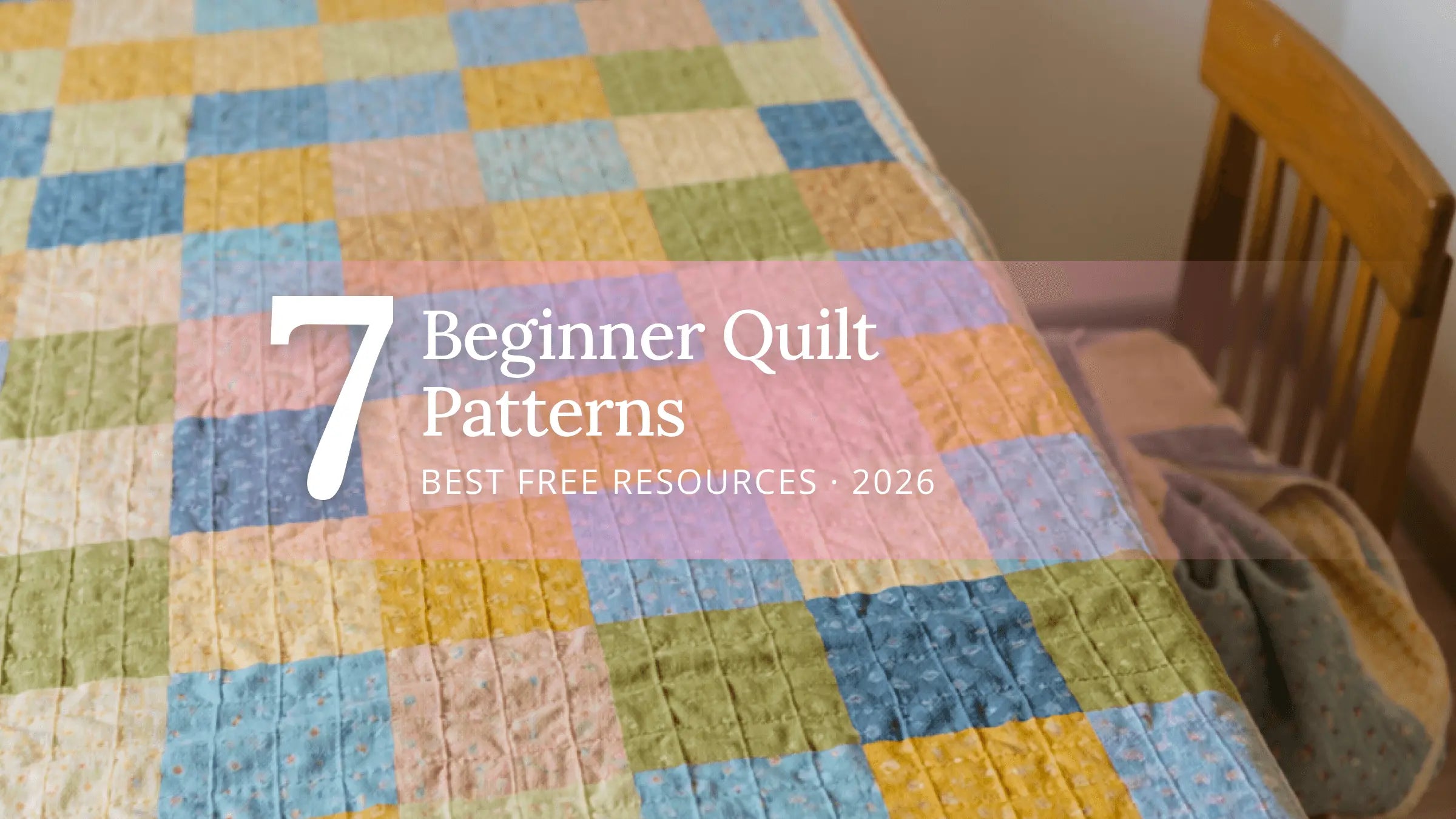
Starting your first quilt can be exciting - but choosing the right beginner pattern can be a little intimidating.
You open your browser and type “free beginner quilt patterns.” Suddenly, you’re staring at hundreds of options. Some look simple and some look stunning. Others claim to be beginner-friendly but quietly assume you already understand half-square triangles, seam nesting, and bias edges.
Here’s the truth: just because a pattern is labeled “beginner” doesn’t mean it’s actually easy to follow.
However, the best free pattern for beginners will:
-
Teach you foundational skills
-
Build confidence
-
Prevent common beginner mistakes
-
Guide you step-by-step
-
Help you actually finish
And yes, you can find all of that without spending money.
In this guide, we’ve carefully reviewed and selected seven of the best websites offering free beginner quilt patterns in 2026. These sources consistently provide clear instructions, reliable measurements, and projects that are achievable for first-time quilters.
Whether you prefer printable PDFs, video tutorials, precut-friendly designs, or structured learning series, you’ll find a starting point here.
What Makes a Quilt Pattern Truly Beginner-Friendly?

Before we dive into the list, let’s define what actually qualifies as beginner-friendly.
A true beginner quilt pattern should:
-
Use straight seams only (no curves)
-
Rely on squares, rectangles, or simple half-square triangles
-
Avoid tiny pieces
-
Include clear cutting charts
-
Specify finished sizes clearly
-
Provide assembly diagrams
-
Recommend manageable quilt sizes (baby or lap)
Meanwhile, beginners should avoid:
-
Complex borders
-
Intricate star blocks with many small units
-
Heavy bias cutting
-
Dense color layouts requiring advanced value control
The goal of your first quilt is not perfection. It’s skill-building.
Now let’s explore the best free pattern sources that understand that.
1. Fat Quarter Shop
Best for Structured, Step-by-Step Learning
Fat Quarter Shop is more than an online fabric retailer. It’s one of the strongest beginner education platforms in quilting today.
If you want structure, clarity, and video support, this is one of the safest starting points.
Why Beginners Thrive Here
Their “Ultimate Beginner Quilt” series is one of the most accessible entry points into quilting online. It’s structured as a block-by-block learning experience. Each block comes with:
-
A free downloadable PDF
-
A matching YouTube tutorial
-
Clear cutting charts
-
Visual demonstrations
Instead of dumping instructions on you, they teach you why each step matters. That level of detail removes a tremendous amount of beginner anxiety.
You’ll learn:
-
Accurate quarter-inch seams
-
Basic block construction
-
Fabric organization
-
Pressing strategies
-
Assembly sequencing
That foundation makes everything else easier.
What to Watch For
Their large website can be a bit overwhelming. So, remember to:
-
Use the “Beginner Friendly” filter
-
Start with baby or lap-size projects
-
Look for sampler-style quilts
Many patterns are precut-friendly, which simplifies fabric coordination. Also, some free patterns are tied to fabric promotions. Actually, you don’t need to use the exact product. Just follow yardage requirements and substitute.
Best For:
-
Visual learners
-
First-time quilters
-
Those who want a guided experience
-
Quilters nervous about cutting
2. Missouri Star Quilt Company

Best for Friendly, Video-First Teaching
If you learn best by watching someone physically demonstrate each step, Missouri Star is a goldmine. The brand built its reputation on approachable quilting education. And their free beginner patterns reflect that.
What Makes It Beginner-Friendly
Many of their free patterns are directly tied to YouTube tutorials.
Jenny Doan’s teaching style is conversational and practical. She simplifies complex ideas without dumbing them down. Plus, her voice is calm and encouraging.
For beginners, that makes a huge difference.
She frequently uses precuts such as:
-
Charm packs
-
Jelly rolls
-
Layer cakes
-
Large-scale prints
This reduces cutting stress, which is one of the biggest beginner pain points.
Important Consideration
Not every tutorial includes a standalone PDF. Some instructions live within blog posts or video demonstrations.
If you prefer printed instructions, double-check availability.
Best For:
-
Visual learners
-
Precut enthusiasts
-
Beginners who want quick, confidence-building finishes
3. AllPeopleQuilt (American Patchwork & Quilting)
Best for Editorially Tested Patterns
AllPeopleQuilt is a site backed by major publication American Patchwork & Quilting. And that editorial oversight shows.
Patterns here are:
-
Well-written
-
Professionally diagrammed
-
Clearly measured
-
Tested before publication
For beginners, that reliability is invaluable.
Why It’s a Strong Choice
Unlike random blog patterns, these designs go through editing and proofing. Yardage errors are rare. Instructions are structured logically.
Their “Free Quilt Patterns for Beginners” section is especially helpful.
You’ll find:
-
Classic patchwork
-
Rail fence designs
-
Simple star blocks
-
Clean modern layouts
Slight Drawback
Some patterns are embedded in multi-page articles rather than single downloadable PDFs. It’s not a dealbreaker, but it requires a bit of scrolling.
Best For:
-
Beginners who want clean, dependable instructions
-
Quilters who appreciate traditional style
-
Print-and-highlight learners
4. WeAllSew (BERNINA Community Blog)
Best for Skill-Building Tutorials with Photos
WeAllSew is less of a retail space and more of an education-driven community blog. This is a good pick if you learn best from step-by-step photos.
What Makes It Different
Each pattern is paired with:
-
High-resolution process photos
-
Technique explanations
-
Downloadable PDFs
-
Seasonal projects
Their guides not only teach “sew this, then that” but “here’s why this works.”
Strengths
-
High-resolution visuals
-
Community quilt-alongs
-
Clear pressing guidance
-
Beginner-friendly language
Because it’s blog-based, navigation requires using the search function. But the depth of instruction makes it worth the effort. Use the search bar with terms like, “beginner quilt,” “simple quilt,” and “quilt-along.”
Best For:
-
Detail-oriented beginners
-
Quilters who want to understand technique
-
Anyone interested in quilt-alongs
5. Robert Kaufman Fabrics
Best for Clean, Simple PDF Patterns
As a major fabric manufacturer, Robert Kaufman provides free patterns to showcase their collections. But don’t overlook them just because they’re marketing-driven. The patterns are actually clean, professional, and beginner-accessible.
What You’ll Find
-
Printer-ready PDFs
-
Clear yardage charts
-
Straightforward block construction
-
Simple layouts
Many designs rely on:
-
Large squares
-
Minimal piecing
-
Strip construction
-
Classic grid formats
Important Note
They don’t sell directly to consumers. You’ll need to source materials elsewhere. Simply follow the yardage requirements.
Best For:
-
Beginners who want simple layouts
-
Quilters who prefer traditional styles
-
Anyone who likes straightforward PDFs
6. Riley Blake Designs
Best for Quick-Finish Baby and Throw Quilts
Riley Blake’s free patterns frequently utilize:
-
Fabric panels
-
Precut bundles
-
Large focal prints
This dramatically reduces cutting and speeds up completion.
And for beginners, finishing matters. A completed quilt helps build confidence faster than anything.
Why It Works
Their patterns are built around:
-
Large center panels
-
Simple sashing
-
Minimal block repetition
You achieve a strong visual impact without complex construction.
One Caveat
Patterns list specific Riley Blake SKUs. If the collection is discontinued, simply match the yardage with similar fabrics.
Best For:
-
Baby quilts
-
Weekend projects
-
Beginners who want a fast win
7. JOANN
Best for Convenience and Supply Integration
JOANN integrates pattern selection with supply shopping. Their free project library is practical.
You find a pattern and click the materials list. You can then add everything to cart.
For absolute beginners who feel overwhelmed by supply sourcing, this can be reassuring.
What to Keep in Mind
Instruction depth varies by project. So, choose patterns with:
-
Clear beginner labeling
-
Integrated shopping
-
Simple designs
-
Frequent sales
Weakness
Instructional depth varies. Some projects include detailed photos. Others are more text-heavy.
If you’re brand new, choose patterns with visual guides.
Best For:
-
Absolute beginners
-
People who want one-stop shopping
-
Quilters who prefer in-store pickup
Comparing the 7 Best Free Beginner Quilt Pattern Sources
|
Provider |
Instruction Depth |
Video Support |
PDF Quality |
Best For |
|
Fat Quarter Shop |
Excellent |
Yes |
Excellent |
Structured learners |
|
Missouri Star |
Excellent (video-first) |
Yes |
Mixed |
Visual learners |
|
AllPeopleQuilt |
High |
Limited |
Strong |
Reliable editorial patterns |
|
WeAllSew |
High |
Sometimes |
Good |
Skill-building learners |
|
Robert Kaufman |
Moderate |
No |
Excellent |
Simple, classic layouts |
|
Riley Blake |
Moderate |
No |
Good |
Quick baby/throw quilts |
|
JOANN |
Variable |
Limited |
Moderate |
Convenience seekers |
How to Choose Your First Quilt Pattern (Without Regret)
Here’s the honest truth: your first quilt does not need to be impressive. It only needs to be finishable.
With so many options out, here’s how you can pick a good pattern:
Choose a quilt that is:
-
Under 60” x 60”
-
Built with blocks 6” or larger
-
Limited color palette
-
Clear cutting charts
-
Straight-seam construction only
Make sure to avoid:
-
Curved piecing
-
Tiny half-square triangles
-
Complex border math
-
High-contrast advanced layouts
Remember, the goal is skill-building, not expert performance.
Common Beginner Mistakes (And How the Right Pattern Prevents Them)
A good beginner pattern reduces:
-
Cutting errors
-
Yardage miscalculations
-
Block distortion
-
Layout confusion
-
Binding panic
To increase your success rate, go for quilt patterns with:
-
Diagrams
-
Clear seam allowance reminders
-
Pressing instructions
-
Assembly sequences
Materials Matter More Than You Think
A free pattern doesn’t mean cutting corners on materials.
For beginners especially:
-
Use 100% quilting cotton
-
Invest in a sharp rotary blade
-
Use quality thread
-
Choose stable batting
-
Prewash if you’re unsure about colorfastness
Accurate cutting and consistent seam allowance matter more than advanced design. Precision builds confidence, and good materials reduce frustration.
From Free Pattern to Finished Quilt: Your Next Steps
This sequence prevents most beginner mistakes:
-
Download your chosen pattern.
-
Read it fully before cutting anything.
-
Highlight cutting instructions.
-
Create a fabric plan.
-
Double-check measurements.
-
Cut carefully.
-
Sew slowly.
-
Press intentionally.
-
Lay blocks out before final assembly.
Turning a Free Pattern into a Quilt You’re Proud Of
The internet is full of free patterns. But not all quilt patterns for beginners work.
The seven sources above consistently provide:
-
Clear structure
-
True beginner accessibility
-
Reliable measurements
-
Helpful support
So, start simple and finish strong. The real magic happens when fabric becomes something functional, warm, and entirely yours.
Why Free Beginner Quilt Patterns in 2026 Are Better Than Ever
In 2026, quilting education is more accessible than ever.
You have:
-
High-definition video tutorials
-
Printable PDFs
-
Online communities
-
Digital quilt-alongs
-
Fabric substitution flexibility
The barrier to entry has never been lower.
The only thing standing between you and your first finished quilt is choosing a pattern and getting started.
Conclusion: Your First Quilt Starts Here

At some point, you have to stop researching and start sewing.
There will always be another pattern to compare or another tutorial to watch. But confidence in quilting doesn’t come from collecting options. Instead, it comes from committing to one and working through it.
Your first quilt is less about the final look. It’s actually more about the experience of making it. So, learn how fabric moves under your hands. Witness flat pieces turn into something dimensional and watch them become a finished quilt.
That transformation is the real reward.
The good news? You don’t need a paid course or an expensive kit to get there. The free beginner patterns in this guide are more than enough to take you from “I’ve never done this before” to “I finished my first quilt.”
Just choose one, set up your machine, and make the first cut.
The only way to become a quilter is to start - and finish - your first project.
With constant practice, you can eventually move to advanced quilt patterns.