Quick answer: For machine quilting, most quilters choose a quality 40wt or 50wt thread — trilobal polyester like Glide for sheen, strength and low lint, or cotton like King Tut for a soft, matte, heirloom finish. For hand quilting, pick a sturdy cotton quilting thread made to pull through layers without shredding. New to cones? OMNI is a strong all-rounder for longarm and domestic machines.
If you ask a seasoned quilter what the secret to a lasting, beautiful quilt is, they'll likely point to the spool of thread sitting by their machine. The rule of thumb has always been to reach for 100% cotton for those traditional, heirloom projects and a tough polyester for heavy-duty machine work. But knowing why is what separates a good quilt from a great one.
Getting a handle on the differences in thread materials and weights is the first real step to achieving that polished, professional look we all crave. With the right knowledge and the amazing products from Linda's, you'll be ready to finish your next quilting project with confidence.
Your Guide to Selecting the Best Quilting Thread
Choosing the right thread is just as critical as picking out your fabrics or the perfect batting. Think of it this way: thread is the skeleton holding your entire masterpiece together. The wrong choice can lead to snapped stitches, frustratingly puckered seams, or a quilt that just doesn't hold up over the years. It might feel like a minor detail, but the fiber, thickness, and finish of your thread will absolutely make or break your final project.
This isn't just a niche concern, either. The global sewing thread market was valued at around USD 2.15 billion in 2023, with synthetics like polyester leading the pack. Why? Because their strength and versatility make them a dream for modern machine quilting. You can dig into the numbers yourself by checking out the full sewing thread market report.
Understanding the Basics
When you walk into a quilt shop, you'll mainly see three types of thread on the wall: cotton, polyester, and silk. Each has its own personality and is suited for different parts of the quilting process, from piecing your blocks to adding that final decorative stitch.
- Cotton Thread: This is the old faithful. It breathes and wears at the same pace as your cotton fabrics, which is why it's the go-to for heirloom quilts meant to be passed down.
- Polyester Thread: The workhorse. It offers incredible strength and produces very little lint, making it perfect for the high speeds of both longarm and domestic sewing machines.
- Silk Thread: The specialist. It's incredibly fine yet strong, and it seems to melt right into the fabric, making it a beautiful choice for delicate appliqué and detailed stitching.
Of course, your thread doesn't exist in a vacuum. It needs to work in harmony with everything else in your quilt "sandwich." For a closer look at another key ingredient, don't miss our guide on quilting batting choices for the passionate quilter.
To make things a little easier, I've put together a quick cheat sheet to help you grab the right spool for the job.
Quilting Thread Quick Comparison
This table gives you a simple, at-a-glance look at which threads work best for different quilting tasks.
| Thread Material | Ideal Use Case | Key Characteristic |
|---|---|---|
| 100% Cotton | Piecing, traditional quilting | Blends with cotton fabric |
| Polyester | Machine quilting, longarm | High strength and low lint |
| Silk | Appliqué, heirloom work | Fine diameter and luster |
Think of this as your starting point. As you get more experience, you'll develop your own preferences, but this guide will keep your projects on the right track from the very beginning.
Comparing Quilting Thread Materials
When you're choosing a quilting thread, the very first thing to consider is the fiber it's made from. This decision affects everything—from how your quilt looks right after the last stitch to how it holds up decades from now. Getting to know the personalities of cotton, polyester, and silk is the first step to making a choice that truly serves your project.
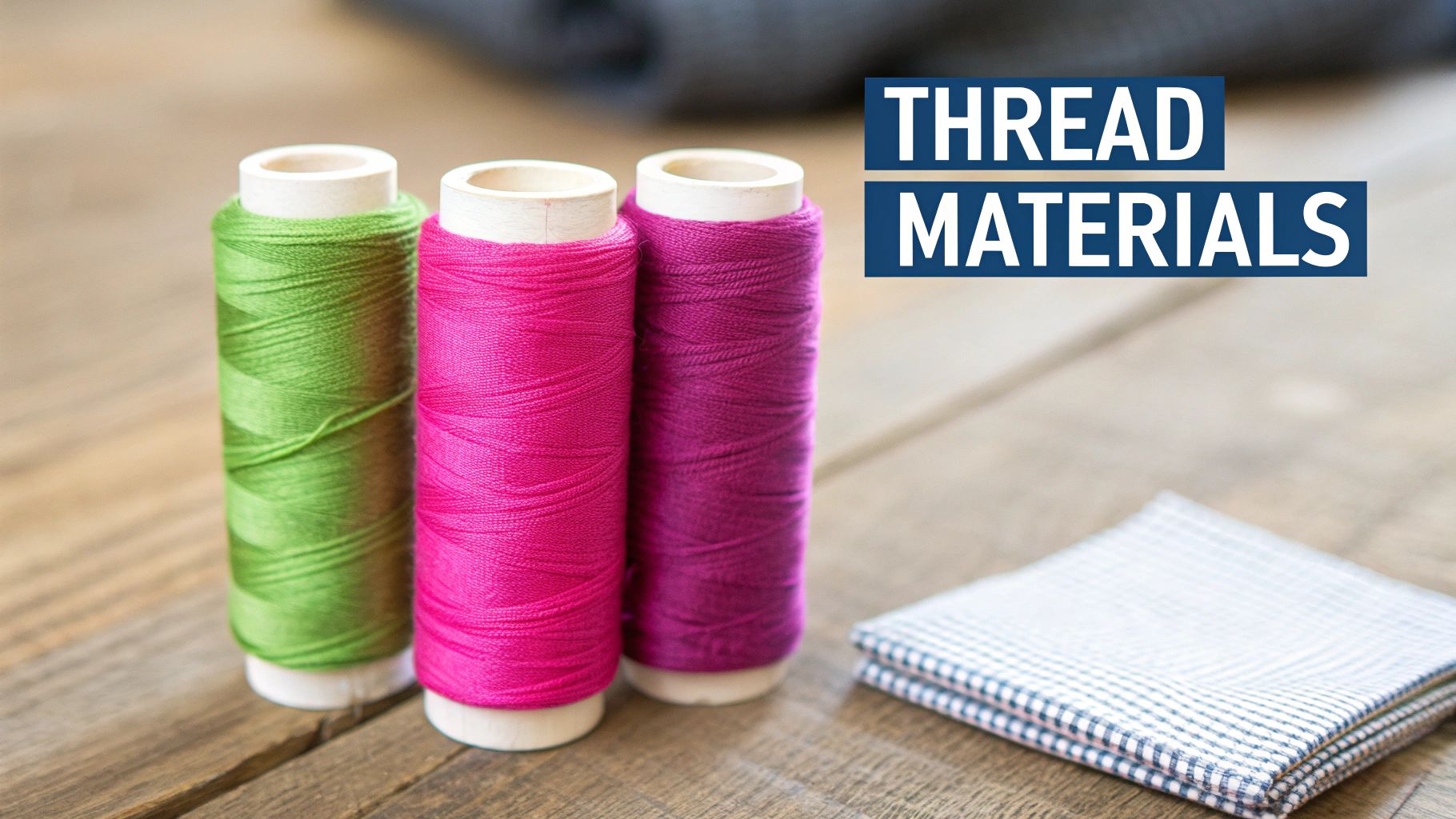
Each fiber brings something different to the table. Let’s look past the simple pros and cons and dive into how these materials actually behave on a real quilt, so your stitches are just as intentional as your fabric choices.
The Traditionalist's Choice: Cotton
For as long as anyone can remember, 100% cotton thread has been the quilter's staple, and for very good reason. Its biggest selling point is how perfectly it gets along with cotton fabrics. Cotton thread wears, washes, and even shrinks at the same rate as your cotton quilt top and batting, which means the whole quilt ages together as one harmonious piece.
This teamwork prevents the thread from eventually cutting through the fabric fibers—a real risk when you use stronger, synthetic threads on natural fabrics. Cotton thread also has that classic, soft matte finish that just melts into the fabric, making it a go-to for piecing and creating subtle, textural quilting. Plus, you can hit it with a hot iron and it won't melt, a must-have quality when you're pressing seams.
The Workhorse of Modern Quilting: Polyester
If cotton is the classic choice, polyester is the undisputed champion of modern machine quilting. It's incredibly strong and has just a little bit of stretch, which lets it handle the high speeds and tension of longarm and domestic machines without constantly breaking or shredding.
This durability is a huge deal. It’s why synthetic threads now make up about 80% of the total thread market; they simply outperform natural fibers in tensile strength and wear resistance. As much as we love cotton, it doesn't have that same elasticity and can be a bit more finicky. You can read up on the sewing thread market at grandviewresearch.com for more on that.
Pro Tip: Polyester thread creates way less lint than cotton. This is a bigger benefit than it sounds—it keeps your machine running cleaner and smoother, and your stitches look crisper, which really matters for intricate quilting designs.
The Specialist's Secret: Silk
Silk thread is like the secret luxury weapon in a quilter's arsenal. It's unbelievably fine but also surprisingly strong, a combination that allows it to sink right into the fabric and practically disappear. This makes it the absolute best choice for delicate work like appliqué, where the last thing you want to see are the stitches.
The natural sheen of silk adds a quiet touch of elegance, making it a favorite for heirloom projects and detailed handwork. While it's definitely more of an investment, having a spool of silk on hand is priceless for achieving that flawless, high-end finish on a quilt that truly matters. Planning ahead helps you know if a specialty thread is worth it—our guide on how to calculate fabric yardage can help you manage your materials and budget.
Ready to match the perfect fiber to your next masterpiece? Explore the premium selection of cotton and polyester threads at Linda's and finish your project with total confidence.
How to Decode Quilting Thread Weight
Walking down the thread aisle can feel like trying to learn a new language, especially with all those numbers like "50wt" or "12wt" staring back at you from the spools. But trust me, understanding thread weight is one of the most valuable skills you can have for getting that clean, professional finish we all crave.
The system is pretty straightforward once it clicks, but it's the opposite of what you might expect. The number on the spool, followed by "wt," simply stands for weight. Here’s the only thing you need to remember: the lower the number, the thicker and heavier the thread.
That means a high number signals a finer, thinner thread. So, a bold 12wt thread is much, much thicker than a delicate 80wt thread, which is practically as fine as a strand of hair.
Common Thread Weights and Their Best Uses
Picking the right thread weight directly changes the entire look of your quilt. A thread that's too beefy can overpower your fabric and create bulk, while one that’s too thin might just disappear or, worse, break under the tension of quilting.
Let's run through the most common weights you'll find and what they're really good for.
-
80wt Thread: This stuff is your secret weapon for any kind of "invisible" stitching. It’s so incredibly fine that it's perfect for English paper piecing, delicate machine embroidery, and appliqué where you want the stitches to just melt into the fabric.
-
50wt Thread: Meet the undisputed champion of all-purpose thread. A 50wt is what almost everyone uses for piecing quilt blocks. Why? It’s strong enough to give you a durable seam but fine enough that it won't add extra bulk when you press your blocks. This is key for getting those perfect points to match up.
-
40wt Thread: When you want your actual quilting stitches to show up as a subtle design element, 40wt is your go-to. It's just a little bit thicker than 50wt, which makes it a fantastic choice for both straight-line and free-motion quilting. It gives your work beautiful texture and definition.
A Quick Tip: The difference between a 50wt and a 40wt might not sound like much, but the visual impact is huge. Use 50wt when you want the texture of the quilting to be the focus, and grab a 40wt when you want the stitch itself to be seen.
Heavyweights for High Impact
Sometimes, you don't want your thread to blend in—you want it to be the star of the show. That’s where the heavyweights come in to play.
- 28wt & 12wt Thread: These thicker threads are all about making a statement. Think bold hand quilting, big-stitch quilting, or any machine quilting where you're going for a dramatic, rustic, and highly visible effect. A 12wt thread, in particular, creates a gorgeous, almost embroidery-like texture that really pops off the fabric.
Getting comfortable with these different weights is a game-changer, allowing you to add incredible dimension and personality to your quilts. If you're ready to really dive deep, our guide on how to elevate your quilting craft with advanced techniques can show you how to weave these threads into more complex designs.
Pair Your Thread with the Right Needle
Okay, last but not least—using the correct needle for your thread is non-negotiable. Seriously. The wrong needle size will lead to a world of pain: skipped stitches, shredded thread, and enough frustration to make you want to walk away from your machine.
This handy little chart will help you match your thread weight to the right needle, keeping everything running smoothly.
Thread Weight and Needle Size Pairing Guide
| Thread Weight | Visual Effect | Recommended Quilting Task | Appropriate Needle Size |
|---|---|---|---|
| 80wt | Invisible | Fine Appliqué, Micro-Quilting | 60/8 or 70/10 Microtex |
| 50wt | Blends In | Piecing, Light Quilting | 80/12 Universal or Quilting |
| 40wt | Visible Stitch | General Machine Quilting | 90/14 Quilting or Topstitch |
| 12wt | Bold & Decorative | Hand Quilting, Topstitching | 100/16 Topstitch or Jeans |
Getting the pairing right is the final step to ensuring a perfect stitch. Ready to put this into practice? Shop the incredible selection of threads and needles at Linda's to find the perfect match for your project.
Matching Thread to Your Quilting Method
Ask any seasoned quilter, and they'll tell you there's no single "best" thread. The secret is matching the thread to the job at hand. What you need for piecing a quilt top is completely different from what you'd want for showing off decorative hand quilting. Using the right tool for the task makes the whole process go smoother and results in a quilt that will stand the test of time.
This job-specific approach is really the heart of quality quilt making. It's what holds together a global quilt market valued at around USD 5.32 billion in 2024. Quilters who know their thread are the ones building this incredible art form, as you can see in this expert quilt market report. When you pick the right thread for each step, every single stitch does exactly what it's supposed to do.
If you're ever stuck, this little decision tree is a great starting point for figuring out what you need.
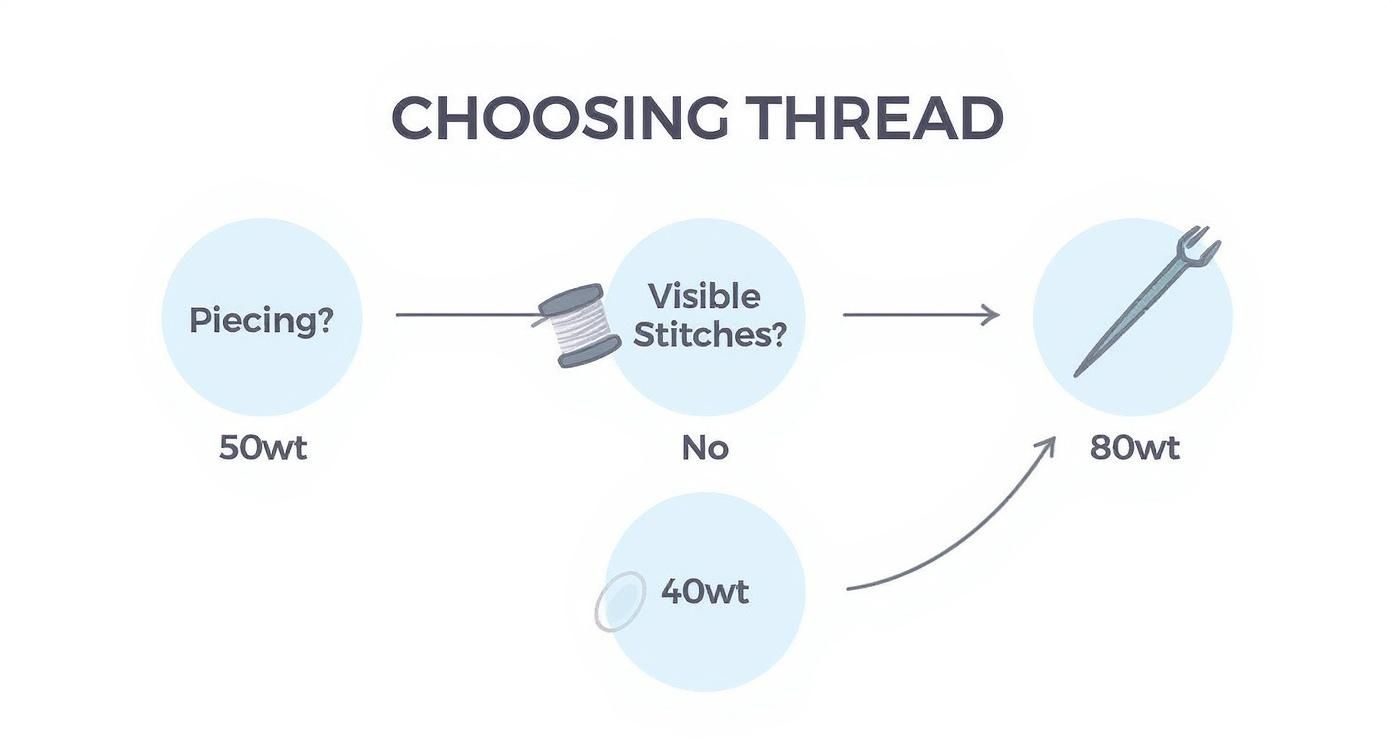
It really breaks down the first questions you should ask yourself, pointing you toward the right thread weight whether you're piecing or putting on the finishing touches.
For Flawless Machine Piecing
When you're sewing your quilt top together, the goal is always flat, accurate seams that don't add extra bulk. A strong, low-lint 50wt cotton or polyester thread is the undisputed king for this job. Because it's so fine, your seams will press beautifully flat, which is absolutely essential for matching up those tricky points and getting a crisp, professional look.
If you go any heavier than a 50wt for piecing, you'll start to feel a ridge along the seam line. This can throw off your block measurements and make the final quilting a real headache. A good quality 50wt also keeps lint to a minimum, meaning less time spent cleaning your machine during those long piecing sessions.
For High-Speed Machine Quilting
Machine quilting puts a ton of stress on thread, whether you're on a domestic machine or a big longarm. All that speed and the constant changes in direction demand a thread that can take a beating without breaking. For that reason, a 40wt or 50wt polyester thread is what most quilters reach for.
Polyester is tough. It holds up to the friction and tension without shredding or snapping, which saves you a lot of frustration. It also has a subtle sheen that gives your quilting stitches just enough definition to pop without stealing the show from your fabric.
Situational Tip: Want your quilting to be a major design element? Go with the slightly thicker 40wt. If you're aiming for texture that blends in more, stick with the 50wt.
For Traditional Hand Quilting
Hand quilting is all about the rhythm and feel of the needle pulling thread through fabric. Your thread needs to be part of that pleasant experience. Most hand quilters swear by a glacé-finished or waxed cotton thread. This coating gives the thread a little stiffness and makes it incredibly smooth, so it glides right through the quilt sandwich.
That special finish is what prevents the thread from twisting up into knots and tangles while you work—something that drives every stitcher crazy. The result is a much more relaxing process and stitches that look even and beautiful.
For Appliqué and Embellishment
When it's time to add appliqué or other fun details, your thread choice is all about the look you want to achieve.
- Invisible Stitches: For appliqué where the stitches need to completely disappear, you can't beat an ultra-fine 80wt or 100wt thread. It’s so thin that it just sinks into the fabric, securing your pieces without leaving a trace.
- Decorative Flair: If you want your stitches to be part of the art, grab something that shines! Rayon and metallic threads have a brilliant luster that catches the light and adds a bit of sparkle. They’re perfect for adding texture and dimension, and you can learn more about using them in our guide to machine embroidery on quilts.
Ready to find the perfect spool for your next project? Browse the amazing selection of specialty threads at Linda's and get exactly what you need to bring your vision to life.
Top Quilting Thread Recommendations
Let’s be honest, picking the right thread can feel like a bigger decision than choosing your fabric. But don't worry—I've seen it all, and a few brands consistently rise to the top for very specific jobs. To cut through the noise, I’ve put together a list of my go-to threads, each a champion in its own category. And the best part? Every single one is a trusted favorite you can find right here at Linda's.
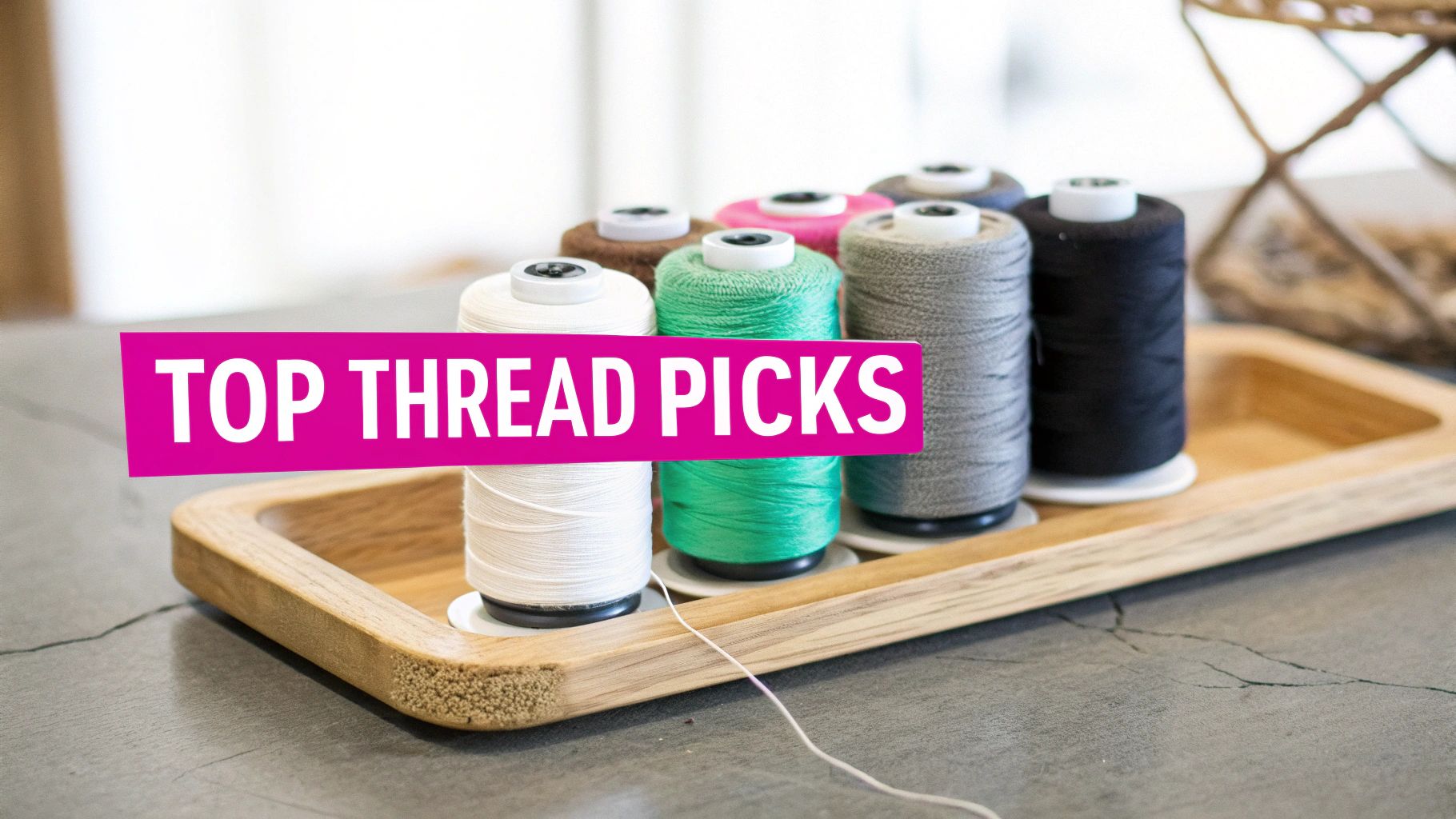
Think of this as your personal cheat sheet. We'll match your project to the perfect thread so you can buy with total confidence and get back to creating something beautiful.
Best for All-Purpose Piecing
When you're piecing quilt blocks, precision is everything. That’s why Aurifil 50wt Cotton is pretty much the undisputed king. It’s a 2-ply thread that is incredibly fine but surprisingly strong, which means your seams lay flat and don't create extra bulk. When getting those points to meet perfectly is non-negotiable, a low-profile thread like this is your best friend.
Its mercerized finish is super smooth, producing barely any lint. This keeps your machine happy and your stitches looking sharp. Quilters love Aurifil for piecing because it’s just so reliable, making it a must-have for your thread stash. Having dependable materials is key as your skills grow—check out our guide on essential quilt projects for every skill level to see just how much quality thread can elevate your work.
Best for High-Speed Longarm Quilting
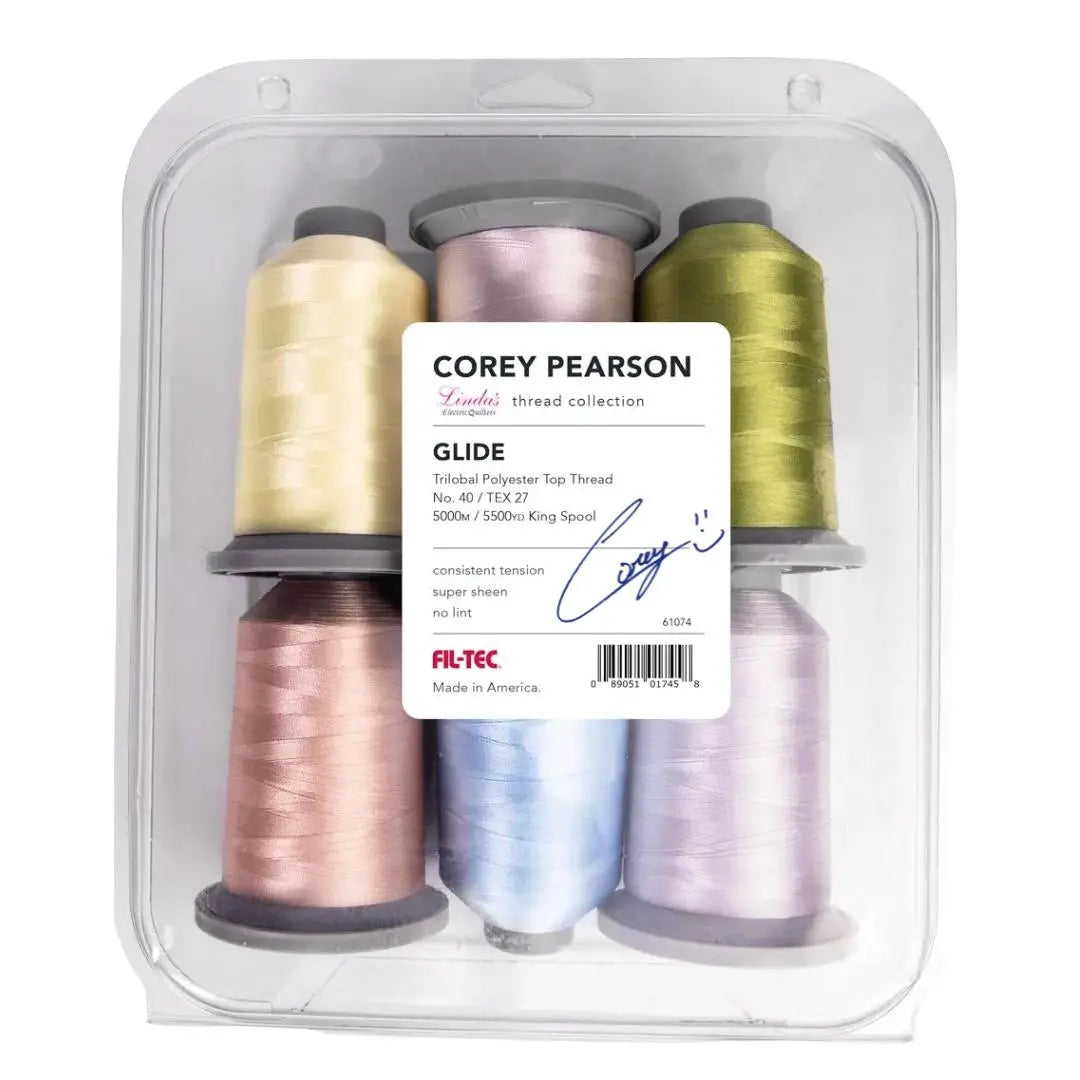
For longarmers, nothing kills the creative flow faster than thread breaking mid-pass. This is exactly why so many pros swear by Glide 40wt Polyester. This trilobal polyester thread not only has a beautiful sheen but is also built like a tank, engineered to handle the intense speed and tension of a longarm machine without complaining.
Glide moves through your machine like butter, giving you gorgeous, even stitches with hardly any shredding or snapping. The vibrant colors and subtle luster it offers make quilting patterns pop with stunning definition.
Why it Excels: Glide's pure strength and low-lint nature mean you're quilting more and troubleshooting less. It's a true workhorse designed for peak performance.
Best for Traditional Hand Quilting
The slow, rhythmic process of hand quilting deserves a thread that cooperates. Gütermann Hand Quilting Cotton is made specifically for this craft. It comes with a special glacé finish—basically a light wax coating that helps it resist tangles and pull through quilt layers smoothly.
This is a sturdy cotton thread that forms those beautiful, distinct stitches that define traditional hand quilting. Its durability is second to none, ensuring the heirloom you’re pouring your heart into will last for generations, with stitches that look as good decades from now as they do today.
Best for Invisible Appliqué
Sometimes, the best stitch is the one you can't see. For those moments, you need Superior Threads MonoPoly. This monofilament polyester thread is hair-fine and see-through, making it the ultimate choice for invisible appliqué, stitch-in-the-ditch quilting, or couching down decorative fibers.
Unlike older nylon monofilament threads that could get brittle or yellow, MonoPoly is heat-resistant and stays soft. You won't get that scratchy feeling against the skin, making it a far better option for quilts that are meant to be snuggled and loved.
Ready to finish your project with the perfect thread? Explore the amazing product selection at Linda's today.
Common Questions About Quilting Thread
No matter how prepared we are, questions always come up. It's just part of the process! Getting solid, practical answers is what turns a good quilter into a confident one. Let's tackle some of the most common head-scratchers quilters run into.
Think of this as your go-to guide for those little hiccups that can throw a whole project off track. With the right info, you can keep things moving smoothly from the first stitch to the last.
Can I Use All-Purpose Sewing Thread for Quilting?
This is a big one. While you technically can use all-purpose thread for piecing, it’s really not the best move for a quilt you want to last. Most all-purpose thread is a polyester blend made for garment sewing, not for heirloom quilts.
The best quilting threads, especially 100% cotton, are designed to wear down at the same rate as your cotton fabrics. If you use a thread that's way stronger than your fabric (like polyester on cotton), it can act like a tiny saw, slowly tearing through the fabric fibers over years of use and washing. Plus, dedicated quilting threads are smoother and produce way less lint, which your sewing machine will thank you for.
Should My Bobbin Thread Match My Top Thread?
It really depends on what you're doing. For piecing, the answer is a definite yes. Using the same thread on top and in the bobbin gives you balanced tension and strong, flat seams that press beautifully.
But when it comes to the actual quilting part, many experienced quilters switch things up. It’s common practice to use a finer thread in the bobbin, like a 60wt or even an 80wt.
Why do this? A few great reasons:
- Less Bulk: A thinner bobbin thread means less bulk on the back of your quilt, which is especially nice for dense quilting.
- Easier Tension: It can make dialing in that perfect tension a little easier, helping you avoid those annoying "pokies."
- A Cleaner Look: The stitches on the back are less noticeable, giving your quilt backing a really neat and professional finish.
Pro Tip: Keep a neutral bobbin thread on hand—think grey, beige, or cream. It blends with almost any color you put on top, saving you from having to wind a new bobbin for every project.
Why Does My Quilting Thread Keep Breaking?
Ugh, there's nothing worse than thread that keeps snapping mid-seam. It's so frustrating! But before you blame the thread, run through a quick checklist of the usual suspects. The number one cause, hands down, is an old or incorrect needle. Always, always start a new quilt with a fresh needle that’s the right size for your thread.
Other common culprits are tension that’s cranked up too high or a simple buildup of lint in your machine's tension discs and bobbin area. Of course, it’s also true that lower-quality threads are just more likely to shred and break under the high-speed pressure of machine quilting.
How Should I Store My Thread Collection?
You've invested in good thread, so you want to protect it! The two biggest enemies of thread are direct sunlight and dust. UV rays from the sun can weaken the fibers and fade the colors over time, while dust can get pulled into your machine and mess with your tension.
The best solution is simple: store your spools in a closed container, a drawer, or on a thread rack that’s kept away from a sunny window. This easy habit will keep your thread clean, organized, and ready to go for your next masterpiece.
Now that you're armed with answers to these common questions, you can approach any quilting project with confidence. You can find all the high-quality threads we've talked about and a whole lot more right here at Linda's Electric Quilters.
Explore Our Full Collection of Quilting Threads at Lindas.com