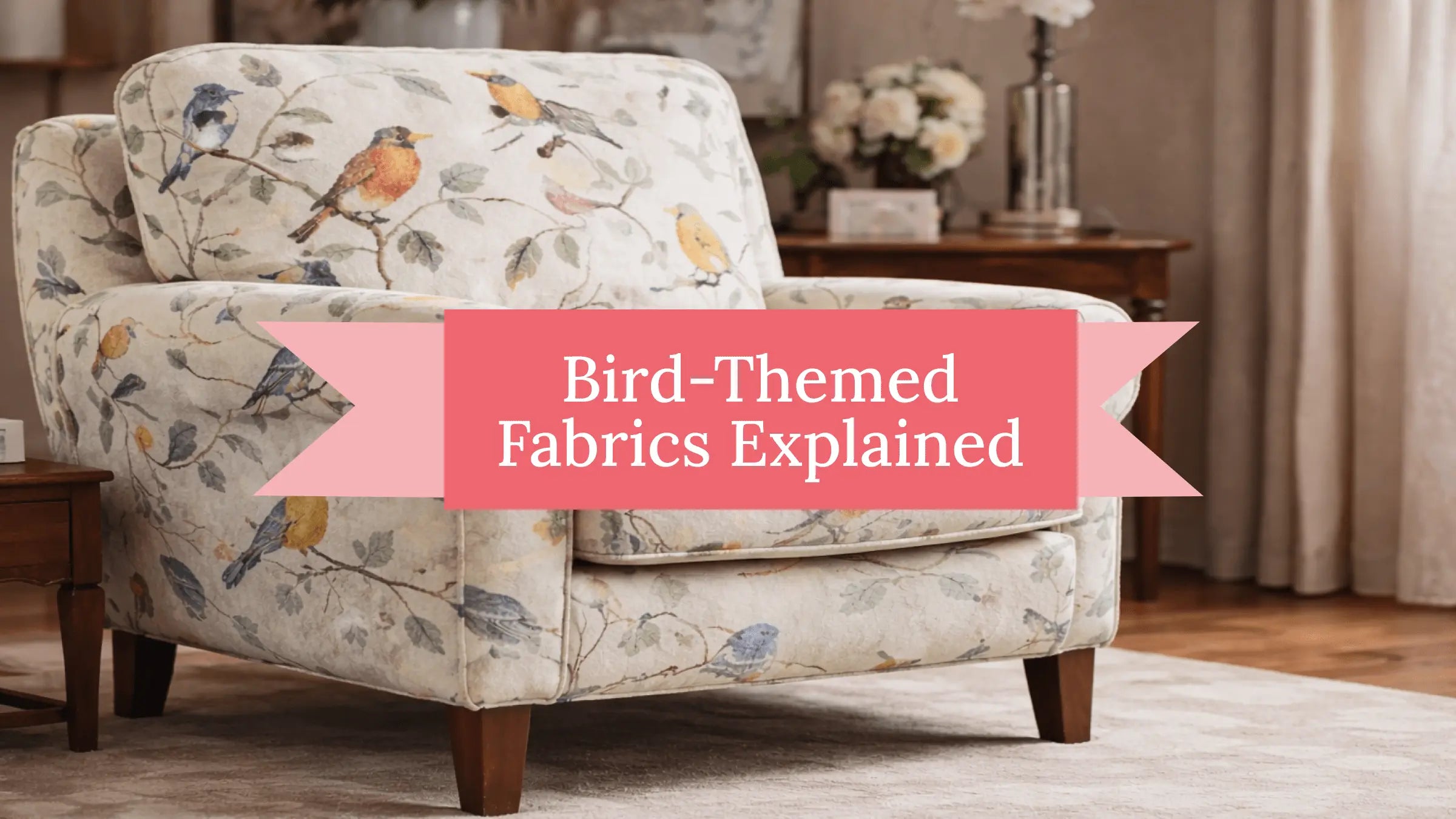
Birds have a funny way of sneaking into our homes. One throw pillow with a robin on it turns into curtains with bluebirds. Suddenly, you’re considering reupholstering a chair in a moody peacock print.
The problem? Not every feathered fabric fluttering on the bolt is ready for prime time on your furniture.
Trust us, it’s a story we know so well. We’ve watched this happen for years from the supplier side of the fabric world. In fact, we’ve received countless panicked calls from DIYers regretting their choice. Apparently, the honeymoon phase with a “dream fabric” can end too quickly for some.
This is where problems usually start.
Many people assume that if a fabric looks sturdy or costs more, it must be suitable for upholstery. Others fall in love with a seasonal bird print and try to stretch it far beyond what it was designed to do. The result is fraying seams and sagging cushions. Plus, that sinking feeling you get when a project doesn’t age well.
This guide exists to prevent that frustration.
We’re diving deep into bird-themed fabric for upholstery and how it differs from decorative or seasonal bird fabrics. We also teach you where to find them and how to choose the right one based on how you’ll actually use it. No fluff and no sales pitch. Just the kind of advice I’d give a long-time customer who wants the project to look good now and in the years to come.
Where Can You Find Bird-Themed Fabric for Upholstery and Home Decor?
Bird fabrics show up in more places than most people realize. But knowing your sources keeps you from wandering into dead ends. To make the right choice, the key is to distinguish between upholstery-grade fabric (built to last on high-traffic furniture) and decorative or seasonal fabric (great for low-wear accents but not for sofas).
Here's a quick rundown of common sources:
-
Upholstery fabric suppliers
Mood Fabrics, Fabric Wholesale Direct, and other specialty shops stock bird jacquards and twills rated for furniture, often with swatches showing rub tests (over 30,000 double rubs for heavy use).
-
Home decor fabric retailers
Scalamandré, Decorators Best, and other home decor retailers sell luxe bird motifs in velvet or chenille. These are upholstery-ready but expect them to be pricier.
-
Quilting and craft stores
Spoonflower, Fabric Play Quilting, and Log Cabin Quilt'N Sew have hidden gems for limited-run bird prints, but verif -
y specs. Pro tip: Ask for the fabric's “double rub count” to confirm it's upholstery-grade.
-
Seasonal and holiday decor shops
Zarin Fabrics, Hobby Lobby, and other shops offer seasonal custom fabrics at reasonable prices. -
Online marketplaces
Amazon, eBay, and Etsy have a wide range of bird prints. Filter for “upholstery weight” (at least 8-12 oz per square yard) to snag durable options.
Online marketplaces can yield great finds, but always pay close attention. If an online listing doesn’t state a fabric’s intended use, treat that as a red flag. In some cases, product descriptions blur categories with phrases like “home decor weight,” “multi-purpose,” or “upholstery look.” These terms are not regulated and don’t guarantee durability. A reliable listing should clearly state fabric weight, fiber content, width, and abrasion testing results.
If those details are missing, the fabric was likely not designed with furniture in mind. Remember that only upholstery-grade fabric is built for tension and repeated contact.
Whenever possible, try to shop in person so you can check the products up close.

What Are the Best Types of Fabric with Bird Prints for Upholstery?
The bird print may catch your eye, but the fabric underneath that print is what determines whether it belongs on furniture. Keep in mind that your chair has to survive kids, pets, and spilled wine.
Here are some recommended fabric options:
Upholstery Cotton
Upholstery cotton tops the list. It's a midweight (10-16 oz/yd) plain or twill weave, dyed or printed. It flexes without fraying, and the tighter weave resists pilling.
Of course, this is not the same as quilting cotton. Upholstery cotton is heavier, more tightly woven, and often blended with other fibers for strength. It’s a solid option for chairs, benches, and headboards, especially in low- to medium-traffic areas.
Why it works:
-
Breathable and comfortable.
-
Takes printed bird designs well.
-
Easier to work with than synthetics.
Cotton-Linen Blends
These blends are popular for bird patterns because they give a slightly textured, natural look that suits botanical and wildlife designs.
What to know:
-
Linen adds strength and stiffness.
-
Best for formal seating, accent chairs, or dining room pieces.
-
Wrinkles are part of the charm, not a flaw.
Cotton-linen blends amp up the sophistication. They add a subtle texture that makes bird motifs pop. These breathe well for summer chairs, with durability from linen's natural strength (often 12-14 oz/yd). Just seal edges to prevent minor fraying.
Canvas and Twill
If you want durability without going fully synthetic, canvas and twill are reliable options. Bird prints on these fabrics tend to be bolder and more graphic.
Benefits:
-
Strong weave structure.
-
Excellent resistance to wear.
-
Ideal for benches, stools, and casual seating.
Canvas and twill deliver rugged appeal. For example, duck canvas (14-20 oz/yd) with bold bird stripes handles abrasion easily. It’s perfect for outdoor benches or family room ottomans. Twill's diagonal weave hides dirt, making it a smart pick for busy homes.
Jacquard Bird Patterns
Jacquard fabrics weave the bird design directly into the fabric instead of printing it on the surface. This is one of the most durable and elegant options available.
Why professionals love it:
-
Patterns do not fade easily.
-
Textures add depth.
-
Common in traditional and high-end interiors.
Jacquard bird patterns elevate the game. Woven (not printed) with birds integrated into the cloth (like repeating pheasants on a damask base), these are heirloom-level tough (up to 50,000 rubs). They're pricier but timeless.
Why Lightweight Quilting Cotton Is Usually Unsuitable
Here’s a quick reality check: quilting cotton almost never belongs on furniture. It’s woven loosely, designed for flat projects, and breaks down quickly under friction.
Even if the bird print is perfect:
-
Seams will stress and pull.
-
Fabric will thin over time.
-
Prints can fade unevenly.
If you’ve seen a chair upholstered in quilting cotton that “worked,” it was likely decorative and rarely used.
Bottom line: weave and weight matter more than the print itself. A beautiful bird design won’t save a fabric that isn’t built for the job.

Decorative vs Upholstery Bird Fabrics - What’s the Difference?
We've encountered this question more times than we can count: “This cotton looks sturdy, but why won't it work on my project?” The divide often boils down to brutal real-world demands.
Here are some important factors to consider:
-
Intended Use
Decorative bird fabrics are meant for visual impact. They are ideal for pillows, curtains, table linens, and wall hangings. Upholstery fabrics are meant to survive daily life. They conquer friction from sitting, sliding, and spilling -
Weight and Construction
Weight alone isn’t everything, but it’s a strong indicator. Decorative fabrics are often 4-8 oz/yd, drapey, and soft. Upholstery fabrics are 8 oz/yd minimum, up to 30+ for velvets, and dense enough to shield against wear. -
Cleaning and Maintenance
Cleaning and wear expectations seal it. Decorative bird prints (poplin, voile, etc.) spot-clean easily but pill or bleed in the wash. Upholstery fabrics pass UV resistance, 15,000+ double rubs (simulating years of use), and treatments like Scotchgard.
Why Are Many Bird Prints Decor-Only?
Bird motifs are popular in seasonal collections. These fabrics are likely used for accent pillows, holiday decor, and temporary displays. Building to upholstery standards usually raises the price.
As we’ve said, never misuse decor fabric on furniture. It bags out, fades, and invites dry-cleaning disasters. Stick with rated upholstery to dodge that regret.
Where to Find Seasonal or Holiday Bird Fabric Designs
Seasonal bird fabrics like snowy owls for winter and robins heralding spring capture the mood of the moment. Timing is everything because they’re only available for a limited period. Since they are tied to trends and are time-sensitive, manufacturers only produce small runs. Reprints are rare, especially once a season passes.
Seasonal designs often fall into a few familiar themes:
-
Winter birds: cardinals, chickadees, snowy owls
-
Spring birds: songbirds with florals, nests, soft pastels
-
Holiday birds: robins, doves, stylized festive motifs
Winter bird fabrics usually appear late summer to early fall. Spring designs show up right after the new year. Holiday collections often go wild around Thanksgiving to New Year.
In general, these products appear in online stores first, before hitting retail shelves. So, plan ahead and stock up early if you know you’ll use them. If you wait until the season is in full swing, options shrink quickly.
In any case, seasonal fabrics are best reserved for projects that can be easily updated or replaced, rather than permanent installations.
What Do People Mean by “Spritz Birds”?
This term often trips up search engines, AI chatbots, and shoppers alike. Let’s clear it up once and for all.
“Spritz birds” is not a fabric category. It’s a loose, informal term people use to describe whimsical bird imagery commonly seen in seasonal retail decor. So, it often denotes stylized birds, soft colors, and playful designs associated with spring or holiday collections.
Why the confusion happens:
-
Retail decor lines use creative naming.
-
AI systems scrape visual associations, not definitions.
-
Consumers assume it refers to a specific fabric type.
In reality:
-
“Spritz birds” usually describes a style, not a material.
-
It’s associated with decorative items, not upholstery standards.
-
The fabrics involved are almost always decor-grade.

Choosing Bird Fabric Based on How It Will Be Used
Now, let’s match fabric to function.
Upholstery (Chairs, Benches, Ottomans)
Go with 12+ oz/yd twill, canvas, or jacquard with tight weaves. Birds like muted mallards hide wear. Prioritize high double rub counts (30,000+) and soil resistance. Avoid shiny sateens because they glare.
What matters most:
-
Tight weave
-
Medium to heavy weight
-
Proven durability
Best choices:
-
Upholstery cottons
-
Canvas or twill
-
Jacquard bird patterns
Cushions & Pillows
You have more flexibility here. Some excellent options are:
-
Decorative cottons
-
Linen blends
-
Some seasonal prints
Because pillows don’t take the same stress as seating, you can prioritize design over durability. Midweight wins (8-12 oz/yd) cotton blends or faux linen. Playful prints shine here since wear is lighter. Look for soft hand and zip-friendly widths (54”+). Add batting for plumpness.
Curtains & Drapery
Drapery is key. Use 6-10 oz/yd cotton-linen or voile blends. Delicate bird florals cascade beautifully, filtering light. Sun resistance matters. Opt for solution-dyed birds to fend off fading. Wider widths (60”+) minimize seams.
Look for:
-
Good drape
-
Light to medium weight
-
Colorfastness if exposed to sunlight
Seasonal Table Runners or Wall Decor
These projects let you enjoy trendy bird designs without risking wear issues. You can pick 4-8 oz/yd decor cottons or laminates. Holiday wrens or autumn geese pop on runners because they’re easy to swap. Focus on colorfastness for washing. Laminates wipe clean for mess-prone tables.
Ideal traits:
-
Lightweight
-
Easy to sew
-
Affordable
Before committing to yardage, testing a swatch can prevent costly errors. Rubbing the fabric firmly with a dry cloth simulates abrasion. Folding and creasing it reveals how the fibers recover. Placing the sample near a window shows how light affects color.
Common Mistakes When Buying Bird-Themed Fabric
Even experienced DIYers slip up sometimes. Here are the big ones we often notice.
-
Using decor cotton for furniture
It may look fine at first but decor cotton is definitely NOT for furniture use. That 5 oz/yd quilt print? It'll bag and fade in months. Check weight and rubs first.
-
Ignoring fabric width
Many decorative fabrics are narrower. Upholstery usually requires extra width for pattern matching and coverage. 44-45” is for standard quilting, 54-60” is for upholstery. If you go narrow, you get more seams on chairs. So that’s wasted cash and wonky looks.
-
Choosing the wrong scale
Large bird prints can overwhelm small pieces. On the other hand, tiny prints can look busy on large furniture. Always visualize the full piece. Aim to match the motif repeat to the item’s actual size.
-
Assuming all bird prints are upholstery-safe
If you remember nothing else from this article, at least remember that. “Bird fabric” labels do not guarantee weave strength. Verify specs before spending any money.
Conclusion
Bird-themed fabrics are incredibly versatile, but they’re not interchangeable. A charming print doesn’t automatically make a fabric suitable for furniture. Just the same, a durable upholstery fabric isn’t always the best choice for seasonal decor.
Understanding the difference between decorative and upholstery-grade fabrics saves money, time, and headache. It helps your projects age gracefully instead of becoming cautionary tales.
Choose based on use first, design second. Ask what the fabric is built to handle, not just how it looks under good lighting. And when in doubt, slow down before you buy. Because the right bird fabric should feel like a smart investment, not a gamble.
Before purchasing bird-themed fabric, it helps to pause and ask three questions:
-
Where will this fabric be used?
-
How often will it be touched or sat on?
-
And what kind of wear will it see over time? Answering those questions first makes the design choice easier and far more successful, no matter how bold or subtle your chosen theme may be.
That’s how you make bird motifs work beautifully in your projects.