You bought the design. You hooped the fabric. You picked a color that looked perfect on the spool rack. Then the stitching started, and suddenly the thread broke, the fabric puckered, or the finished embroidery looked flatter than you hoped.
That moment happens to almost every machine embroiderer.
Embroidery thread for sewing machines can seem simple at first. It is just thread, right? But the thread you choose changes the shine, texture, durability, and even how smoothly your machine runs. For quilters, that choice matters even more because embroidery often has to play nicely with batting, pieced tops, labels, appliqué, and decorative quilting.
At the shop, we see the same questions come up again and again. Which thread should I use for towels? Why does polyester behave differently from rayon? What does 40wt mean? Do I really need to touch my tension settings?
The good news is that this gets much easier once you connect thread choice to the result you want on the project in front of you.
Unlocking a World of Color Your Guide to Machine Embroidery Thread
You stand in front of a wall of thread and every spool seems to promise something different. One shines like jewelry. One says polyester. Another says rayon. Then you notice the numbers on the labels and realize you are no longer just choosing a color.
That confusion is normal.

For machine embroidery, thread is not a minor supply. It affects how your design looks, how it wears, and how your machine behaves while stitching. A thread that works beautifully on a quilt label may not be the one you want for a kitchen towel or a dense decorative fill on a tote bag.
Why thread choice matters so much
When crafters say a project looks “store bought,” they usually mean the stitching is smooth, the color is lively, and the finish looks intentional. Thread plays a big role in all three.
A good thread choice helps with:
- Clean stitch definition: Letters and motifs look crisp instead of fuzzy.
- Better surface effect: You can get soft, glossy, bold, subtle, or sparkly results.
- Fewer machine headaches: The right thread usually means fewer breaks and less fuss.
- Project longevity: Some threads hold color and strength better through washing and regular use.
A craft with deep roots
Before manufactured cotton thread became available, sewers relied on silk or linen. Later, six-cord cotton thread changed early machine sewing because it provided the fineness and strength needed for early sewing machines, and it became the global industry standard, as described in this history of cotton sewing thread.
Tip: If thread feels oddly technical, remember that generations of makers had to solve the same problem you are solving now. They needed thread that looked good and behaved well in the machine.
What makes this easier
Most thread decisions come down to three things:
- Material
- Weight
- Machine setup
Once those three click, the wall of thread starts to feel less like a puzzle and more like a palette.
Choosing Your Thread's Personality Rayon vs Polyester and More
Some threads behave like polished performers. Others are dependable workhorses. A few are specialty players that shine in exactly the right role. Thinking in terms of personality makes it easier to match thread to the project instead of getting stuck on labels alone.

Polyester as the reliable workhorse
If you want one category to learn first, start here.
Trilobal polyester has a three-lobed cross-section that gives it higher breaking strength than rayon. It can run at over 800 stitches per minute, while rayon is best kept under 600 stitches per minute. That is one reason polyester became the commercial standard for embroidery, along with its colorfastness and durability, according to Coats’ discussion of embroidery solutions.
For everyday sewing and quilting projects, polyester is often the calmest option. It handles repeated washing well, holds bright color, and works beautifully on practical items like quilted gifts, children’s pieces, linens, and bags.
If you like thread that helps you finish the project with less drama, polyester is often the first spool to reach for.
Rayon as the glossy artist
Rayon usually attracts people by appearance first. It has that lush, decorative sheen many embroiderers love for floral motifs, monograms, and elegant detail work.
It is a lovely choice when the look of the stitch matters most and the item will not face especially rough wear. The tradeoff is that it tends to be less forgiving than polyester during stitching and use.
A lot of quilters enjoy rayon on special projects where they want embroidery to read as ornament. Think heirloom-style blocks, fancy gift pieces, and decorative accents on wall hangings.
Cotton as the quiet traditionalist
Cotton embroidery thread gives a softer, more matte look. If polyester is bright and polished, cotton is understated and familiar.
That makes cotton a natural fit for projects where you want the embroidery to blend into a quilt rather than sparkle on top of it. It can look especially at home on traditional quilt labels, primitive motifs, and softer farmhouse-style projects.
Cotton also appeals to many quilters because its finish feels visually close to quilting cotton fabrics.
Metallic as the showpiece
Metallic thread is the spool you bring in when you want a little celebration on the surface of the fabric.
It catches light differently from every other type in the drawer. That makes it fun for holiday pieces, gift bags, special-occasion table linens, and design accents where a standard sheen is not enough.
The tradeoff is patience. Metallic thread often asks for slower stitching, careful setup, and a willingness to test before committing to the final piece.
Key takeaway: If the project must be durable and easy to run, start with polyester. If the project is about surface beauty first, rayon is worth considering.
Silk and specialty choices
Silk sits in a luxury category for many stitchers. It can look beautiful, but most everyday machine embroiderers do not need to begin there. Specialty threads such as glow-in-the-dark or variegated threads can also be fun once your basic settings feel comfortable.
If you want to experiment, do it on a small motif first. Specialty thread is much more enjoyable when you already know how your machine behaves with standard embroidery thread.
Embroidery Thread Comparison
| Thread Type | Best For | Sheen Level | Durability | Linda's Fave |
|---|---|---|---|---|
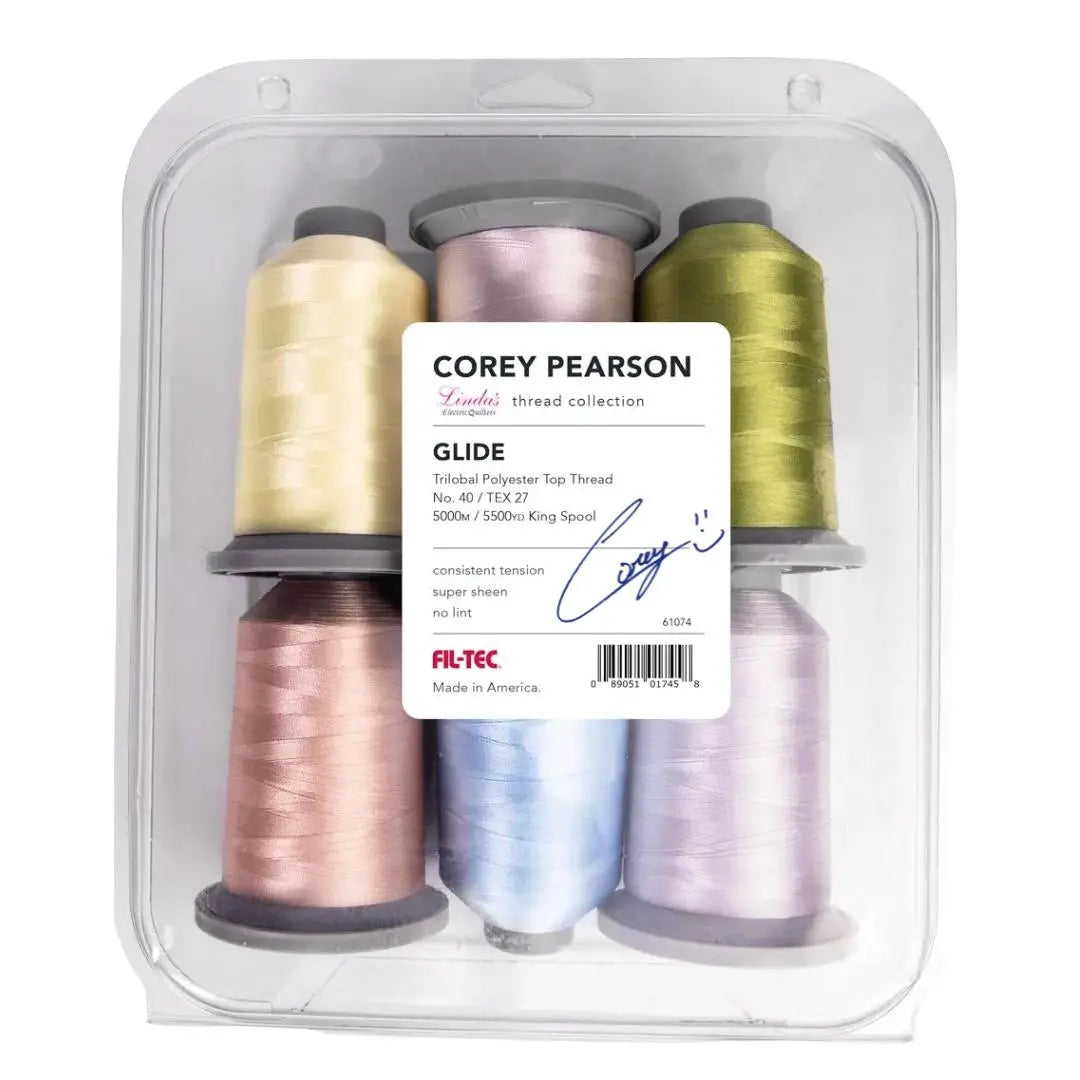
| Polyester | Towels, bags, quilt accents, children’s items | Medium to high | High | Glide or Isacord style polyester for everyday use |
| Rayon | Decorative florals, monograms, elegant motifs | High | Moderate | Splendor 40wt rayon for a softer decorative finish |
| Cotton | Quilt labels, traditional looks, matte detail | Low to medium | Moderate | Cotton-look finishes for understated embroidery |
| Metallic | Holiday accents, names, gift projects | Sparkly | Varies with setup | Metallics for short accent areas |
How I would choose in real life
If a friend brought me three projects, I would not give all three the same thread.
For a set of kitchen towels, I would lean polyester because the project needs wash-friendly performance.
For a wedding handkerchief-style keepsake or decorative pillow front, I might choose rayon for the shine.
For a quilt label that should feel integrated with the quilt instead of flashy, I would think about cotton or a softer-finish thread.
That is the true secret. Do not ask only, “What thread is good?” Ask, “What should this project look like when I am done?”
Decoding the Numbers What Thread Weight Means for Your Project
Thread weight confuses almost everyone at first because the numbering feels backward.
The simple rule is this. The lower the weight number, the thicker the thread. So a 30wt thread is thicker than a 40wt thread, and a 60wt thread is finer.

Why 40wt is the standard starting point
If you only buy one type of embroidery thread for sewing machines, 40wt polyester is the practical starting place. It is considered the industry standard because it offers visible stitch definition and texture without causing puckering on most fabrics. Its continuous filament construction also lets it run smoothly at over 800 SPM, making it suitable for over 90% of home and commercial embroidery projects, according to this embroidery thread guide.
That is a big reason so many embroiderers keep returning to 40wt. It covers a lot of ground.
How different weights change the look
Here is the easiest way to think about it on actual projects:
- 40wt: Your everyday choice for names, motifs, appliqué accents, and decorative embroidery.
- 60wt: Better when the design has tiny details, fine outlines, or small lettering.
- Heavier threads such as 30wt: Useful when you want extra presence, a bolder line, or more visible texture.
A finer thread can help detailed designs look cleaner. A thicker one makes stitches stand out more strongly on the fabric surface.
Three project examples
A quilt label with several lines of text often benefits from a finer thread because the letters stay more readable.
A child’s name stitched large on a pillow or tote usually looks great in 40wt because the lettering needs to show clearly from a distance.
A decorative motif on denim or a craft project where you want strong texture may benefit from a heavier-looking thread choice.
Tip: If you are unsure, use 40wt first and let the test stitch tell you whether you want more delicacy or more punch.
What beginners often miss
Weight affects more than appearance. It also influences how the design packs into the fabric. If the thread is too bold for the scale of the design, small areas can look crowded. If it is too fine, the result may look weaker than you imagined.
That is why testing matters. Stitch a small sample on a scrap with the same fabric and stabilizer before committing to the final quilt block or gift item. Even a quick sample tells you whether the thread weight supports the look you want.
Machine Settings for Flawless Stitches Needles and Tension
A lot of embroidery problems get blamed on the thread when the primary issue is setup.
Thread can only perform well if the needle, top tension, and bobbin tension support it. This matters especially on combo sewing-embroidery machines, where you may switch from piecing to decorative stitching and expect the machine to handle both with no adjustment.
Start with the needle
For quilting projects using 40wt polyester embroidery thread, a 75/11 or 90/14 needle is often the right place to start. That recommendation appears alongside tension guidance in this article on choosing thread for embroidery projects.
Why does that matter? Because embroidery thread behaves differently from regular sewing thread. If the eye of the needle is not suited to the thread and fabric combination, the thread can fray, shred, or break before it ever has a chance to form a clean stitch.
A lighter quilting cotton with embroidery on top often works well with the smaller needle. Heavier layers or denser project builds may need the larger size.
Tension is where many quilters get stuck
The same source notes that for quilting projects on Brother or Bernina machines, a top tension of 1.5 to 2.0 and a bobbin tension of 1.0 to 1.5 are often used with 40wt polyester embroidery thread on cotton quilting fabrics. It also reports that 68% of users in quilting forums mention thread breakage or puckering when they switch from sewing thread to embroidery thread without making those calibrations.
That number tracks with what many crafters experience. They thread the machine, keep the old settings, and assume the machine will sort it out. Usually it will not.
A simple setup routine
Use this checklist before your next embroidery session:
- Match the needle to the job: Start with 75/11 for lighter quilt cottons and move to 90/14 when the fabric stack is heavier.
- Lower and balance tension: If you normally sew at a different setting, do not assume it will suit embroidery.
- Test on a scrap sandwich: Use the same fabric and stabilizer you plan to embroider.
- Watch the first few stitches: Early loops or strain usually mean you should stop and adjust before stitching the full design.
What balanced tension looks like
Balanced embroidery stitches lie flat. The top thread looks smooth on the surface, and the underside does not show bulky pulling or looping. The fabric should not draw up around the design.
If you see tight pulling, start by easing the tension slightly or reconsidering whether the needle is too small for the thread and fabric combination.
Bobbin choices matter too
Many beginners focus only on the top spool because that is what they can see. The bobbin still affects the stitch balance.
For embroidery, you generally want a bobbin setup that supports a clean, balanced stitch without adding unnecessary bulk underneath. If the underside looks heavy or messy, the fix may not be the top thread at all.
Practical advice: Change only one variable at a time. Needle first, then top tension, then bobbin tension. If you change everything at once, you will not know what solved the issue.
One habit that saves time
Keep a small notebook or a phone note with settings that worked on past projects. Write down the fabric, stabilizer, thread type, needle size, and tension range.
That personal record becomes more useful than any generic chart because it reflects your machine, your thread preferences, and the kinds of quilts and gifts you make.
Solving Common Issues with Your Embroidery Thread
Even careful setup does not guarantee a perfect first run. Sometimes the machine starts stitching and something goes sideways anyway.
That does not mean you chose the wrong hobby. It usually means the machine is giving you a clue.

When thread keeps breaking
Thread breakage feels dramatic, but the cause is often simple.
Check the needle first. A worn, bent, or mismatched needle can rough up thread very quickly. Then rethread the machine completely. A tiny snag in the thread path can create repeated trouble.
Also look at the spool itself. If the thread is catching on the notch, net, or cap arrangement, the machine may be pulling unevenly.
When you see loops or bird's nests
If thread is building up underneath, many people assume the bobbin is bad. Sometimes it is. But looping under the fabric often points back to the top thread path or top tension.
Take the thread out and rethread carefully with the presser foot in the proper position for threading on your machine. Then stitch a small test before returning to the project.
When the fabric puckers
Puckering is not always a thread problem.
It can happen when tension is too tight, when the needle is not suited to the thread and fabric stack, or when the project lacks enough support for the density of the design. Dense fills on a soft quilt top need more care than an outline motif on a stable fabric.
Fast troubleshooting guide
- Thread shreds near the needle: Replace the needle and confirm the size suits the thread.
- Thread snaps after a few stitches: Rethread and check for spool drag.
- Underside is messy: Review top threading and top tension first.
- Fabric tunnels around satin stitches: Loosen tension slightly and test again.
- Design looks heavy and stiff: Consider whether the thread weight or design density is too much for that fabric.
Tip: The machine usually tells you the category of problem before it tells you the exact cause. Breaking points to friction or path issues. Looping points to tension or threading. Puckering points to tension or support.
When the design just looks wrong
Sometimes the project finishes with no thread breaks, but it still does not look the way you hoped. The letters may seem too chunky. The motif may look flat. The shine may feel too strong or not strong enough.
That is where thread choice and project goals reconnect.
If a small design looks crowded, try a finer thread next time. If a bold monogram disappears into a textured fabric, move toward a more visible weight or a shinier material. If a practical item looks too fancy, switch from glossy thread to a softer finish.
A short visual walkthrough can help when you are diagnosing stitch behavior on the machine:
The mindset that helps most
Do not judge a thread by one bad run on one project.
A spool that struggles on a dense design over batting may work beautifully on a lighter motif. Troubleshooting gets easier when you stop asking, “Why is this thread bad?” and start asking, “What is this setup asking the thread to do?”
That shift saves a lot of frustration.
Matching the Right Thread to Your Next Masterpiece
You finish a quilted gift, hold it up to the light, and the embroidery either feels just right or slightly off. The name on the label may look too bold. The floral corner on a towel may seem dull instead of lively. In most cases, the thread choice shaped that result as much as the design itself.
Start with the outcome you want on the finished project. Then choose thread that helps you get there.
For kitchen towels and everyday linens
These pieces need embroidery that stays clear and attractive after many trips through the wash. A 40wt polyester embroidery thread usually gives the best balance of color, coverage, and durability for this kind of work.
Picture the thread as the finish on a painted cabinet. You want something pretty, but you also want it to hold up to real use. For monograms, small motifs, and corner flourishes on towels, polyester is often the practical pick.
If you are shopping for supplies, you can find thread options alongside stabilizers, batting, and other quilting notions for the full project setup.
For quilt labels and memory stitching
Quilt labels ask for a different mood. They are part record, part message, part keepsake.
Small lettering often looks cleaner with a finer or softer-looking thread than a glossy, showy one. If your label includes dates, names, or a longer note, test your thread on a scrap first and look at it from reading distance, not nose-to-fabric distance. That one habit can save you from stitching a label that is technically neat but hard to read.
Memory quilts benefit from the same kind of planning. Decide whether the words should stand out clearly or rest into the background. A softer visual effect often suits sentimental stitching better than a high-shine finish.
For children's projects and gift bags
These projects usually need thread that can handle handling.
A bright polyester thread works well for backpacks, gift bags, bibs, and playful quilted gifts because the embroidery has to survive use, washing, and a fair amount of tugging. Bold colors also help names and simple motifs show up well on busy prints and textured cottons.
Novelty accents can be fun here too. A little glow thread or a sparkle detail can make a birthday gift feel extra special. Use those threads like sprinkles, not the whole cake. A small accent area gives you the effect without making the design harder to stitch.
For wall hangings and decorative quilt blocks
Display pieces give you more freedom to choose thread by mood and surface effect.
Rayon can add a graceful shine to petals, script, feathers, and scrollwork. Matte or softer-finish threads create a quieter surface that lets piecing and quilting share attention with the embroidery instead of competing with it. If your goal is texture more than sparkle, a subtle thread can do beautiful work.
Color contrast matters just as much as fiber. A thread close to the fabric color adds richness without stealing focus. A high-contrast color turns embroidery into the star of the block.
Key takeaway: Match the thread to the job you want the stitching to do. Utility projects usually reward durability. Display projects often reward surface effect and mood.
For sparkle and celebration
Holiday stockings, keepsake ornaments, special table linens, and gift toppers are good places for metallic or high-sheen accents.
Use metallic thread in short areas such as stars, lettering highlights, border details, or ornament caps. That approach is easier on the machine and often looks more polished than stitching a full design in metallic. A little flash catches the eye quickly.
A simple way to choose before you stitch
Ask yourself four questions before you load the machine:
- Will this project be washed often?
- Do I want a glossy finish or a softer look?
- Is the design large and bold, or fine and detailed?
- Should the embroidery stand out or blend with the fabric?
Those answers usually point you to the right thread faster than reading spool labels alone. And they keep the decision connected to the finished quilt, towel, bag, or keepsake in your hands, which is what matters most.
Your Top Embroidery Thread Questions Answered
Can I use regular sewing thread for machine embroidery
You can, but it usually is not the smoothest path for decorative embroidery. Embroidery thread is made to create a particular surface effect and to run cleanly in embroidery applications. Regular sewing thread may not give the same sheen, coverage, or stitch look you expect in a decorative design.
If the project is meant to look embroidered, using embroidery thread for sewing machines is the safer choice.
Is polyester or rayon better for beginners
For most beginners, polyester is easier to start with. It is generally more forgiving, especially on practical projects and repeated-use items.
Rayon is lovely, but many new embroiderers find it easier to enjoy once they already understand their machine’s preferences.
What weight should I buy first
Start with 40wt. It is the most versatile place to begin for names, motifs, and general decorative stitching.
If you later find yourself doing tiny text or very delicate detail, then add a finer option to your collection.
Do I really need to adjust tension
Often, yes.
Many stitching issues happen because people keep the same settings they used for ordinary sewing and then switch to embroidery thread. A small adjustment can make the difference between puckering and smooth results.
Why does my thread keep breaking even when the spool is new
New thread can still break if the needle is wrong, the thread path has resistance, or the tension is too tight for the setup. Rethreading, replacing the needle, and testing on scrap usually reveal the problem faster than swapping spools again and again.
How should I store embroidery thread
Keep thread clean, dry, and out of harsh light. Dust and prolonged light exposure are not helpful to any thread collection.
A drawer, cabinet, or covered storage system works well for many home stitchers. The main goal is to protect the thread so it stays ready for the next project.
What is the smartest way to build a thread collection
Do not try to own every color at once.
Start with the shades you use most on quilts and gifts. A balanced starter set usually includes a few neutrals, several bright basics, and a couple of colors that suit your favorite fabric palette. Add specialty threads only after you know what kinds of projects you enjoy making most.
You do not need a giant wall of spools to produce beautiful embroidery. You need a few dependable choices, a properly set machine, and the willingness to test before stitching the final piece.
If you are ready to put these ideas into practice, explore the thread, stabilizer, batting, and machine embroidery supplies available at Linda's Electric Quilters and build your next quilted or embroidered project with tools that match the finish you want.