Exploring the Crossroads: Longarm Quilting, Shortarm Quilting, Sewing, and Embroidery
Exploring the Crossroads: Longarm Quilting, Shortarm Quilting, Sewing, and Embroidery: In the world of textiles and fabric arts, quilting, sewing, and embroidery are timeless crafts that have evolved over centuries, connecting generations of creators through their needles and threads. These crafts are increasingly crossing paths with modern technology and evolving tools like longarm and shortarm quilting machines. Each technique brings its own strengths, but together they form a harmonious intersection where tradition meets innovation. Let’s explore the key differences, similarities, and the ways in which these distinct crafts—longarm quilting, shortarm quilting, sewing, and embroidery—enhance each other.
Longarm Quilting: Precision and Speed for Large-Scale Projects
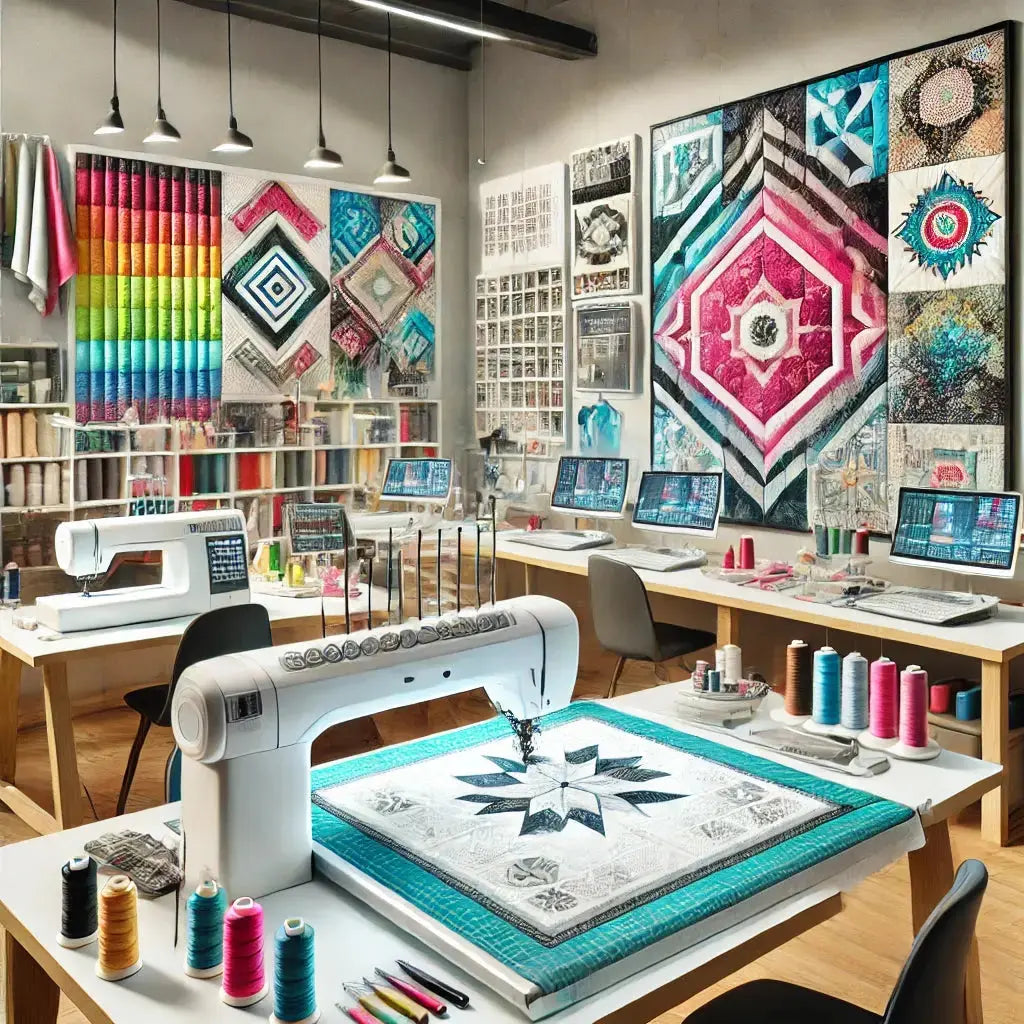
Longarm quilting has transformed the quilting industry by offering a solution for handling large quilts with both precision and speed. As the name suggests, these machines are equipped with long frames, where the quilt’s layers (top, batting, and backing) are stretched and stitched together. With a longarm machine, quilters can easily sew intricate, continuous designs over an entire quilt surface without having to reposition the fabric constantly.
What sets longarm quilting apart is its ability to cover vast areas with consistency. It allows for highly detailed custom patterns or seamless all-over designs like stippling, swirls, or feathers. The computerized capabilities of many modern longarm machines also open up new levels of creativity, enabling quilters to upload custom designs or download pre-programmed templates. This makes longarm quilting ideal for quilters who want to complete large-scale projects efficiently while incorporating artistic flair.
Shortarm Quilting: Flexibility and Accessibility
Shortarm quilting, sometimes referred to as midarm quilting, is a more accessible version of longarm quilting, with a smaller machine head and shorter frame. These machines are often more affordable and compact, making them ideal for quilters who want the benefits of machine quilting but have limited space. While shortarm quilting machines may not cover the large area of their longarm counterparts, they still offer precision and control, particularly for smaller quilts or specific sections of a quilt.
Many shortarm machines are portable, which gives them a distinct advantage for hobbyists or quilters who may not have a dedicated quilting space. They allow for free-motion quilting, similar to longarm machines, but often with more hands-on involvement in guiding the quilt. This makes shortarm quilting a great starting point for quilters who want to learn machine quilting techniques before investing in larger equipment.
Sewing: The Foundation of Fabric Arts
At the heart of nearly every fabric art, including quilting and embroidery, is the foundational skill of sewing. Whether you’re piecing together quilt blocks, attaching binding, or creating garments from scratch, sewing is a versatile craft that forms the backbone of textile creation. Unlike longarm or shortarm quilting, which focuses on stitching through multiple layers of fabric, sewing is primarily about constructing items through seams and piecing.
For quilters, sewing machines are essential for creating the quilt top, piecing together squares or more intricate patterns like flying geese or log cabin designs. The sewing machine also plays a key role in smaller, detailed quilting projects like baby quilts or wall hangings, where hand-stitching or basic sewing techniques can suffice for finishing the piece. Sewing can be both utilitarian and creative, offering endless possibilities when combined with other fabric arts.
Embroidery: Detailed and Decorative Stitching
Embroidery is another textile art that, like quilting, has a long history. It involves stitching intricate designs or patterns onto fabric using a variety of thread types and techniques. While quilting stitches are typically functional (holding fabric layers together), embroidery stitches are decorative, designed to add embellishment and visual interest to the fabric.
In recent years, the rise of computerized embroidery machines has made it easier to create detailed, professional-looking embroidery patterns in less time. Like longarm quilting, these machines use software to create digital patterns that are stitched onto fabric with precision. Embroidery adds a unique decorative element to quilts, garments, and home décor items, allowing makers to personalize their creations with monograms, logos, or intricate floral and geometric designs.
The Intersection of Quilting, Sewing, and Embroidery
The beauty of longarm quilting, shortarm quilting, sewing, and embroidery lies in the way they complement one another, often blending together to create projects that are greater than the sum of their parts.
Longarm and Shortarm Quilting with Embroidery: Many quilters are incorporating embroidery into their quilt designs. Whether using hand embroidery or a computerized embroidery machine, quilters can embellish their quilt tops with intricate thread designs before sandwiching the layers and quilting them together. This adds a rich layer of detail that enhances the overall aesthetic of the quilt.
Sewing and Quilting: Sewing is the foundation of every quilt, with machine piecing being a crucial first step. The design and construction of the quilt top rely on sewing techniques, whether it’s traditional piecing or more modern improvisational methods. Once pieced, the quilt top can be transferred to a longarm or shortarm machine for the quilting phase, blending both sewing and quilting in a seamless process.
Embroidery on Garments and Quilts: Embroidery is often used to add a decorative touch to items made with sewing or quilting techniques. For instance, an embroidered name or motif on a quilt label personalizes the quilt, making it an heirloom piece. On garments, embroidery can elevate the design, adding intricate details to an otherwise simple fabric.
The Future of Fabric Arts
As technology continues to evolve, we’re seeing increased overlap between these crafts. Quilters are using digital software to design patterns for both quilts and embroidery, while sewing machines are incorporating quilting functions for versatile use. This technological cross-pollination means that makers can experiment with combining sewing, quilting, and embroidery in ways that were once unimaginable.
In the future, we can expect further innovation in the tools and techniques used in fabric arts. Quilting and embroidery machines will likely become even more user-friendly, customizable, and efficient, empowering creators to push the boundaries of what they can achieve.
Conclusion: The Power of Versatility in Fabric Arts
Longarm quilting, shortarm quilting, sewing, and embroidery are distinct crafts, each with its own history, tools, and techniques. However, at their intersection lies the true magic of fabric arts—the ability to take individual elements and weave them together into something beautiful, functional, and meaningful. Whether you’re a seasoned quilter, an avid sewer, or an embroidery enthusiast, these crafts offer endless opportunities to learn, create, and connect with a broader community of makers.
Embrace the versatility, explore the intersections, and discover the new possibilities that emerge when these timeless crafts meet in your hands.