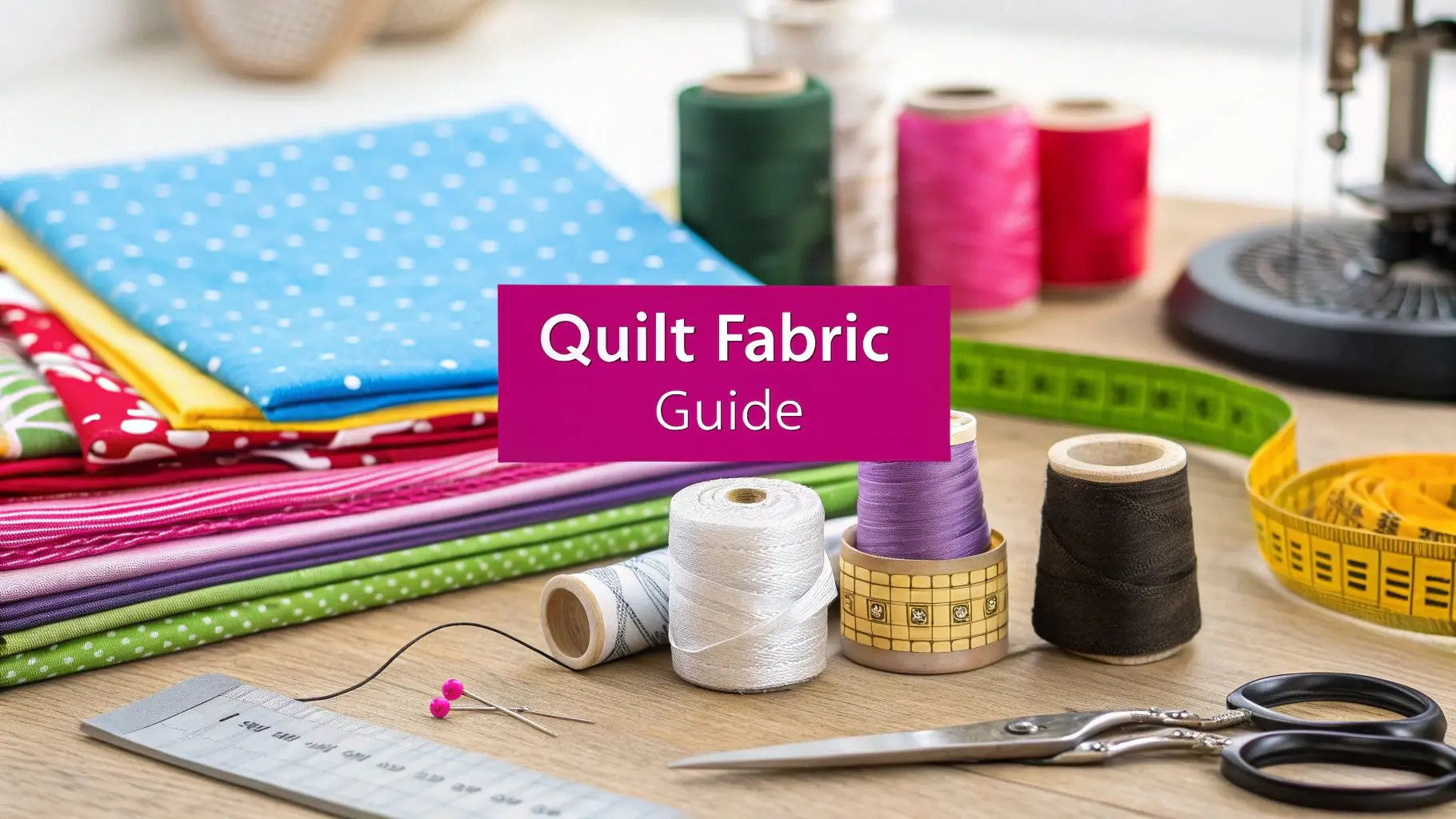
Welcome to the wild and wonderful world of quilting! Choosing your fabric is the very first, and maybe most exciting, step you'll take in creating a new project. If you ask any seasoned quilter what the best fabric for quilting is, they'll almost always tell you it's a 100% high-quality quilting cotton.
Why? It's all about that stable weave, medium weight, and the fact that it barely stretches. This makes cutting accurate and piecing a dream. This educational guide is here to walk you through picking beautiful, durable fabric that makes every single stitch a pleasure and helps you complete your next quilting project with confidence.
Your Guide to Selecting the Perfect Quilting Fabric
Starting a new quilt is like mapping out a family heirloom. Every little choice, from the pattern you pick to the thread you use, really matters. But nothing is more fundamental than the fabric itself. The right material doesn't just bring your design to life; it makes sure your creation can stand up to years of cuddles and washes, turning into a cozy piece of art.
Think of it this way: you're casting the actors for a play. Every textile has its own personality. High-quality quilting cotton is your reliable lead—it's strong, consistent, and just plain easy to work with. It holds a crisp press, keeps its shape, and handles dense stitching like a champ. That stability is what helps you get those perfect, sharp points in your patchwork.
Why Your Fabric Choice Matters
Picking the right fabric from the get-go saves you so much frustration later on. There’s nothing worse than working with a material that stretches out of shape, frays like crazy, or shrinks unevenly. It can turn a relaxing hobby into a serious headache. When you invest in good materials made for quilting, you're setting yourself up for a win.
Here’s why it's such a big deal for your project:
- Accuracy: Quilting is all about precision. Fabrics with a tight, stable weave, like premium cotton, don't warp or distort when you cut them. That means your pieces will actually fit together perfectly.
- Durability: A quilt is meant to be loved and used. Good fabric holds its color and won't fall apart at the seams after a few trips through the laundry.
- Machine Performance: The right fabric weight just gets along better with your sewing machine. It feeds through smoothly, letting the needle create nice, even stitches without skipping or bunching up.
Choosing fabric designed for quilting isn't just buying cloth—you're investing in the final quality and longevity of your project. It's the difference between a quilt that looks great on day one and one that becomes a treasured family heirloom for generations.
Here at Linda's, we get it. We've hand-picked our collection of quilting fabrics to give you the perfect foundation for whatever you're dreaming up. As you read through this guide, you’ll start feeling more confident to browse our shelves and pick out the perfect textiles for your next quilt, knowing exactly why they’re the right choice.
What Makes a Great Quilting Fabric
Walking into a fabric shop is a feast for the eyes, but picking the right fabric for your quilt involves more than just finding a print you love. To make a quilt that stands the test of time, you need to understand what makes a piece of cloth truly shine. It's a bit like being a chef—the quality of your ingredients directly impacts the final dish.
When you're browsing the aisles at Linda's, knowing a few key details will help you choose fabric like a seasoned quilter. We're going to pull back the curtain on three critical elements: thread count, weave, and weight. Once you get a feel for these, you'll be able to tell quality fabric just by touch, ensuring your patchwork comes together perfectly and your quilt is built to last.
This visual guide shows you exactly what to prioritize when making your selections.
As you can see, it all starts with the quality of the fabric. Get that right, and you're already on the path to a beautiful quilt.
The Importance of Thread Count
You've probably heard the term "thread count" when shopping for bedsheets, and it’s just as vital in the quilting world. It simply refers to the number of threads woven into one square inch of fabric, counting both the lengthwise (warp) and crosswise (weft) threads. For quilting cotton, you want to see a thread count of 68x68 or higher, sometimes just labeled as "200 thread count."
A higher thread count means the fabric is denser, smoother, and far more stable. Think of it like a high-resolution screen versus a pixelated one; the high-res screen gives you a crisp, clear image. In the same way, a high thread count fabric gives you a solid foundation that resists fraying and holds your stitches beautifully.
Understanding Weave and Stability
Next up is the weave, which is how the warp and weft threads are laced together. The overwhelming majority of quilting cottons use a plain weave—a simple but incredibly strong one-over, one-under pattern. This is what gives quality cotton its signature stability and keeps it from stretching out of shape.
So, why does this matter to a quilter?
- Precision: A stable weave is your best friend for accurate cutting. When you slice a 4-inch square, you want it to stay a 4-inch square, not morph into a parallelogram.
- Durability: That balanced weave helps your fabric handle dense stitching and repeated washes without pulling apart at the seams.
- Crispness: It holds a crease like a dream. When you press your seams, they stay put, giving you those sharp points and perfectly nested blocks that make a quilt look professional.
The real magic of a premium quilting cotton is its reliability. That stable, plain weave means fewer headaches and less guesswork, so you can focus on the fun part—bringing your vision to life.
Finding the Right Fabric Weight
Finally, let's talk about fabric weight, measured in ounces per square yard. The sweet spot for quilting is a medium-weight fabric, usually around 4.0 to 4.5 ounces per square yard. This isn't just a random number; it's the ideal balance for a few key reasons.
It’s sturdy enough to last but not so thick that your sewing machine struggles to get through it. A fabric that’s too light, like a voile, might be too delicate and could pucker under heavy quilting. On the flip side, heavy fabrics like canvas or denim create bulky seams that are a nightmare to press flat.
The right weight also gives your finished quilt a lovely drape and feel. Medium-weight cotton results in a quilt that’s soft, flexible, and perfect for cuddling. This fabric works hand-in-hand with quality batting, which provides the loft and warmth. To learn more about this crucial middle layer, check out our guide where we introduce fantastic batting options from The Warm Company. When you combine the right fabric weight with great batting from Linda's, you get a quilt that’s as cozy as it is beautiful.
This table gives you a quick rundown of different fabric weights and what they're best used for.
Quilting Fabric Weight and Best Uses
| Fabric Weight | Description | Best For | Considerations |
|---|---|---|---|
| Lightweight (< 4.0 oz) | Airy and sheer. Includes lawn, voile, and some linens. | Appliqué, delicate heirloom projects. | Can be difficult to handle, may require a stabilizer, and can be less durable for everyday quilts. |
| Medium-weight (4.0-4.5 oz) | The standard for quilting cotton. Crisp, stable, and easy to handle. | Piecing, patchwork, binding, and backing. | The ideal choice for most quilting projects, offering the perfect balance of durability and softness. |
| Heavyweight (> 4.5 oz) | Dense and sturdy. Includes canvas, denim, and corduroy. | Quilted bags, home décor projects like placemats or pillows. | Creates very bulky seams that are hard to press and can be tough on standard sewing machines. |
Choosing the right weight really comes down to what you're making. For traditional quilts, sticking to that medium-weight sweet spot is almost always the right call.
Exploring the Best Types of Fabric for Quilting
Okay, so you’ve got the basics down on what makes a quilting fabric structurally sound. Now we get to the really fun part—actually picking out the fabrics! Think of it like being a chef choosing ingredients; each type of fabric brings its own personality, texture, and creative flair to a quilt.
The quilting world is absolutely booming right now. It's built on a shared passion for making beautiful things by hand. The global quilt market hit a value of USD 5.32 billion in 2024 and is projected to skyrocket to nearly USD 9.26 billion by 2034. This isn’t just a niche hobby; it’s a massive movement driven by people who love artisanal quilts made from gorgeous materials like cotton, linen, and flannel. You can dig into the numbers and trends yourself in this growing quilt market business report. When you choose the perfect fabric from Linda’s, you’re not just buying cloth—you’re plugging into this amazing tradition.
100% Quilting Cotton: The Undisputed Champion
If there were a hall of fame for quilting fabrics, 100% quilting cotton would be the star quarterback, the MVP, the first name on the ballot. It is, hands down, the go-to choice for almost every quilter out there, from your first stitch to your hundredth quilt. Its fame is well-deserved because it hits all the marks we talked about earlier: a stable weave, a perfect medium weight, and it holds a press like a dream.
But what really makes quilting cotton king is the sheer, mind-boggling variety. The number of prints, solids, and designer collections available is just incredible. Whether you're dreaming of a vintage floral quilt, a sharp modern design, or a sweet and cuddly baby blanket, I guarantee there's a cotton fabric at Linda's that will bring your vision to life. This reliability lets you piece with total confidence, knowing your seams will lay flat and your points will match up.
On top of all that, it's just easy to work with. It doesn't fight you, it feeds smoothly through your machine, and it’s tough enough to last through decades of use and washing. It’s the perfect fabric to build your skills on. Ready to find the perfect cotton for your next project? Browse our amazing collection today.
Cozy Flannel: For Warmth and Comfort
When you want your quilt to feel like a big, warm hug, you reach for flannel. Flannel is simply a cotton fabric that’s been brushed on one or both sides in a process called “napping.” This fluffs up the fibers, creating that incredibly soft, fuzzy texture that just screams cozy.
Flannel really shines in a few key areas:
- Winter Quilts: Those napped fibers are fantastic at trapping air, which means extra insulation. Flannel quilts are unbelievably warm.
- Baby Quilts: The unmatched softness is perfect for a baby’s delicate skin.
- Rag Quilts: Flannel frays like a champ, which is exactly what you want for a rag quilt. Those fluffy, exposed seams are the whole point!
Just a heads-up, though: flannel needs a little extra TLC. It’s notorious for shrinking more than regular quilting cotton, so prewashing is a must. It also sheds a lot of lint, so be ready to give your sewing machine a little extra cleaning love.
Elegant Linen and Linen Blends
Looking to create a quilt with a more sophisticated, modern vibe? Linen or a linen-cotton blend is a showstopper. Made from flax plant fibers, linen is prized for its strength, breathability, and gorgeous, slightly textured drape. It adds an earthy, organic elegance to a project that other fabrics just can't match.
Now, pure linen can be a bit of a diva for beginners; it loves to wrinkle and can be a bit shifty. That's why a linen-cotton blend is often the perfect compromise. You get the beautiful texture and luxe look of linen married with the stability and user-friendliness of cotton. These blends are fantastic for heirloom quilts, decorative throws, and modern wall hangings where you want your quilting stitches to really pop.
The Artistic Flair of Batiks
Batiks aren't just fabric; they are wearable, usable pieces of art. These incredible textiles are made using a traditional wax-resist dyeing method. Artisans literally paint patterns with hot wax onto the cloth, then dip it in dye. The wax resists the color, and the process is repeated again and again to build up complex, layered designs.
That signature "crackle" you see in batiks? It comes from the dye seeping through tiny cracks that form in the wax during the process. This happy accident ensures that no two bolts of batik fabric are ever perfectly identical. Each piece is truly one-of-a-kind.
Thanks to their high thread count and the intense dyeing process, batiks barely fray and have a crisp, smooth feel that makes them a joy to cut and sew. They are a brilliant fabric for quilting projects that need rich, saturated color and a ton of visual texture. Mix them with your regular quilting cottons to add a splash of something special.
Batiks are also amazing for appliqué since the edges stay so clean. Whether you're buying yardage or pre-cuts, adding some batiks to your stash will open up a whole new world of creative possibilities. Speaking of pre-cuts, if you're curious about them, check out our guide that explains everything you need to know about what a fat quarter is and how to put them to work.
How to Combine Colors and Prints Like a Pro
Alright, this is where the real fun begins. Stepping away from a pre-packaged kit and choosing your own fabric is a huge milestone for any quilter. It can feel a little intimidating, but trust me, it’s the most rewarding part of the whole process. With a few key ideas in your back pocket, you can start building stunning, cohesive palettes that make your quilts absolutely sing.
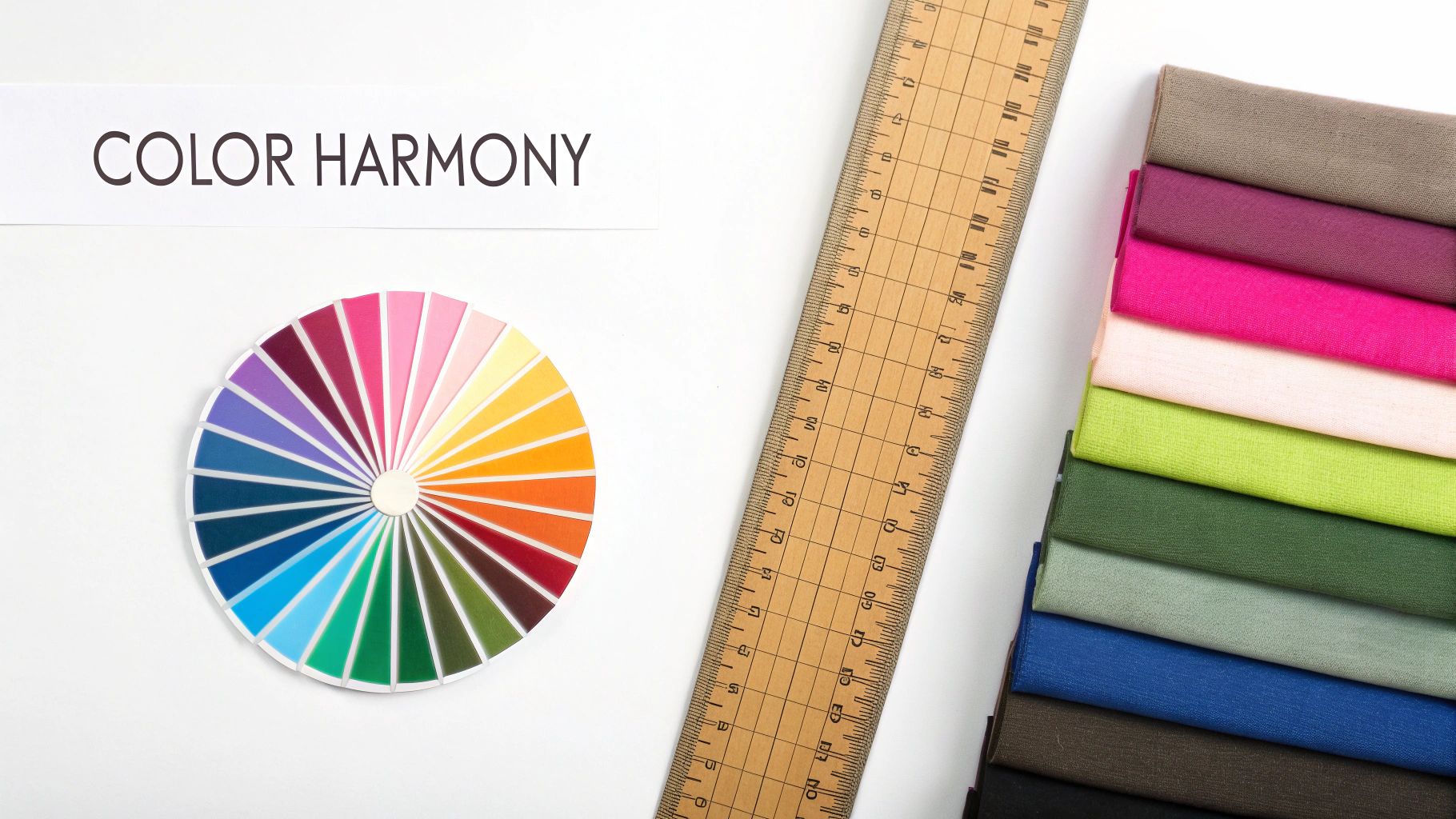
Think of yourself as a painter. Your bolts of fabric are your tubes of paint. The goal is to combine them in a way that creates harmony, sparks a little contrast, and just feels exciting to look at. It's really about creating a conversation between the different pieces of cloth you choose.
Mastering the Color Wheel
Remember that color wheel from elementary school art class? It’s about to become your best friend. You don't need a degree in color theory, but understanding a few basic relationships will give you a rock-solid foundation for picking fabrics.
Here are a few classic color combinations that are practically foolproof for quilts:
- Monochromatic: This is all about using different tints and shades of a single color. Picture a quilt made entirely of blues, from a pale, whisper-soft sky blue to a deep, dramatic navy. It’s an instant recipe for a calm, sophisticated look.
- Analogous: This approach uses colors that sit right next to each other on the color wheel—think yellow, yellow-green, and green. It naturally creates a peaceful and harmonious vibe.
- Complementary: If you want your quilt to shout from the rooftops, this is the way to go. Pick colors directly opposite each other on the wheel, like purple and yellow or a classic red and green. This pairing makes each color look brighter and more intense.
A fantastic starting point is to find one "hero" print that you absolutely adore. Then, simply pull the other colors for your quilt directly from that one piece of fabric. It’s a simple trick that guarantees all your fabrics will play nicely together.
Once you have a general idea of your palette, the real fun starts. The best way to know if something works is to see it in person. Lay your fabrics out, stand back, squint your eyes, and see how they feel next to each other.
Using Value to Create Depth and Contrast
Beyond color itself, the single most important element in your fabric pull is value. This is simply the lightness or darkness of a fabric. A quilt made with fabrics that are all the same value will look flat and muddy, no matter how beautiful the colors are. You need a good mix of lights, mediums, and darks to create depth and make your pattern pop.
Think about it like a black-and-white photo. A compelling photograph has brilliant whites, deep, rich blacks, and a whole range of grays in between. Your quilt needs that same dynamic contrast. A quick pro tip: arrange your chosen fabrics and snap a photo with your phone. Then, change the photo to black and white or monochrome. If everything blends into one big blob of gray, you know you need to bring in more light or dark fabrics to create separation.
For a masterclass in how value can create a showstopping effect, just look at the classic Carpenter Star quilt design. That entire pattern is built on the dramatic interplay between light and dark fabrics, which is what makes the star seem to radiate from the center.
Mixing Print Scales for Visual Interest
The final piece of the puzzle is the scale of your prints. Just like with value, you want a dynamic mix. Combining large, medium, and small-scale prints adds so much texture and energy, preventing your quilt top from looking static.
Try this simple formula for a balanced and beautiful result:
- Large-Scale Prints: These are your showstoppers. Think big, bold florals, eye-catching geometrics, or fun novelty prints. Let them shine in larger blocks or borders where the pattern has room to breathe.
- Medium-Scale Prints: These are your supporting actors. We're talking about your friendly polka dots, stripes, or smaller floral designs that complement the star prints without stealing the spotlight.
- Small-Scale Prints (Blenders): From a distance, these fabrics often read as a solid color, but up close, they add a wonderful, subtle texture. They’re perfect for filling in smaller pieces and giving the eye a place to rest.
Mixing up your scales keeps a quilt from feeling either too chaotic or too boring. It creates a rich, layered look that makes people want to lean in and see all the details. If you're hesitant to buy yards of fabric just to experiment, try grabbing one of Linda's curated fat quarter bundles. They’re a perfect, low-pressure way to play with coordinating colors and prints and build up your fabric-picking confidence.
Prewashing and Preparing Your Fabric for Success
Want to know the secret to a pucker-free, professional-looking quilt that lasts for years? It all comes down to proper preparation. Before you even think about making that first cut, you need to tackle a question that sparks endless debate in quilting circles: to prewash, or not to prewash?
Honestly, there's no single right answer. It really depends on your project, the fabric you've chosen, and frankly, your personal quilting style.
Think of fabric straight off the bolt as a blank canvas that’s a little stiff. This is from sizing agents added during manufacturing. Some quilters love this crispness, believing it helps them cut and piece more accurately. Others can't wait to wash it out, dealing with any potential issues before a single stitch is made.
The Great Prewashing Debate
Deciding whether to prewash your fabric for quilting is a foundational step. Let’s look at both sides of the argument so you can figure out what works best for your next masterpiece.
Team "Prewash" has some compelling reasons:
- Preventing Shrinkage: Most cotton fabrics will shrink up to 3-5% in their first wash. Prewashing means your finished quilt won’t pucker or distort down the road, protecting all your hard work.
- Removing Excess Dyes: Those gorgeous, highly saturated colors—especially reds and dark blues—can sometimes bleed. Prewashing with a color catcher sheet gets rid of any loose dye before it has a chance to stain the lighter fabrics in your quilt.
- Eliminating Chemicals: A quick wash removes any leftover chemicals or sizing from the factory, giving you a softer, more natural-feeling fabric right from the start.
But Team "No-Wash" makes a good case, too:
- Crispness for Cutting: That sizing on unwashed fabric gives it a firm, almost paper-like feel. This can make it much easier to get perfectly accurate cuts, which is a huge help for beginners.
- That Crinkly Look: This is a big one. When you wash the finished quilt instead of the fabric, you get that classic, slightly puckered "crinkle" that so many of us adore. It instantly gives a quilt that cozy, well-loved vintage vibe.
The most important rule of thumb is simply consistency. If you decide to prewash one fabric for your quilt top, you absolutely must prewash them all. Mixing washed and unwashed fabrics is a surefire recipe for uneven shrinkage and a wonky, distorted quilt.
Your Guide to Perfect Fabric Prep
If you land on Team "Prewash," doing it right is key to protecting your beautiful fabric.
Start by completely unfolding your cuts. You'll want to wash similar colors together on a gentle, cool cycle with a mild detergent. And always, always toss in a color catcher sheet just to be safe. It’s cheap insurance!
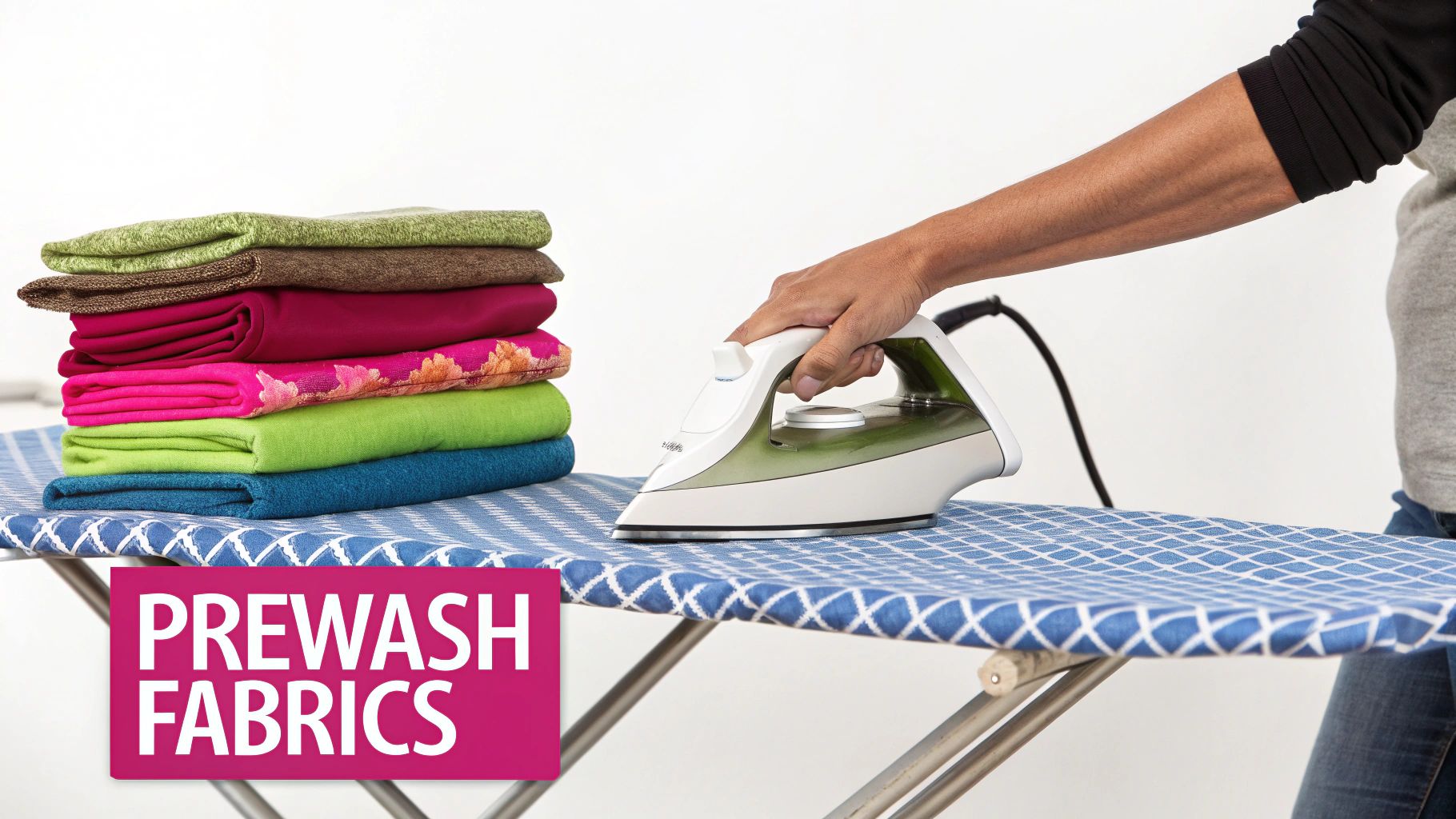
Once the wash is done, tumble dry on a low heat setting and try to pull the fabric out while it’s still just a little damp. This trick makes the next step—pressing—so much easier. Use a hot, dry iron to press the fabric until it's perfectly smooth and wrinkle-free.
Proper pressing is just as crucial as the wash itself; it resets the grain of the fabric, getting it ready for accurate cutting. Mastering this is a fundamental skill for any sewing project, not just quilting. While we're focused on quilts here, understanding general fabric preparation for sewing projects will make you a better stitcher all around.
After pressing, your fabric is prepped and ready for action. By the way, if you find your quilt layers tend to shift around on you during quilting, our guide on how to use a walking foot can be a total game-changer, helping all those perfectly prepped layers feed through your machine like a dream.
Calculating Yardage and Sourcing Your Fabric
We’ve all been there. That sinking feeling when you realize you’re just a few inches short of that perfect fabric to finish your project. It's a quilter's worst nightmare! Learning how to accurately calculate your fabric needs before you even make the first cut is one of the most practical skills you can master. It's the secret to a smooth, stress-free quilting journey.
Think of it like baking a cake from a recipe. You wouldn't just start dumping ingredients in a bowl without making sure you have enough flour and sugar, right? The same goes for quilting. A little bit of planning upfront prevents those frantic, last-minute trips to the store and ensures you have plenty of material for your quilt top, backing, and binding.
Estimating Your Fabric Needs
So, how much fabric do you actually need? The answer always comes back to your pattern and the final size of your quilt. While most patterns will give you a list of requirements, it's incredibly empowering to know how to figure this out on your own. Start by grabbing the finished dimensions you're aiming for—your quilt's length and width in inches.
Here are a couple of quick formulas to get you in the ballpark:
- For Backing: Take the length and width of your quilt top and add 8 inches to each measurement. This gives you a comfortable 4 inches of extra fabric on all four sides. Multiply the new length by the new width, then divide that number by 1,296 to get the square yards you need.
- For Binding: First, find the perimeter of your quilt (Length x 2 + Width x 2). Now, divide that number by 40 (which is the average usable width of a fabric strip). This tells you how many strips to cut. Multiply the number of strips by 2.5 inches (a very common binding width) to figure out the total yardage required.
If you want to dive deeper into the math with some super helpful charts, be sure to check out our complete guide on how to calculate fabric yardage. We break it all down into simple, easy-to-follow steps.
Sourcing Quality Fabric Online
Once you've got your numbers, the real fun begins: shopping! It's an amazing time to be a quilter. The craft has grown from a small hobby into a huge, vibrant community. In fact, annual revenues jumped from USD 1.8 billion back in 2000 to an estimated USD 4.2-4.5 billion between 2020-2025, thanks to so many new quilters joining the fun. You can discover more insights about the evolving quilting market to see just how much our world has expanded!
This incredible growth means we have access to a world of beautiful fabrics right at our fingertips. When you buy from a trusted shop like Linda's, you know you're getting top-notch material. As you browse online, always read the product descriptions carefully. They'll tell you the fabric type, width, and designer—all important clues about its quality.
Good online shops will have well-lit photos that show the fabric's true color and print scale. We always try to include a ruler in our product images to give you a clear sense of the print's size. It’s all about helping you buy with total confidence!
Whether you’re ordering several yards for a big quilt back or grabbing a curated fat quarter bundle to beef up your stash, getting your calculations right and buying from a reliable source are the keys to a successful project. That little bit of planning lets you relax and truly enjoy the creative process.
Common Quilting Fabric Questions Answered
Diving into the world of quilting fabrics can feel like learning a new language. You're not alone! Here are some of the most common questions we hear from quilters just like you, with straightforward answers to get you stitching with confidence.
Can I Use Regular Cotton Instead of Quilting Cotton?
We get this one a lot. While you could technically use any cotton, we really, really advise against it. Think of it this way: you wouldn't use all-purpose flour to make a delicate pastry, right?
Quilting cotton is engineered for the job. Its medium weight and tight, plain weave give it stability. This special construction means it won't stretch or warp when you're cutting and piecing, which is absolutely crucial for getting those points to match up perfectly. Other cottons, like a lightweight apparel lawn or a heavy canvas, will stretch, shrink, and behave unpredictably, leading to wonky blocks and a whole lot of frustration. Stick with the good stuff!
What Is the Difference Between Backing and Top Fabric?
The biggest difference here is usually the width. The beautiful quilt top you spent hours piecing together is made from standard-width fabrics, which are typically 42-44 inches wide.
When it comes to the back, you have two choices. You can either piece together more of that standard-width fabric (which means sewing a long seam down the middle), or you can grab an extra-wide backing fabric. These bolts are a whopping 108 inches wide, making them perfect for covering the entire back of most quilts in one smooth piece. Going with a wide-back fabric is a huge time-saver and gives your quilt a flawless, professional finish without a central seam.
How Do I Know if a Fabric's Color Will Bleed?
This is a quilter's worst nightmare! Those gorgeous, deeply saturated colors—rich reds, deep navies, and vibrant purples—are the usual suspects for bleeding dye.
The absolute best way to know for sure is to prewash your fabric. Toss a color catcher sheet in with it; it’s designed to trap any loose dye that comes out in the wash. If you're in a hurry, you can do a quick spot test.
Quick Bleed Test: Get a small corner of your fabric damp and press it against a clean white paper towel with a hot iron. If you see even a hint of color on that paper towel, you've got a bleeder. Definitely prewash it before letting it anywhere near your other fabrics!
Feeling more confident? Now you're ready to pick out the perfect fabrics for your next masterpiece. Find an incredible selection of high-quality quilting fabrics, essential notions, and all the tools you need right here at Linda's. Come explore our collection and get inspired today! Visit us at https://lindas.com.