
Hey everyone. Today you will learn how woven and nonwoven fusible interfacing differ — and how to choose for your next project.
Here is the short answer first. Woven fusible interfacing has interlaced threads and a grainline. Nonwoven fusible interfacing has bonded fibres rather than a woven structure. Either can be soft or firm. Some nonwovens feel papery; others stay soft and flexible. Neither type is automatically better for washing. Choose for the support you need, follow the product's care instructions, and test it on your fabric.
This is part of our Be the Best at Batting series, where the layer you cannot see decides how the finished piece feels.
Why the two families feel different
Look at how each one is built. That explains much of the hand.
A woven fusible has warp and weft threads crossing each other. Because of that, it has a lengthwise grain, and it can flex with your fabric. Fused to quilting cotton, a suitable woven can keep a cloth-like feel while adding body. The finished hand still depends on the fabric, interfacing weight, and adhesive.
A nonwoven is made from bonded fibres rather than woven warp and weft. Some can be cut in any direction. Others have directional stretch or reinforcement, so check the package before cutting. Depending on weight, a nonwoven can feel flatter and less cloth-like, and a hard fold may show more on some products than on a woven. Others stay soft. The name alone does not settle it.
Weight matters in both families. A heavy woven can be stiff, and a light nonwoven can be soft. Construction is the starting point, not the whole story.
How to choose, step by step
- Start with the support and the washing the project will actually get. Does it need crisp support, soft body, or just a little stability? Will it be washed weekly, gently now and then, or never? A washable project deserves a more careful test than a one-time craft.
- Do a first drape check in your hand. Drape a piece of each fusible over your fingers. Bend it. Roll it a little. Notice how each sample bends and falls. This is a first check, not a prediction of the finished result. Compare them again after fusing to your fabric.
- Prepare, then fuse a test square first. Prepare the fabric and interfacing as their makers direct, including any preshrinking. Then fuse a square, about 6 inches, to the actual fabric you will use, following that fusible maker's instructions for heat, time, and pressing motion. Let it cool completely. Then bend it, fold it, and handle it the way the finished project will be handled.
- Wash that fused test — within both products' care. If the project will be washed, first check that its planned care suits both the fabric and interfacing. Then wash and dry the fused test using that routine, within both products' care instructions. Look again. Has the hand changed? Is the bond still even? Did either layer pucker or feel stiffer?
- Match grain on a woven — unless told otherwise. For a woven, normally match the fabric's grain unless the pattern or interfacing maker specifies otherwise. A woven fusible cut off-grain can fight the fabric and twist the piece.
When it matters — and when it does not
For projects that bend and wash, test the support, flexibility, and care compatibility together. A woven or a nonwoven may work. Quilts, garments, and pouches that open and close daily flex their interfacing again and again, so the fused test — not the construction name — should make the call.
For a firm craft base, choose the stiffness the project needs rather than deciding from the construction name alone. A stable project that will not be laundered and does not need to drape may suit a nonwoven well, and a woven may suit it too. Completely up to you — options, not verdicts.
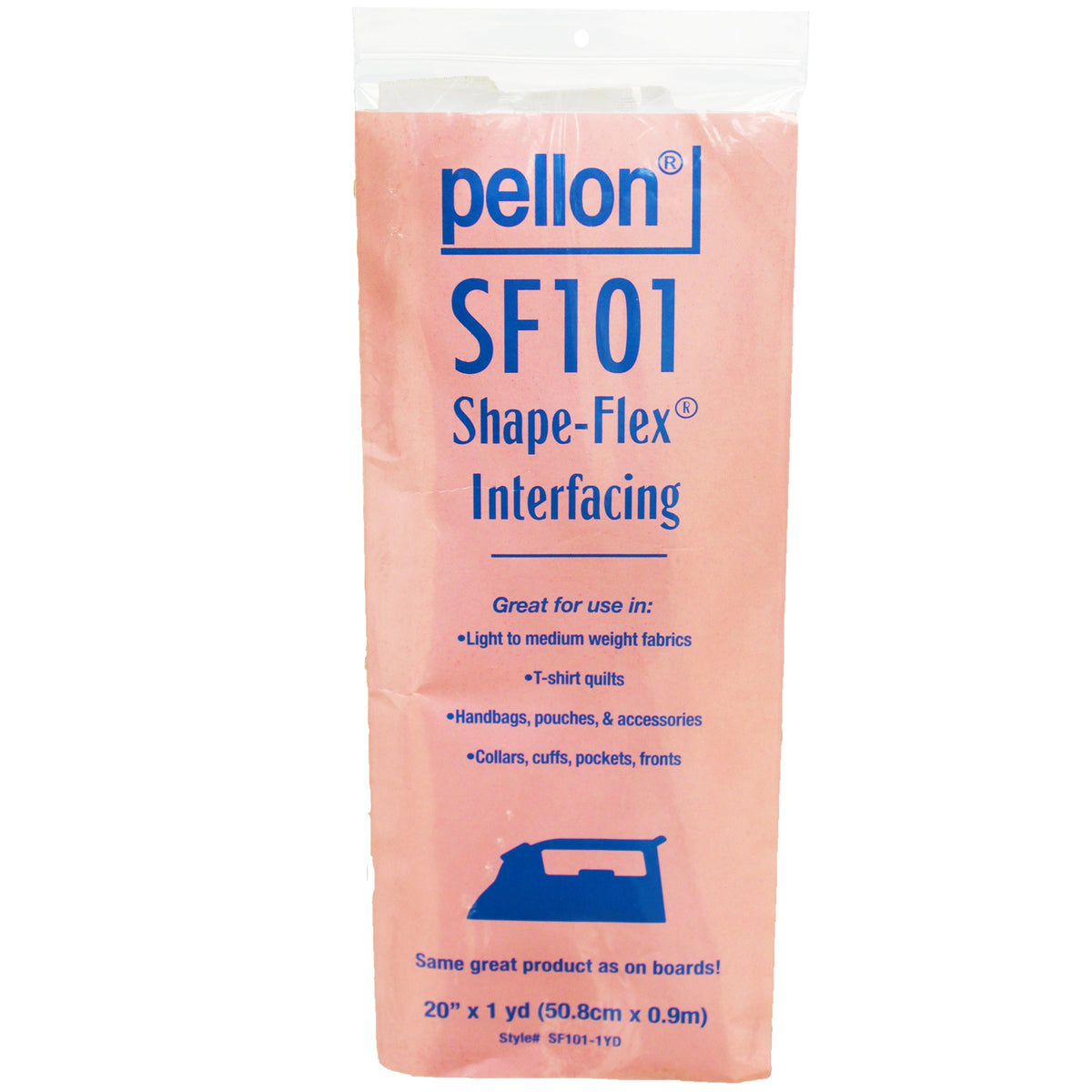
Pellon SF101 Shape-Flex is one woven cotton option to test when you want added body and crisp support. Let your fused sample decide whether it suits your project. That is the personal proof I trust here at Linda's: the test square on your own fabric, not the word on the bolt. If the test feels too soft, test up a weight. If it feels too firm, test down, or test the other family.
It does not have to be perfect. You are your own worst critic here. Take your time, test one square, and let that square tell the truth. If I can do this, y'all can do it.
Thanks for spending a little time with me. We'll see you next time. Bye.
Shop Pellon® SF101 Shape-Flex® Cotton Woven Fusible Interfacing 20" x 1 yard Package. Color: White. at Linda's Electric Quilters.


