
You can quilt with two thin batting layers, but they are not automatically easier to handle than one thicker batting. The fibers, construction, and finished stack all matter. Make a test sandwich before you choose. Compare how it feeds, bends, and feels after washing.
Hey everyone. Today you will learn why quilters layer two battings, what a layered stack can and cannot promise, and how to test it before you commit to a whole quilt.
This is part of our Be the Best at Batting series, where we look at the hidden layers that shape the projects you make.
Why the whole stack matters
Thickness alone does not tell you how batting will quilt. A lofty batting can be light and soft. A thinner batting can feel denser. Layering lets you combine the qualities of two battings. It does not guarantee easier feeding or softer drape. Compare the full sandwich with a single-batting sample before you commit.
Here is the catch with loft. Two batting layers do not guarantee twice the finished puff. Quilting and washing can change the result. Compare a quilted sample, not just the loft names on the packages.
That combining idea is the real reason to layer. One batting might bring the drape you like. Another might bring the body or warmth you want. Stacked, they share the job. Or they might fight each other. Only the test sandwich knows, and it will tell you honestly.
What to do about it
- Make a test sandwich first. Layer your top fabric, both battings, and your backing in a square about 12 inches across. Quilt it the way you plan to quilt the real piece. Wash it if the finished quilt will be washed. That square tells you the drape, puff, and hand.
- Check both quilting-distance limits. Follow the smaller maximum spacing allowed by the two manufacturers. If one allows 8 inches and the other allows 4 inches, keep your quilting lines no more than 4 inches apart. If a limit is missing, check with the manufacturer before quilting.
- Cut both full layers with a working allowance. For the full-quilt stack described here, let both battings extend beyond the quilt top on every side. Follow your quilting method or longarmer's allowance requirements. After quilting, square and trim the quilt for your binding method.
- Baste like you mean it. Two layers can creep against each other. Pin or spray baste the full stack smoothly, and check the back before you start. Work from the center out. Slow down here.
- Match the setup to your quilting method. For walking-foot quilting, test your walking foot and stitch length on the full sandwich. For free-motion quilting, use your machine's recommended setup. Adjust until the stitches look balanced on both sides.
- Mind the seam and binding bulk. Two layers add thickness at the edges. Your binding has to wrap that extra body. Test your binding width on the sample first.
When it matters / project notes
On a home machine, test how the whole sandwich fits and moves through the throat space. Two thin layers are not a guaranteed space-saving fix. Compare them with your single-batting option before you baste the full quilt.
It matters for mixed-fiber stacks too. A cotton layer and a wool layer, for example, bring different drape and wash behavior to the same quilt. Test first, because both fibers must agree with your washing plan.
One batting may still be the simpler choice. There is one less layer to position and baste. For hand quilting, test how easily your needle passes through the full sandwich. For bold puff, compare a high-loft single batting with a layered sample.
There is no prize for using two layers. Make the test square. If one batting gives you the feel you want, use one. Trust what your hands tell you.
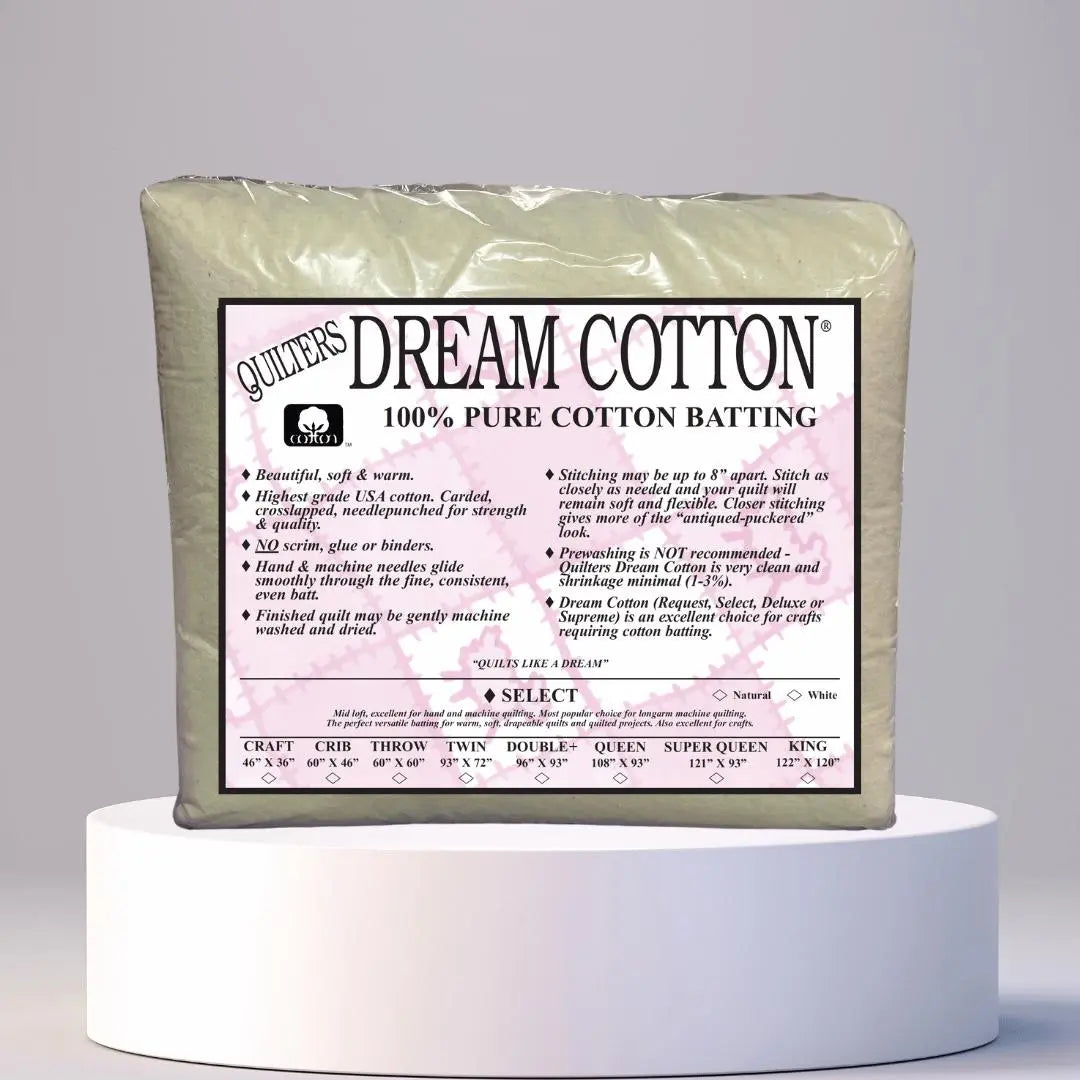
Quilters Dream Select Natural Cotton Batting Package is one cotton option to consider for a layered sample. Select is mid loft, not low loft. Check the instructions for both battings, then let your test sandwich guide the choice.
Thanks for spending a little time with me. We'll see you next time. Bye.
Shop Quilters Dream Select Natural Cotton Batting Package at Linda's Electric Quilters.


