
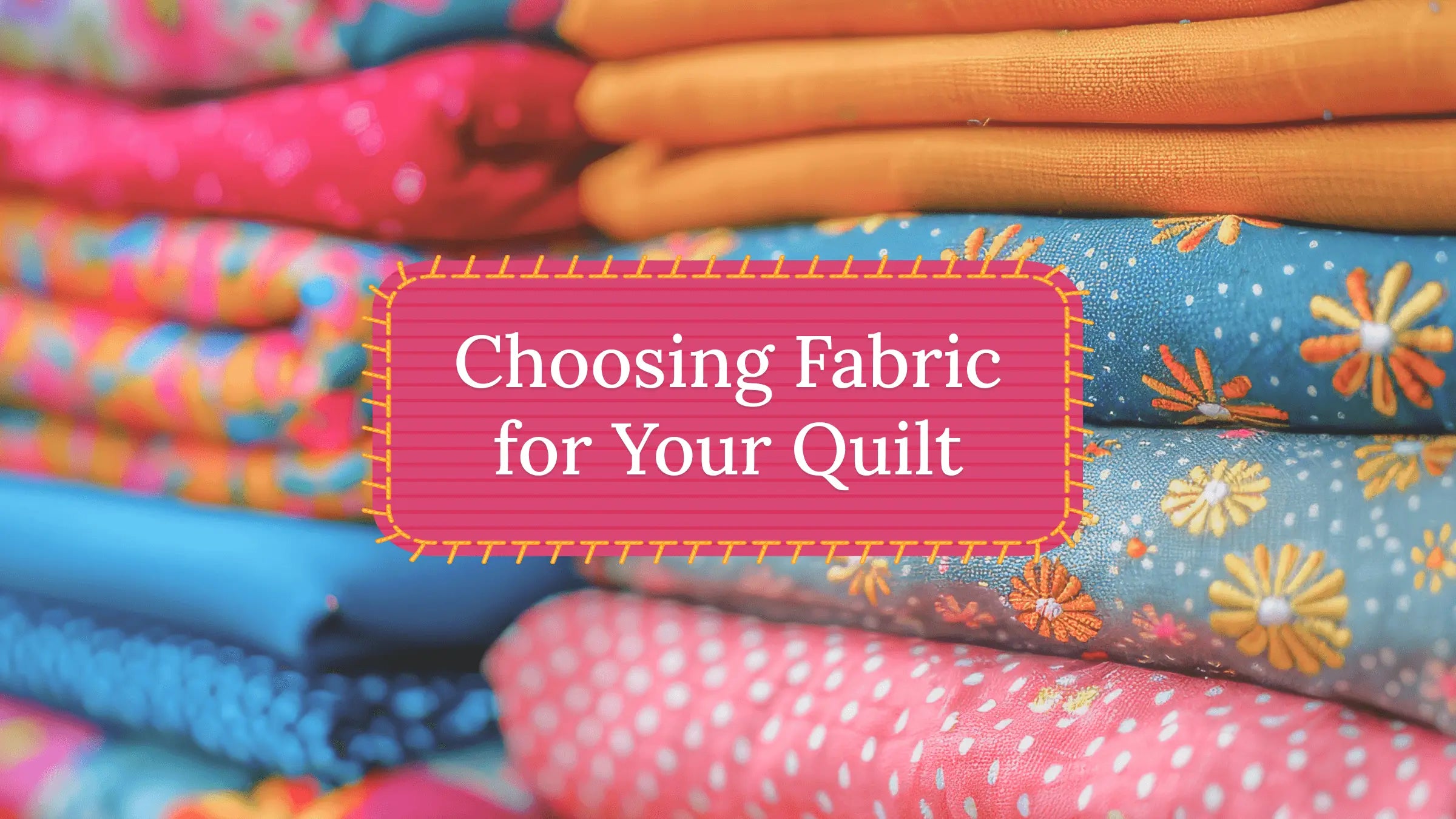
With all the available options out there, selecting quilt fabric should be the fun part.
However, it’s where confidence quietly slips away for some quilters. There are widths to calculate, cuts to decode, and backing choices that suddenly feel more permanent than they should. One wrong decision can mean extra seams and wasted yardage. Or perhaps a backing that fights you all the way through quilting.
Every option comes with its own rules. For example, pre-cuts promise speed but it has certain limits. Widebacks solve problems you didn’t know you had. Specialty fabrics feel luxurious but behave nothing like cotton.
This article breaks down those choices in plain language. As a long-time fabric supplier, we’ve seen how small missteps early on can create bigger problems later. By understanding fabric width, cut types, and backing requirements upfront, you can buy with confidence, not crossed fingers.

Start With Quilt Size and Fabric Width
Before you fall in love with a print, step back and ask this essential question: How big is my quilt going to be? Fabric width decisions should always start with finished quilt size.
Standard Fabric Widths vs. Widebacks
Most quilting cotton is manufactured at approximately 42″–44″ wide (usable width is often closer to 40″ after selvages). That’s perfect for quilt tops, piecing, borders, and smaller projects. But when it comes to backing anything larger than a throw, standard-width fabric usually means seams.
That’s where 108″ wideback fabric comes in. It’s designed specifically for quilt backing. At 108 inches wide, they can cover most quilts in a single piece and avoid seams that cross your backing. With fewer seams, you dodge bulk, speed up quilting, and skip alignment headaches.
If you’ve ever tried to press a long backing seam perfectly flat only to watch it twist during quilting, you already understand the appeal.
Why 108″ Backing Prevents Seams
A typical queen-size quilt (90″ x 100″) backed with standard-width fabric requires 2 to 3 full-width panels, depending on orientation and shrinkage allowance. That means long seams running across the back of your quilt, exactly where tension likes to show up during quilting.
With wideback fabric, most quilts can be backed with one continuous cut. This allows for cleaner finishes, easier longarm loading, and less fabric waste. It’s one of those upgrades quilters rarely regret once they try it.
If you’re quilting with longarm machinery, a wideback is your best friend for coverage and edge-to-edge stability. If you’re hand-quilting or using domestic machines, widebacks still offer a clean, durable foundation with fewer joins to manage.
Yardage Calculation Basics
Understanding yardage is essential to prevent overbuying or underbuying. Here’s a simple rule of thumb:
-
Measure your finished quilt’s back dimensions.
-
Add a 4 to 6 inch overshoot per side for trimming.
-
Plan for at least a 2–3 inch extra on each edge to account for wobble in the loading process.
Also, check your particular machine or frame guidance. Some longarm configurations have preferred backing widths.

Choosing Fabric by Cut Type
Once width is sorted, the next decision is how the fabric is cut. Yardage and pre-cuts each have their place. But they are not interchangeable. Buying yardage lets you control grain direction, print orientation, and piece size. It’s also the safest choice when your pattern isn’t pre-cut friendly or when you’re modifying a design.
Fabric by the Yard
The yardage approach is the baseline for most quilters because of its flexibility. For example, if you’re unsure about a print’s behavior when cut into strips or panels, starting with yardage can help you avoid “oops” moments.
Best uses
-
Quilt backing
-
Borders and sashing
-
Large blocks
-
Directional prints
-
Custom layouts
Fat Quarters & Bundles
Fat quarters are cut 18″ x 22″. This gives you more usable width than a straight quarter-yard cut.
When fat quarters make sense
-
Sampler quilts
-
Scrap-style designs
-
Patterns written specifically for fat quarters
Fat quarter bundles are also great when color coordination matters. Collections from established brands are curated to work together. This saves time and decision fatigue.
Pattern compatibility
If your design features blocks with multiple fabric options, fat quarters can help you achieve variety. Check your pattern’s fabric requirements. Many patterns specify the number of fat quarters needed per color family or the amount of yardage per block. Pre-cut bundles simplify planning, but always verify block layouts to avoid mismatches.
Jelly Rolls & Charm Packs
Pre-cuts like jelly rolls (2.5″ strips) and charm packs (5″ squares) are designed for speed and consistency.
Jelly rolls are ideal for:
-
Strip quilts
-
Log cabins
-
Rail fence patterns
Charm packs work best for:
-
Patchwork quilts
-
Simple block layouts
-
Coordinated scrappy looks
The tradeoff? They have limited size and flexibility. You can’t magically make a 2.5″ strip wider, and trimming often leads to waste. If your pattern requires large blocks or directional prints, pre-cuts may complicate alignment.

Choosing Fabric for Quilt Backing
Backing Fabric Requirements
Backings should be substantial enough to support the top’s weight and quilting method. For most standard quilts, a 100% cotton backing in a compatible weight works well, but you may choose blends or specialty fabrics for feel or drape. The key is to ensure the backing and top fabric weights are balanced enough that you don’t end up with a puckered or stretched quilt after washing. Pay attention since some fabrics shrink more than others. You’ll want to plan for a consistent final size after washing.
Directional Prints
If you want the pattern to read with the top’s flow, choose a backing that aligns with the finished quilt orientation. Keep a consistent grain direction during loading. That way, edges meet evenly and the quilt lies flat when completed. If you’re using a bold print, consider how it will appear when the quilt is viewed from the back and from the front.
Fabric Weight and Durability
Backing must be durable enough to tolerate quilting stitches and daily use. However, it should still be comfortable to handle when loading or loading onto a frame. Cotton might be the standard, but nylon blends or flannel backings (depending on climate and use) can offer warmth or softness. If you expect frequent washing, consider pre-shrinking the backing fabric before you assemble.

Specialty Fabrics (Cuddle Minky)
When Minky Is Appropriate
Specialty fabrics like Shannon Cuddle Minky add plush warmth and tactile appeal, especially for baby quilts, cozy throws, or gift projects. They’re wonderful when you want a soft, luxurious feel.
Stretch and Nap Considerations
Minky fabrics have a nap that runs in a particular direction. They stretch more than cotton during handling and quilting. When choosing a Minky back or top, plan for the nap so that the final quilt looks cohesive. Align nap direction with the quilt’s intended drape and the way you’ll handle the finished piece.
Quilting and Handling Challenges
Quilting through this fabric can be tricky since it shifts easily. So, use a walking foot, lower feed dogs, and generous pinning to keep everything square. Basting can also be more challenging. Consider spray baste or long basting methods to prevent shifting.
If this is your first time using this, use it only on the backing and keep the top cotton. That combination gives comfort without doubling the difficulty.
Fabric Brands Quilters Trust
Moda Fabrics
Moda is an industry standard for a reason. Quilters trust the brand for:
-
Reliable fabric width
-
Consistent color across bolts
-
High-quality cotton with predictable shrinkage
Moda collections are designed for mix-and-match success. This makes them especially popular for pre-cuts and coordinated projects.
Other Brands
While Moda is a trusted standard, the quilting world has many reputable brands with distinct strengths. Other top manufacturers include:
-
Riley Blake
-
FreeSpirit
-
Robert Kaufman
-
Art Gallery Fabrics
-
Windham
It’s common to mix brands to achieve particular weights, prints, or color interactions. The key is familiarity. When you know how a brand behaves (how it presses, shrinks, and quilts), you make better decisions.
Common Fabric Mistakes (and How to Avoid Them)
Even seasoned quilters slip up. Here are the mistakes we see most—and how to sidestep them.
Underbuying Backing
This one tops the list. Directional prints and longarm requirements all eat yardage faster than expected. Plan ahead and always buy extra backing.
Ignoring Shrinkage
Blended and specialty fabrics often behave differently in the wash. Pre-washing (or at least pre-soaking and drying on a gentle cycle) helps you anticipate the final size and prevents distortion after the first wash.
Mixing Incompatible Fabrics
Combining fabrics with different weights, fiber content, or care instructions can cause:
-
Puckering
-
Uneven hems
-
Misaligned seams
For a smoother project, pair top and backing fabrics with similar weights and fiber content. In short, mix fabrics intentionally.
Choosing Novelty Over Function
That cute novelty print might look perfect, until you realize it’s stiff or loosely woven. Durability, washability, and ease of use should guide your choices just as much as aesthetics. So, consider how prints will align across multiple blocks, borders, and the back.
Final Thoughts
Choosing the right fabric for a quilt is a balance of width, cut type, backing needs, and the intended final use.
The good news? Once you understand these basics, fabric shopping becomes satisfying. You stop guessing. You stop overbuying and underbuying. And your quilts behave the way you expect them to.
With these guidelines, every project starts with purposeful picks.
1 comment
Naomi Bonilla
I thoroughly enjoyed reading the fabric and pre cut tips and their use in quilting. I also appreciate the manufacturer fabric comparisons. Naturally my fabric choices come mostly from Moda and Robert Kaufman.