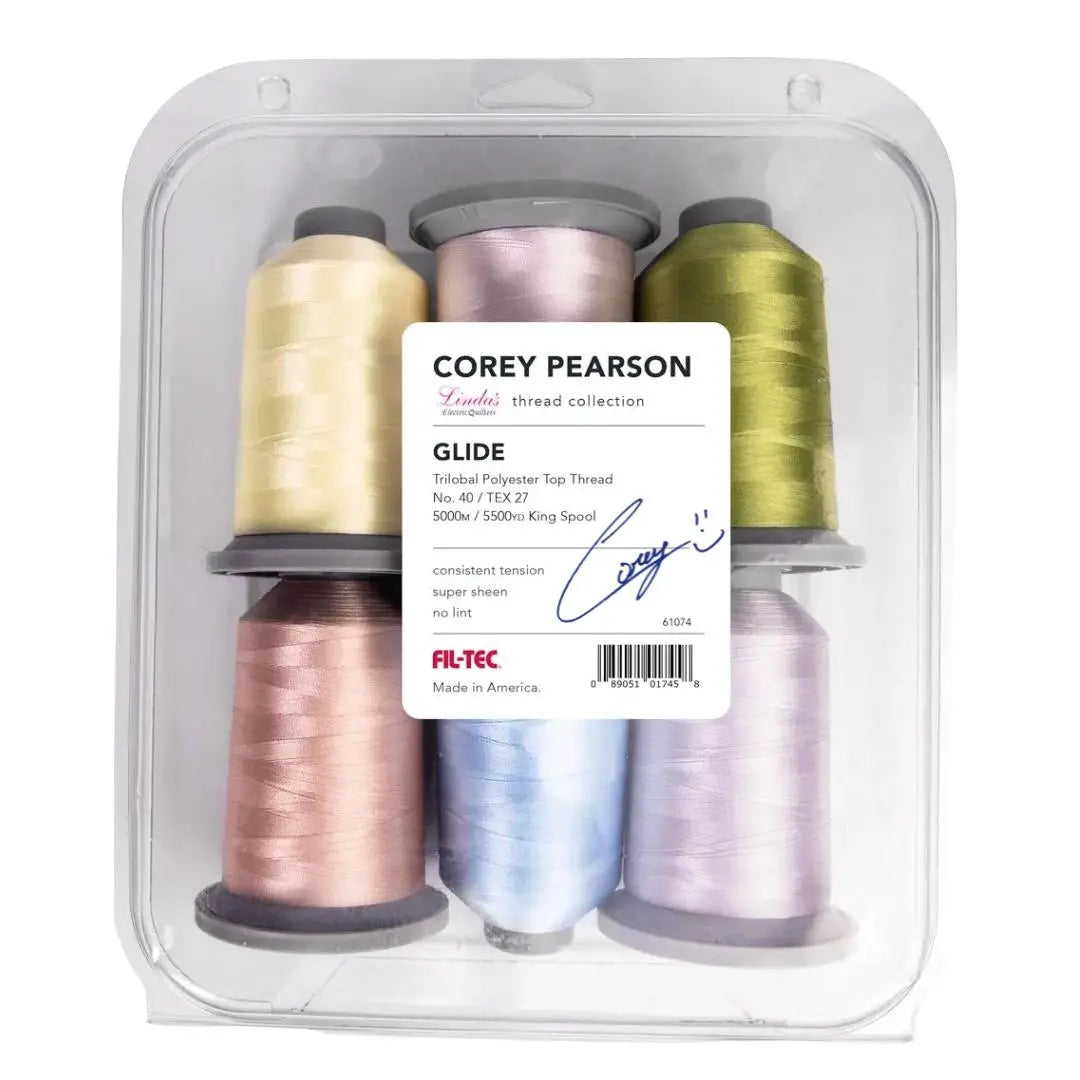
Quick answer: The best quilting thread for most sewing machines is a smooth, low-lint 50wt cotton or 40wt trilobal polyester — substantial enough for quilting, fine enough for clean stitches and easy tension. Match the fiber to the quilt: cotton for a traditional matte look, polyester like Glide for sheen and strength, and step up to cones if you quilt often.
If there’s one thing we see quilters hesitate over more than fabric, it’s thread. And honestly, that makes sense.
The options can be overwhelming. Thread labels are full of numbers, fibers, cone sizes, and brand names that all promise “perfect stitches.” Meanwhile, your machine just wants to sew without skipping, breaking, or throwing lint everywhere.
As a long-time quilting supplier, we see the same questions repeatedly. They usually come up when quilters move from spools to cones or from a domestic machine to a longarm.
Well actually, choosing the right quilting thread doesn’t have to be hard.
This practical guide draws from our years of experience as thread suppliers. We’ll show you how thread weight, fiber, cone size, and machine type actually affect your stitching. As you understand these fundamentals, you’ll get to save time and money. Best of all, you’ll achieve consistent stitching results.

Start With Thread Weight
Thread weight is the first decision that matters. It affects stitch visibility, tension, and how your quilt holds up over time. The number indicates thickness. Higher numbers mean finer thread. Most quilting happens with either 50wt or 40wt thread.
50wt Thread
A 50wt thread is thin and smooth. This versatile thread is usually the go-to choice for piecing. It creates clean defined stitches that don't overpower fabric patterns. Your patchwork lies flatter and your points line up better. Pressing also becomes much easier.
Many quilters use 50wt when they want the stitches to look low-profile. This is why it’s popular with cotton thread lines like the Aurifil quilting thread.
Best uses:
-
Piecing quilt tops
-
Subtle, blended quilting
-
Projects where seam accuracy matters
For quilting designs where you want texture without heavy visual impact, 50wt strikes the right balance.
40wt Thread
A 40wt thread is noticeably thicker. Quilters often choose it for top quilting when they want the stitch line to show. It gives definition to feathers and straight-line designs. This weight is ideal for art quilts and modern designs with bold lines. The quilting becomes a decorative feature. Not just a structural element.
Brands like Glide and Omni offer 40wt polyester options that run smoothly at higher speeds. This makes them especially popular for longarm quilting.
Best uses:
-
Decorative quilting
-
Emphasizing texture and pattern
-
Longarm quilting at speed
That said, 40wt isn't always appropriate for piecing. The added thickness can create bulk in seams, particularly in complex blocks. It also requires slightly different tension settings on most machines. You'll need to test before committing to a full project.
Understanding Thread Fiber Types
Weight tells you how thick the thread is. Fiber tells you how it performs under tension and how it wears over time. The two dominant fiber types in quilting are cotton and polyester. Each has distinct characteristics.
Cotton Thread
Cotton thread gives quilts that traditional finish. It has a soft hand and a matte look that blends beautifully with cotton fabrics.
The tradeoff? Lint. Cotton threads naturally shed, especially at high speeds or with dense quilting. While this may not be a flaw in itself, it does mean more frequent cleaning, particularly on longarm machines.
Cotton threads like Aurifil, King Tut, and Signature are favorites for quilters who value stitch definition and a natural finish.
Best uses:
-
Traditional quilts
-
Piecing and quilting with a softer look
-
Projects where fiber-to-fiber consistency matters
Cotton thread works best when the quilt will be used and washed regularly. The fiber breathes with the fabric and ages consistently. For heirloom projects where longevity matters, cotton has a proven track record.
Polyester Thread
Polyester thread is all about consistency and speed. Modern polyester threads are smooth, low-lint, and extremely durable. That’s why they dominate professional longarm quilting workflows. Threads like Glide and Omni are designed to handle fast stitching. The fiber is also more elastic and is less likely to break under the rapid needle movement of a longarm machine.
Polyester also holds color exceptionally well. It’s a strong choice for quilts that will be washed often.
Best uses:
-
Longarm quilting
-
High-speed stitching
-
Utility quilts and high-use projects
Keep in mind that polyester doesn't have the same soft, traditional appearance as cotton. It works well for modern, durable quilts. That said, some quilters still prefer cotton for traditional piecing.

Cone Thread vs Spools
Once you've settled on weight and fiber, the next question is how much thread to buy at once. This decision is usually determined by your machine type and how often you quilt.
Why Longarm Quilters Use Cones
Longarm machines consume thread quickly. A standard spool empties fast and interrupts your workflow. That’s where cones come in.
A typical 5,000-meter cone offers:
-
Fewer thread changes
-
More consistent tension
-
Lower cost per yard
Cones are also designed to feed smoothly at high speeds. This matters when your machine is running thousands of stitches per minute.
Storage Considerations
Cones do take up more space than spools. They need to be properly stored to prevent tangling and dust buildup. If you're quilting in a dedicated studio, this shouldn’t be a problem. If you're working in a shared space or quilting occasionally, smaller spools may be more practical.
For domestic quilters, standard spools are usually the better choice. They fit on most machine spindles without adapters. You can even test colors or weights without committing to large quantities. Once you've identified the threads you use most often, transitioning to cones makes better sense if your machine can accommodate them. Pairing cones with the right longarm tools makes setup easier and helps avoid feeding issues.
Choosing Thread by Machine Type
Not all thread works equally well on all machines. Understanding your machine's limitations will prevent tension problems and thread breaks that slow down your work.
Longarm Machines
Tension stability matters more on a longarm than on a domestic machine. The thread path is longer and the needle is moving faster. Any inconsistency in the thread itself will show up as irregular stitches or skipped tension adjustments. Cones allow for smoother thread delivery, eliminating the drag often caused by smaller spools.
Prewound bobbins are standard in longarm quilting. They're wound under controlled tension, which produces more consistent results than winding your own bobbins. They also hold more thread. So, you're not stopping to change bobbins as often. When you're working on a king-sized quilt, that difference adds up.
Domestic Machines
Domestic machines have smaller bobbin cases and less robust tension systems than longarms. Using a thread that's too thick or slippery may result in skipped stitches, loops on the back of the quilt, or outright thread breaks.
Most domestic machines handle 50wt thread without any problems. Moving to 40wt requires testing first. Some machines adjust easily, while others struggle with the added thickness. If your machine has tension problems with heavier thread, it's better to stick with what works. Don’t force a weight that isn't designed for your machine's capabilities.
Spool sizing also matters. Domestic machines typically use smaller spools. Trying to fit a large cone onto a standard spindle without the right adapter can cause uneven feeding. If you plan to use cones on a domestic machine, invest in a thread stand that positions it correctly relative to the machine.
An obvious advantage of domestic machines is that they're quieter and slower. This makes them ideal for precision work where stitch placement is critical. Thread choice should support that rather than fight against it.
Trusted Quilting Thread Brands
The brands you choose matter because consistency is built into how they manufacture thread. Here's what to know about the most reliable options:
Aurifil
Aurifil is a gold standard for cotton quilting thread. The brand offers hundreds of colors, which makes it easy to match or contrast with any fabric palette. It is especially popular in 50wt for quilters who want reliable seam quality.
That said, Aurifil's weight consistency is one of its main upsides. The thread behaves the same way from one spool to the next. You don't have to adjust tension mid-project. This makes a real difference for quilters who value predictability.
Glide
Glide is a trilobal polyester thread designed specifically for longarm quilting. It has a slight sheen and runs extremely smooth. Also, it performs well at high speeds. The triangular fiber cross-section reduces friction. Meanwhile, the thread doesn't stretch or fray as easily as cotton. It also generates minimal lint.
No wonder, it’s a favorite among professional quilters who need reliability over long sessions.
Omni
Omni is a versatile polyester thread with a smooth finish and strong performance across different machine types. It's slightly less expensive than Glide but still delivers consistent results. The color range is also extensive.
This brand works well on both longarm and domestic machines. It is, however, particularly popular with longarm quilters who want a polyester option with a soft finish.
King Tut & Signature
King Tut and Signature are both cotton threads that offer alternatives in weight, color range, and finish. King Tut is a long-staple Egyptian cotton with a matte finish and excellent color saturation. Signature is another high-quality option with a broad color palette and reliable performance.
Both threads are well-suited to quilters who prefer cotton's traditional look. They're available in both spools and cones. So they’re flexible for different machine setups.
Common Thread Mistakes (and How to Avoid Them)
Even experienced quilters make thread choices that complicate their work. Here are the most common mistakes we see, along with straightforward fixes:
Choosing weight blindly.
Buying thread without checking the weight leads to mismatched stitches and tension problems. Always check the weight, especially if you're switching brands or trying a new fiber. Thicker isn’t always better. So, match the weight to your purpose.
Ignoring machine limits.
Not all domestic machines can handle heavy threads or high-speed polyester. Test a small sample before committing to a full project. If your machine struggles, it's not worth pushing it.
Mixing incompatible bobbins.
Using a different thread weight or fiber in the bobbin than in the needle causes tension imbalances. If you're quilting with 50wt polyester on top, use 50wt polyester in the bobbin. Or a prewound bobbin designed for that weight. Top and bobbin threads should complement each other in fiber and weight.
Overbuying specialty threads. Metallic threads and heavy decorative threads have their place. However, they're not practical for everyday quilting. Buy them for specific projects rather than stocking them in bulk.
Conclusion
To be clear: there’s no such thing as a single “best” quilting thread. Ultimately, the right choice depends on your machine and your project. It also comes down to how you want the stitches to look and perform.
Start with weight. Consider fiber. Match your thread delivery to your machine. When those pieces align, quilting gets smoother, faster, and far more enjoyable. Don't hesitate to switch brands or weights when a project calls for it.
If you’re ready to explore options, take a look through our quilting thread categories and brand collections. We stock the threads professionals trust because we use them, too.