
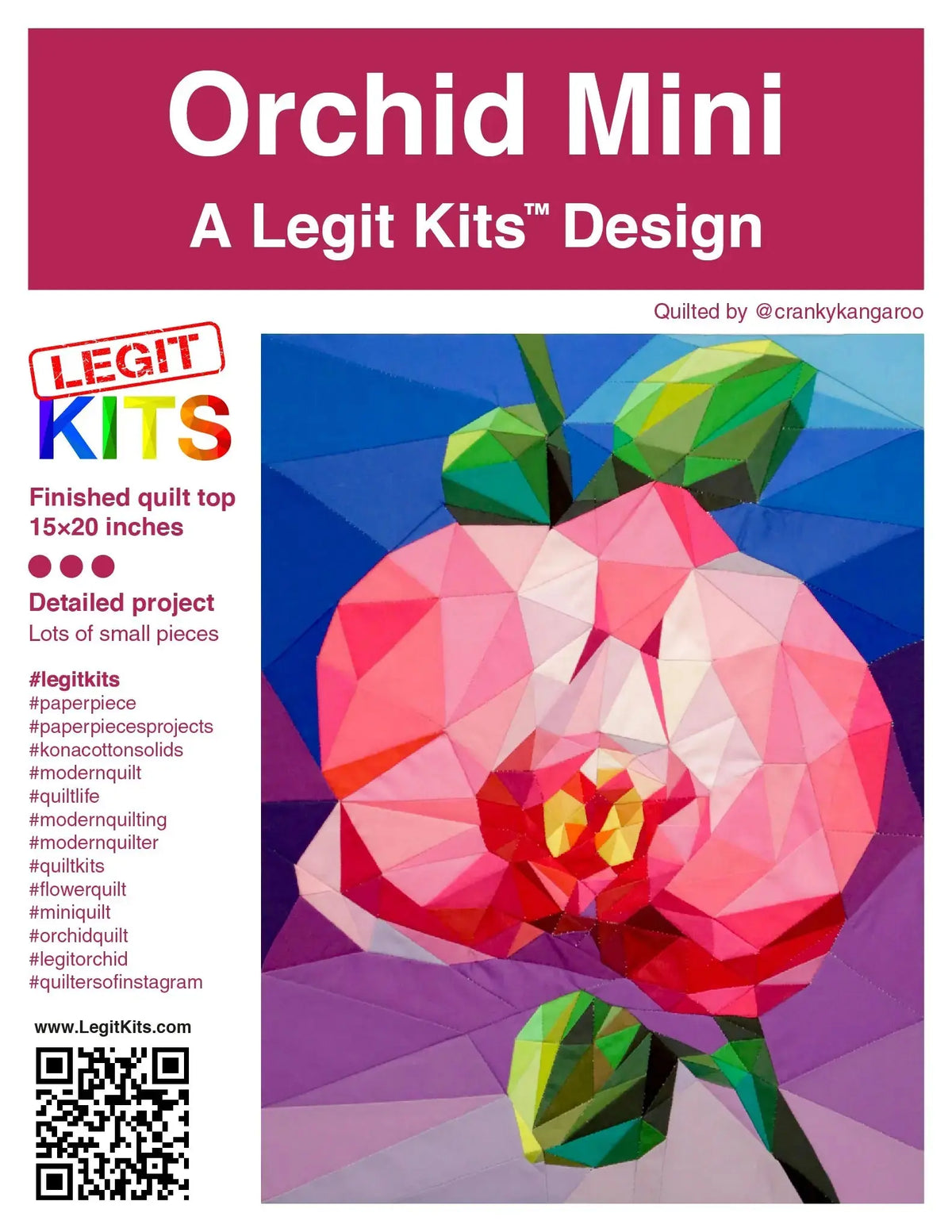
79 Shades, One Orchid: A Foundation Paper Piecing Guide to a 15 x 20 Mini Quilt
An orchid holds its color in gradients — a petal deep pink at the edge can soften to almost white at the center, with green tucked into stem and leaves. Capturing that shading in fabric takes more than a handful of pinks and greens. The Orchid Mini Quilt Kit from Legit Kits is built around exactly that challenge, using dozens of solid shades to build one lifelike flower with foundation paper piecing.
What This Kit Makes
The finished size is 15 inches by 20 inches — a true mini quilt. That portrait size is made to be displayed: think wall hanging for a sewing room or plant lover's corner. Do not let the small dimensions fool you into expecting a simple project — the detail is concentrated, every small piece does visible work, and the reward is a botanical portrait with the crisp edges only paper piecing delivers. Legit Kits describes it as a premium design with everything a foundation paper piece quilter wants.
What's Included
The headline number is 79. The kit contains 79 different shades of Robert Kaufman Kona Cotton Solids. That is an unusually deep palette for a 15 x 20 piece, and it is the whole point: with that many steps between light and dark values, petals and leaves shade gradually instead of jumping from one flat color to the next.
The kit also includes color maps. With this many similar shades — several pinks or greens may look nearly identical on the cutting table — a color map is essential. It shows which shade belongs where, so the gradient you planned is the gradient you sew.
A note on scope: the description lists the Kona solids and color maps, and does not list backing, batting, or binding as included. Plan to choose those separately once your top is complete — a mini needs only a small amount of each.
Skill Level: Who This Suits
This kit is aimed at the foundation paper piece quilter, and the number of shades and small units means the sewing itself — sew on the line, fold, trim, press, repeat — should already feel familiar. A confident beginner who has finished a small paper-pieced block will find it a satisfying step up in complexity without a step up in size. If you have never paper pieced, learn the technique on scrap fabric first.
How Long It Takes
Expect a multi-session project. The piece is small, but 79 shades mean many units to piece and join, so most makers will spread the work across several focused sittings rather than one afternoon. Accuracy in paper piecing comes from a steady pace, not speed.
Tips for Success
Organize before you sew. Sort and label every cut before you begin, and keep the color maps beside your machine for every unit. Re-label offcuts you reuse — guessing between two close pinks is where gradients go wrong.
Use a short stitch length. Shorter stitches perforate the foundation paper as you sew, so it tears away cleanly and seams stay secure.
Press and trim as you go. Kona solids press crisply — a real advantage here. Trim evenly and press each addition before the next, so small units stay flat and join accurately.
Check your values from a distance. Because the flower is built entirely from solids, its realism lives in value placement. Step back, or take a phone photo, to confirm the orchid reads as a flower before joining larger sections.
Keep foundations in place until units are complete. The paper is both guide and stabilizer; removing it early invites distortion in the small, precise areas this design depends on.
The result is a small quilt with gallery presence: one orchid, built shade by shade, with the precision that makes foundation paper piecing worth the effort.
Shop the Orchid Mini Quilt Kit at Linda's Electric Quilters.


