
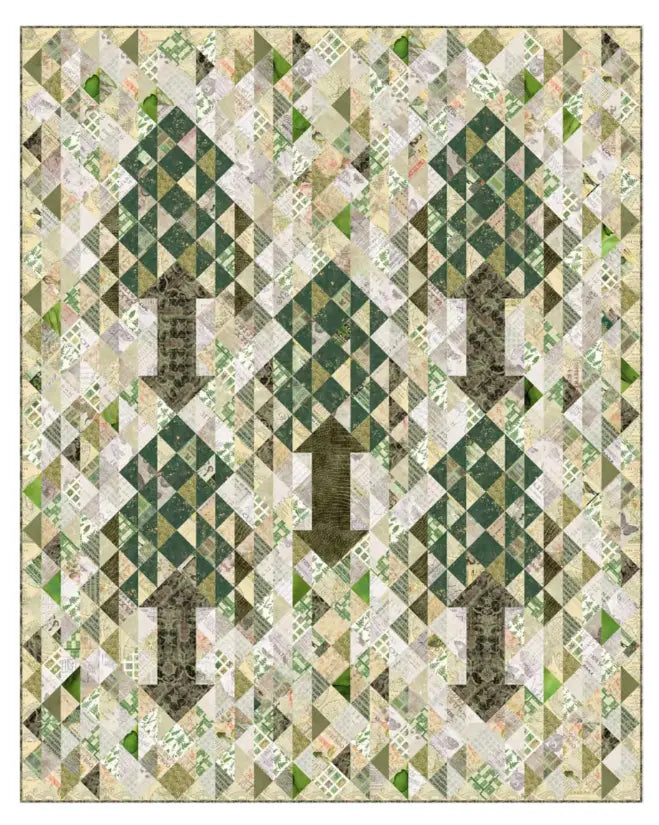
Some kits are chosen for speed, and some are chosen for mood. The Dappled Pines Kit in the Tim Holtz Green palette, from FreeSpirit, belongs to the second group: it gathers coordinating Tim Holtz fabrics for the Dappled Pines project, in a green palette the product description calls striking for art quilters and Tim Holtz fans. This guide explains what that palette does, what the kit promises, and how to plan the rest.
What This Kit Makes
The finished project is the Dappled Pines quilt, built from Tim Holtz fabrics in his Green palette for FreeSpirit. Tim Holtz designs have a layered, vintage, texture-rich look — prints that feel collected rather than bright and flat — and a single-color palette lets those textures do the talking. In green, that means a woodland, dappled-light mood: pines, shade, and depth created by value and print rather than by a rainbow of contrasting colors.
The product description does not state a finished size, so do not plan your batting, backing, or display space from a guess. Check the measurements given with the project materials when your kit arrives, and measure your finished top before you cut backing or batting. A palette like this suits a wall hanging or a throw equally well, because the impact comes from texture and contrast within the greens, not from scale.
What Is Included — and What to Plan For
What the description does promise is specific: this is a quilt kit that gathers coordinating Tim Holtz fabrics for the Dappled Pines project, in the Tim Holtz Green palette from FreeSpirit. That coordination is the real value. Tim Holtz prints vary widely in scale, motif, and value, and a kit saves you from hunting yardage that may not read as one family.
The description does not separately list a pattern, backing, binding, or batting. So inventory the package on arrival: confirm the fabrics, look for the Dappled Pines project instructions, and note what you still need. Read the project's requirements before cutting, and plan backing, batting, and binding from them — a deep, quiet green or textured neutral backing will support the palette without competing.
Skill Level and Time Commitment
No official skill level is stated for this kit. Its natural audience, per the description, is art quilters and Tim Holtz fans who enjoy print texture and value. A confident quilter who cuts accurately, keeps a consistent seam, and lays out a top before sewing will be comfortable here. Monochromatic quilts also reward patience: they show mismatched joins and careless pressing clearly, with no color change to hide them.
Work in stages rather than one long session: one sitting to inventory the kit and study the project instructions, one to cut and lay out the full top, one or more to piece it, and a final session to layer, quilt, and bind. The layout stage deserves extra time in a single-palette quilt — that is where the design succeeds or fails.
Tips for Success With a Single-Color Palette
Sort by value first, color second. In an all-green quilt, light, medium, and dark values create the dappled effect. Lay your fabrics out, squint or take a phone photo in black and white, and check that you have a real spread of values before you assign pieces.
Balance busy and quiet prints. Alternate dense, detailed prints with calmer textures so no corner feels heavier than another, and step back often.
Respect print direction and scale. Larger motifs may need to sit where they will not be cut into fragments. Test your cutting plan on the layout first, especially for any print with a clear direction.
Press and pin with care. Press as you go and pin at intersections. In a tonal quilt, clean geometry keeps the mood intentional rather than muddy.
Choose quilting that adds shade, not noise. Straight-line or gently organic quilting lines can deepen the woodland, dappled-light feeling without chopping across the prints. Test stitch length and thread color on a scrap sandwich first — a thread that vanishes on one green may stand out sharply on another.
Shop the Dappled Pines Kit-Green-Tim Holtz at Linda's Electric Quilters.


