
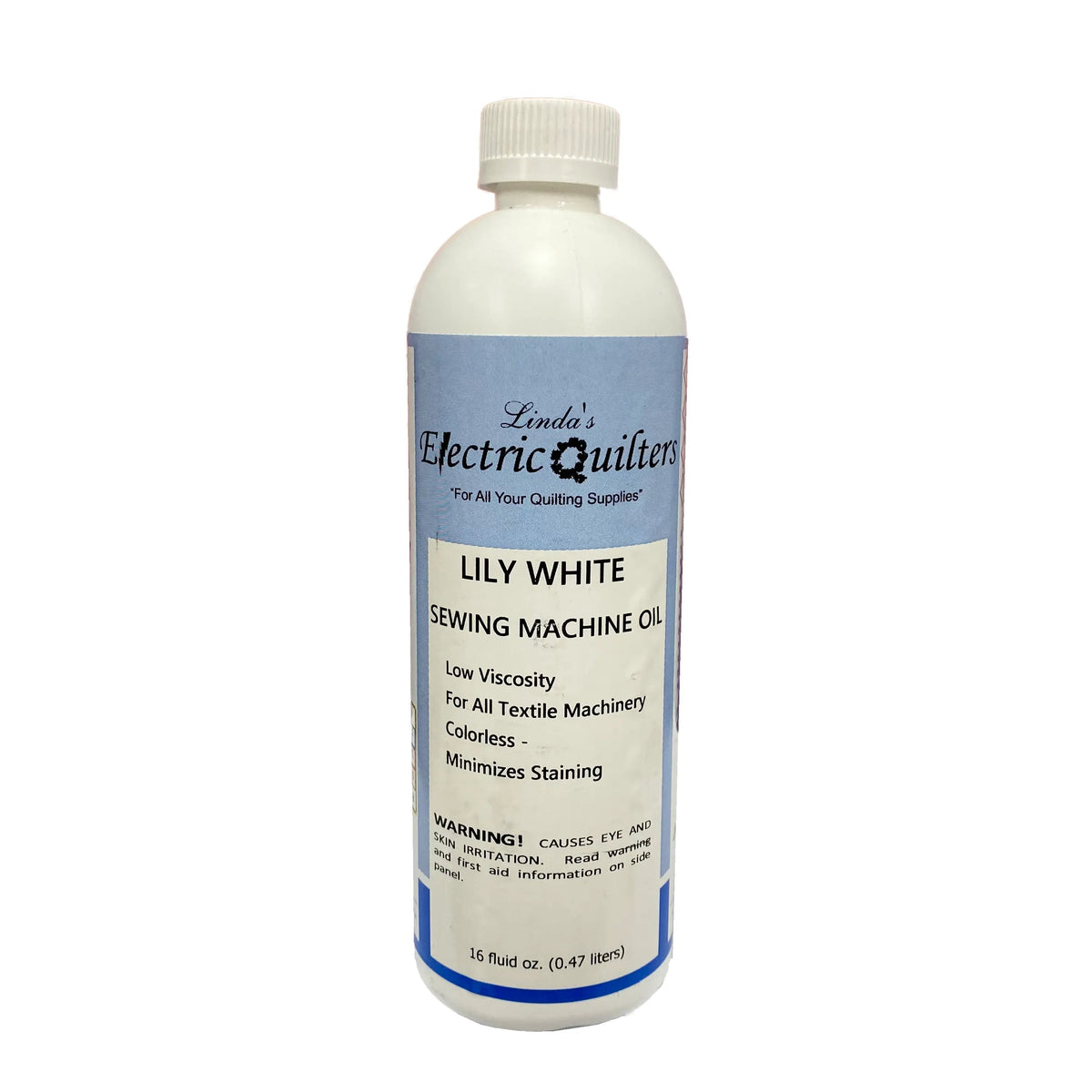
A Small Habit That Keeps Your Machine Running Smoothly
A quilting machine works hard. On a longarm, a single quilt can mean hours of continuous stitching at high speed, and a domestic machine piecing all weekend is doing the same steady, repetitive work. Metal parts moving against metal parts need lubrication, and that is exactly what machine oil is for. Oil for Quilting Machines is a clear machine oil made for longarm quilting machines and sewing machines that require oil, sold in a pint size so you can keep up with regular maintenance without constantly reordering.
What This Oil Is
This is Lily White sewing machine oil, a clear and colorless oil for machines that require oiling. It comes in a 16 fluid ounce bottle — one full pint. That larger size makes sense for quilters who oil frequently, especially longarm owners whose machines are oiled as part of their regular routine. A pint gives you a long-lasting supply in the sewing room, ready whenever your machine is due.
Because the oil is clear and colorless, you can see where it goes, and oil wiped from the machine shows at a glance whether it comes off clean or picks up lint — a useful clue about cleanliness inside.
Why Quilters and Sewists Use It
Regular oiling reduces friction between moving metal parts, helping a machine run more smoothly and quietly and reducing wear over time. A machine starved of oil may sound harsher, feel less smooth, and place extra strain on its parts. For longarm quilters, whose machines stitch for long stretches across large quilts, oiling is part of protecting a significant investment. For domestic machine owners, it is one of the simplest maintenance steps you can do at home to keep stitching consistent between services.
How to Use It: Step by Step
- Check your manual first. Only oil a machine that requires oil, and only at the oil points your manufacturer specifies. Machines differ, so follow your own machine's guide rather than guessing.
- Clean before you oil. Remove lint and thread scraps from around the bobbin area and other accessible parts first. Oiling over built-up lint just turns it into a paste, so a quick clean lets the oil do its job properly.
- Apply sparingly. A small drop at each specified point is the principle to follow — oil should coat the moving parts, not flood them. Add it slowly and give it a moment to settle.
- Run the machine gently. After oiling, run the machine briefly without fabric, or turn the handwheel as your manual directs, to distribute the oil across the moving parts.
- Wipe away any excess. Blot any oil on surfaces where fabric will pass, then stitch on a scrap first. That test run catches excess oil before it can reach your quilt.
Practical Tips
Make oiling a routine rather than a reaction — tie it to starting a new quilt on the frame, changing the needle, or cleaning the bobbin area. Keep a scrap piece near the machine for post-oiling stitch-outs. If your machine has sat unused for a long time, check its oil points before a big project.
Care and Storage
Store the bottle upright with the cap closed, in a cool spot away from fabric, so a knock or drip cannot reach a quilt top. Keep it with your other maintenance supplies — brushes, spare needles, and manual — so everything is in one place. Wipe the bottle neck clean after use so dust and lint do not build up around the opening. Keep it out of reach of children, and do not oil a machine whose manual says it does not require oiling.
Project Ideas It Supports
This pint belongs beside every kind of machine quilting: loading a large quilt on a longarm frame for an all-over design, pantograph or custom quilting that keeps the machine running for hours, and piecing and quilting on a domestic machine. None of those projects goes well on a dry, neglected machine — a regular drop of oil is what quietly makes them all possible.
Shop the Oil for Quilting Machines at Linda's Electric Quilters.


