
Why Pressing Makes or Breaks a Quilt
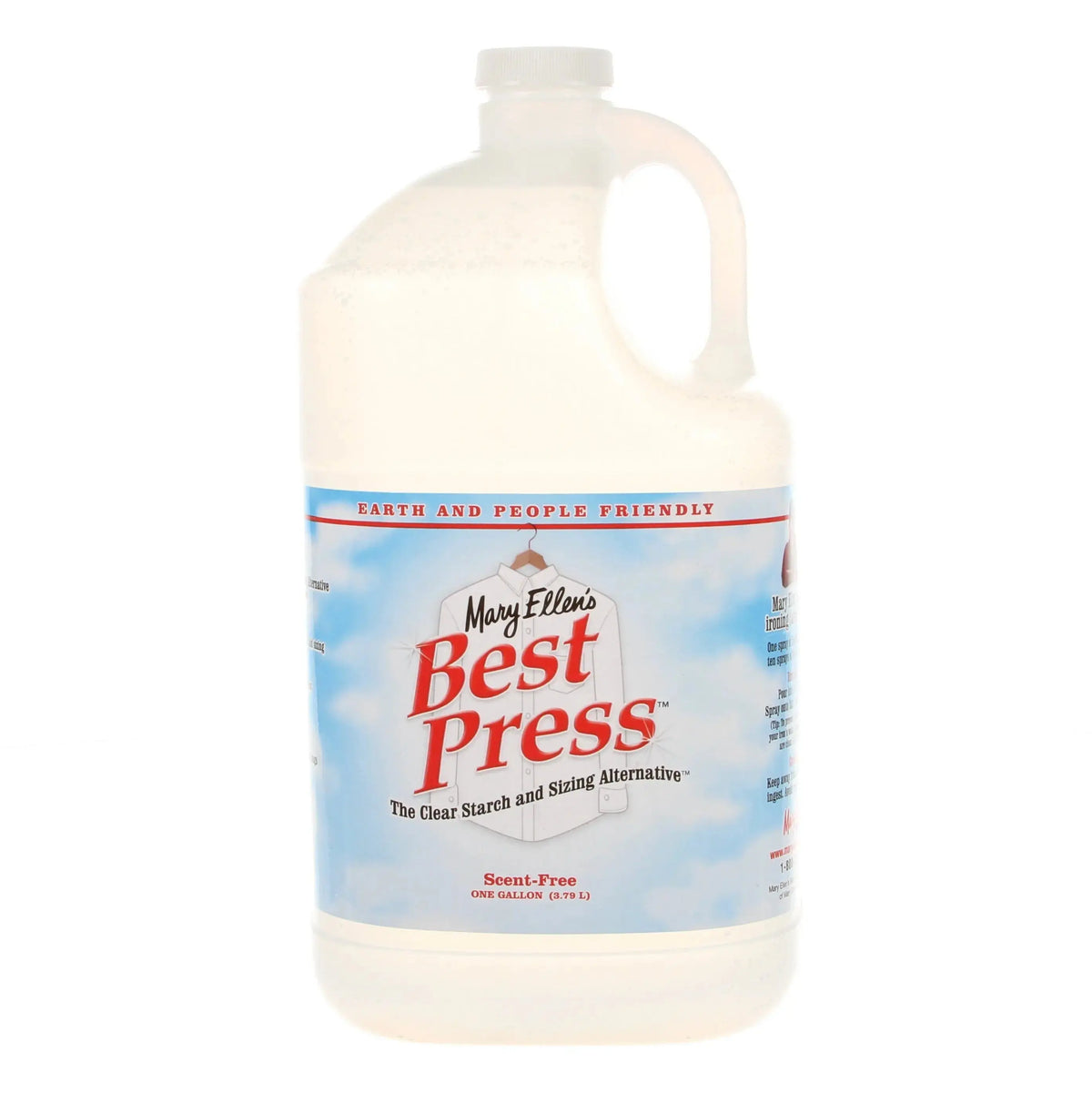
You can cut accurately and sew a careful quarter-inch seam, and still end up with wavy blocks if the fabric was wrinkled or shifting while you worked. Pressing is not just a finishing step — it shapes every block as you build it. Best Press Spray Starch Scent Free Gallon Refill Size gives quilters a crisper, more stable press without the problems many people associate with ordinary spray starch, and this gallon size is made for refilling the spray bottle at your ironing station.
What Best Press Is
Best Press is a starch and sizing alternative, and it has been a best seller for years. Unlike ordinary spray starch, it is made to avoid flaking, clogging, and white residue on dark fabrics. A special stain shield helps protect fabrics, and the product helps resist wrinkles, so fabric stays smoother between pressing and sewing. This version is scent free — a good choice if you prefer no added fragrance in your sewing room. It comes in a 1 gallon plastic bottle for use as an ironing spray refill.
Why Quilters and Sewists Use It
Quilters reach for a pressing spray when fabric is limp, wrinkled from the bolt or from storage, or too soft to cut and piece cleanly. A light application before cutting can help fabric feel more stable under a ruler and rotary cutter. During piecing, pressing with support helps blocks lie flat, seam allowances stay put, and intersections match more easily. Because Best Press leaves no white residue on dark fabrics, it is especially reassuring on deep navies, blacks, and rich batiks where ordinary starch can leave visible flakes. Sewists use it the same way when pressing garment pieces and hems that need a clean edge.
How to Use Best Press
- Refill your spray bottle. Use the gallon bottle to refill it, then replace the cap on the gallon so it stays clean for next time.
- Test first. On a scrap of the same fabric, spray lightly and press to see how that fabric responds.
- Spray lightly and evenly. Mist the surface from a short distance. You want even coverage, not a soaking.
- Let it settle. Give the spray a few seconds to absorb before pressing.
- Press, don't slide. Set the iron down, press, then lift and move. Sliding can stretch damp fabric and distort the grain, especially on bias edges.
- Press at each stage. Press yardage before cutting, press seams as your pattern directs, and give finished blocks a final press before joining.
Practical Tips
- Start light on dark fabrics. Even though Best Press is made to leave no white residue, a scrap test builds confidence before you press a finished top.
- Don't over-stiffen. If fabric feels too firm for a project that should drape, use a lighter mist next time. You want control, not cardboard.
- Keep the gallon as back stock. The refill size makes sense if you press often — you are less likely to run out while prepping a large quilt.
Care and Storage
Store the gallon bottle upright with the cap closed, away from your iron's heat. Keep your filled spray bottle at the ironing station so pressing becomes part of your routine. Wipe up any overspray from your ironing surface so the next fabric you lay down stays clean.
Project Ideas
Reach for Best Press when prepping fat quarters and yardage for a pieced quilt, pressing appliqué shapes before stitching, or flattening finished blocks before assembly. It is also useful for pressing quilt backings, crisping binding strips, and refreshing table runners and placemats. For garment sewing, use it on seams, hems, and collars where a clean edge makes the whole piece look more finished.
Shop the Best Press Spray Starch Scent Free Gallon Refill Size at Linda's Electric Quilters.


