
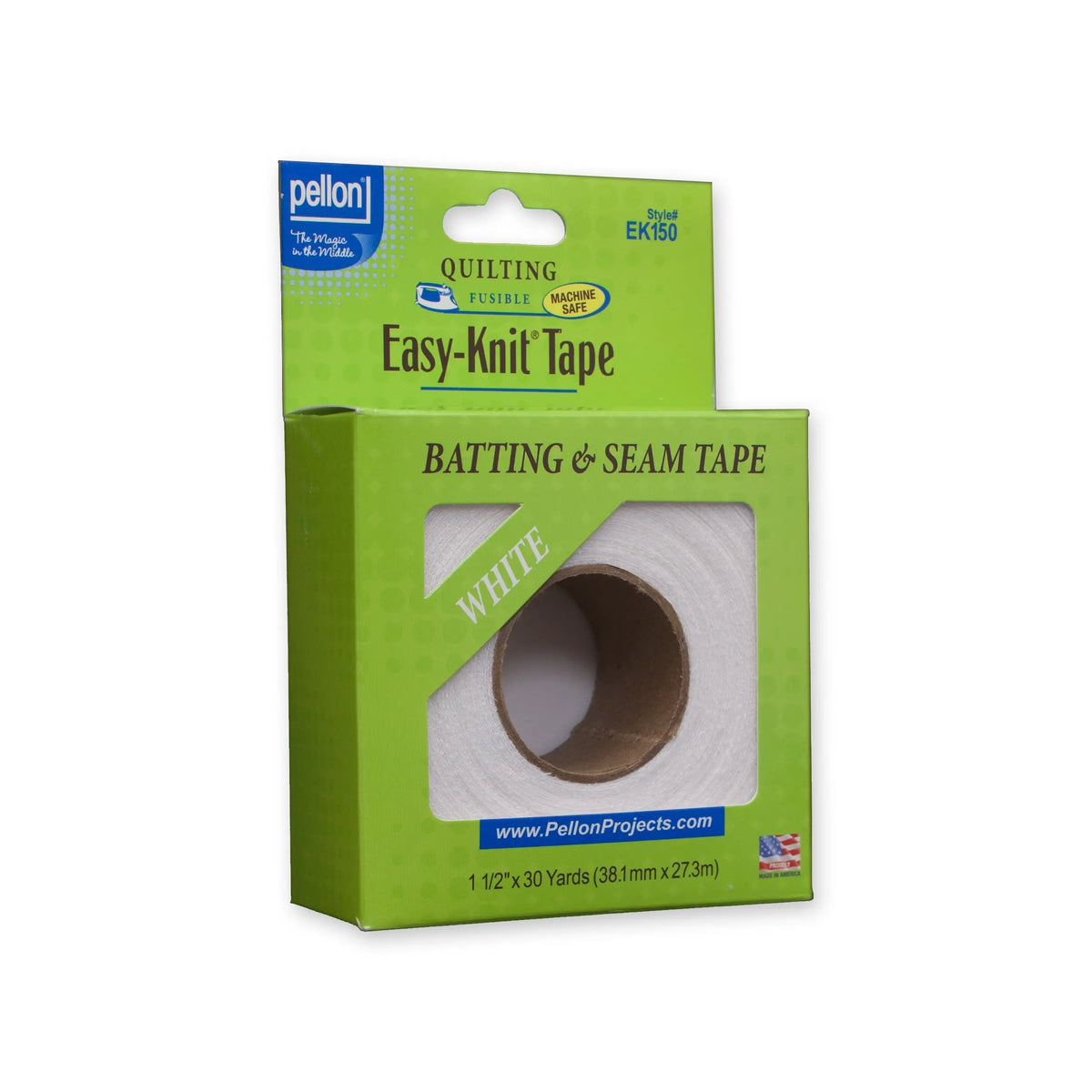
Zero-Waste Batting and Softer Seams: What Fusible Knit Tape Actually Does
Every quilter has batting scraps too big to throw away and too small to use — and every garment sewer knows a seam that scratches all day in wear. Pellon® Easy-Knit® Fusible Tape was made for both problems. This narrow, one-sided fusible tape, sold as product EK150, stabilizes seams, softens rough edges, and joins leftover batting into a usable sheet, without sewing a joining seam first.
The package is a 1.5-inch by 30-yard tape in white, made from 100% polyester. Because it comes pre-cut to a tape width on a long roll, there is nothing to measure and trim to width — you simply cut the length you need, fuse it in place, and move on.
Joining Batting Scraps: The Best-Known Use
Batting is too good — and too costly — to waste, and this tape is a favorite way to rescue offcuts. Butt two straight edges of leftover batting together so they meet without overlapping, lay a length of tape centered over the join, and fuse it in place. The tape bridges the seam and holds the pieces together as one sheet you can layer into a quilt sandwich.
Two details matter. First, butt the edges rather than overlapping them: an overlap creates a ridge that can show through your quilt top. Second, cut clean, straight edges on both scraps first — a wavy edge leaves gaps the tape must span. Joined this way, scrap batting works beautifully for smaller quilts, runners, placemats, and practice sandwiches.
Stabilizing Seams and Softening Scratchy Edges
The tape's other stated jobs are in garment and general sewing. Fused along a seam area, it helps stabilize that seam — giving a narrow strip of support exactly where stitching will run, rather than interfacing an entire pattern piece. That targeted support is useful where you want the seam line steadier without changing how the rest of the fabric behaves.
It can also be used to soften the rough edges of scratchy fabrics. If a seam allowance or edge feels harsh where it will sit against skin, a fused strip of tape over that edge puts a smooth layer between the rough fabric and the wearer. Instead of abandoning an otherwise lovely fabric because it feels uncomfortable at one edge, you fix just the spot that causes the problem.
How to Fuse It
Because this is a one-sided fusible, placement matters: the adhesive side goes against the wrong side of your fabric — or centered over your batting join — and you press from the other side with a hot iron to bond it. Work on a firm, flat pressing surface, press rather than sliding the iron back and forth, and let the fused area cool flat before moving the piece, so the bond sets undisturbed.
Always test first on a scrap of your project fabric or batting. Fuse a short length, let it cool completely, then check that it is holding securely and that the fabric still looks and feels the way you want. That quick test tells you far more than guessing, especially on a fabric you have not fused to before.
Tips and Care
Keep the roll in a dry place with your interfacings so the tape stays smooth and ready to cut. Label the roll with its width — at 1.5 inches it is easy to confuse with other tapes at a glance. Save even short leftover lengths; a few inches is enough to tame a single scratchy seam edge. Once the tape is fused into a project, follow the care instructions for your fabric and batting, since those materials govern how the finished piece should be washed and dried.
If you quilt often, sew garments from fabrics that need a little help at the seams, or simply hate throwing good batting away, a roll of Easy-Knit® Fusible Tape earns its shelf space quickly.
Shop the Pellon® Easy-Knit® Fusible Tape 1.5" x 30 yds Tape Package. Color: White. at Linda's Electric Quilters.


