
Backing a Quilt Without Piecing Seams: Using a 108-Inch Wideback
Every quilter knows the moment: the top is finished, pressed, and looking beautiful — and then comes the backing. With standard 44/45-inch quilting cotton, backing a bed-size quilt usually means piecing two or three lengths of fabric together, matching seams, and hoping everything stays straight on the frame or under the needle. A wideback fabric removes most of that work in one step, and the Dainty Daisy Waterfall Cotton Wideback from Riley Blake Designs is a lovely example of why so many quilters keep a wideback in their stash.
What This Fabric Is
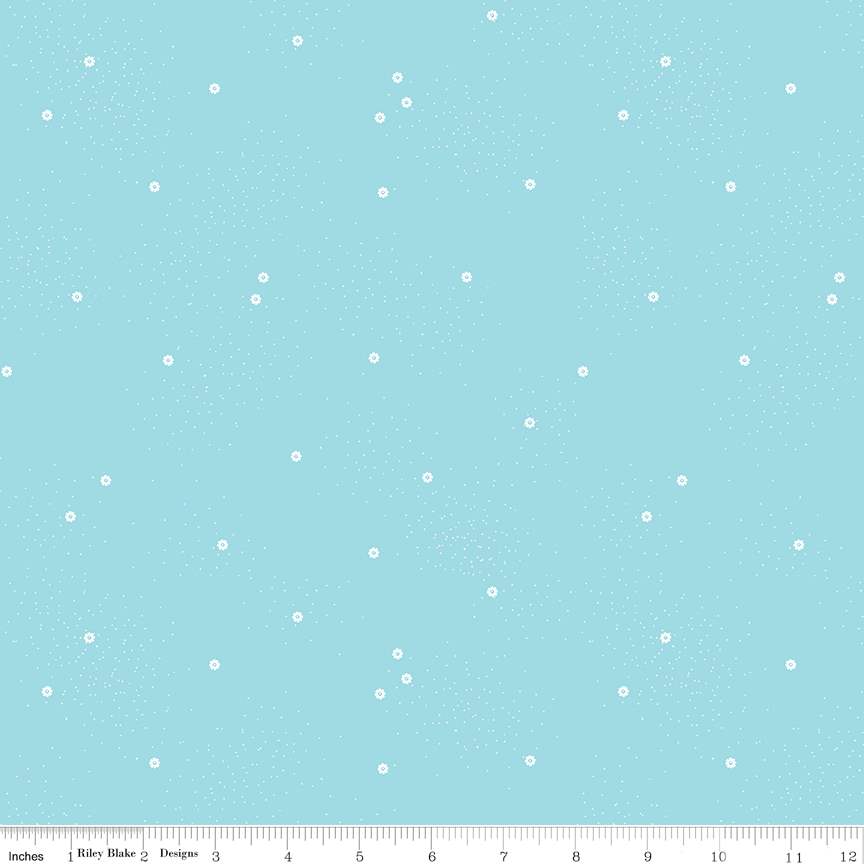
This is a Riley Blake Designs Basic designed by Beverly McCullough for the Dainty Daisy collection. It is 100% cotton and measures a generous 107/108 inches wide — wide enough to accommodate most quilt backs in a single, seamless piece. The print is sweet and subtle: small daisies scattered over a background of pin dots, in the soft blue Waterfall colorway. Because the scale is small and the design is an all-over basic rather than a large feature print, it works quietly behind almost any quilt top without competing for attention.
Why Choose a Wideback for Your Backing?
The biggest advantage is simple math. If your quilt top is narrower than about 100 inches once you allow a few inches of extra backing on each side for quilting, one width of this fabric covers it — no piecing, no center seam, and no seam ridge for a longarm quilter to work around. That saves fabric, saves time, and gives you a smooth, even surface that bastes and quilts more easily. Widebacks are also economical: one yard of 108-inch fabric gives you the coverage of roughly two and a half yards of standard-width cotton.
How to Use It
Measure your finished quilt top, then add at least 4 inches to each side (8 inches total to both the width and the length) if the quilt will be longarm quilted, or 2 to 3 inches per side for home quilting. Cut your wideback to that size with a rotary cutter and a long ruler, squaring one edge first so the backing hangs straight. The pin-dot background is forgiving — because the daisy print is small and multidirectional in feel, you do not need to worry about fussy directional placement the way you would with a large one-way print.
Press the fabric well before layering. Wide fabric can hold creases from the bolt, and a few minutes with a steam iron now prevents puckers later. When you layer your quilt sandwich, smooth the backing from the center outward and keep the grain straight; the extra width means fewer chances for the backing to shift off-grain compared with a pieced back.
Color Pairing and Other Projects
Waterfall is a gentle blue that pairs beautifully with white, cream, soft gray, and pastel quilt tops, and it makes a calm partner for brighter Dainty Daisy prints and other Beverly McCullough collections. The same qualities that make it a great backing — soft hand, cheerful small-scale print, extra width — also suit it to other projects: a whole-cloth throw, duvet covers, curtains, tablecloths for wide tables, and apparel pieces that benefit from generous width. Leftover cuts make charming binding, sashing, or a scrappy border on a coordinating project.
Care
Care follows the instructions given for this fabric: machine wash cold and tumble dry low. Washing before use is a personal choice for backings, but if you plan to wash the finished quilt, pre-washing the backing the same way you will wash the quilt helps everything shrink and settle together.
If you are tired of piecing quilt backs, a wideback like this one is one of the easiest upgrades you can make to your process — one cut, one layer, and you are ready to quilt.
Shop the Dainty Daisy Waterfall Cotton Wideback Fabric per yard at Linda's Electric Quilters.


