
BOM Quilting Made Simple: How to Use Lori Holt's Sew Simple Shapes for a Jane Austen Block of the Month
A block-of-the-month (BOM) quilt is a wonderful way to build a large, intricate project in manageable monthly steps — and the right cutting templates can make every step easier. Lori Holt of Bee in my Bonnet designed the Jane Austen Sew Simple Shapes specifically for the Jane Austen 250th Anniversary Block of the Month quilt, a celebration of the beloved author's 250th anniversary year. Here is how to get the most out of them.
What Sew Simple Shapes Are
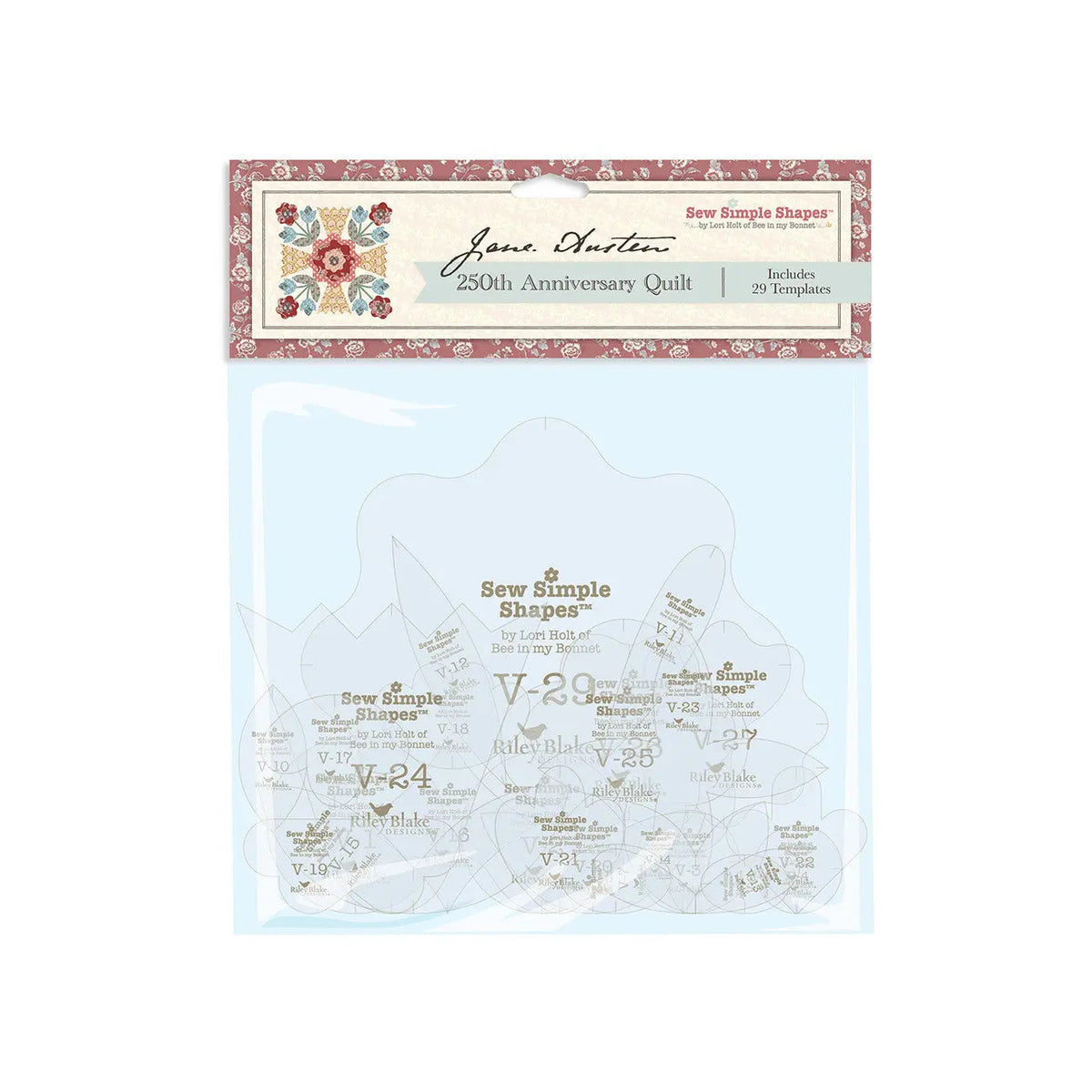
The Jane Austen Sew Simple Shapes are a set of 29 quilting templates designed by Lori Holt for Riley Blake Designs. Rather than cardboard or paper, they are cut from sturdy template plastic — which means they are see-through, long-lasting, and reusable across every block in the BOM and beyond.
Two details make them especially useful for BOM work:
- See-through plastic for fussy cutting. Because you can see the fabric through the template, you can position it precisely over a motif — a floral sprig, a stripe, a phrase in a novelty print — before you cut. Fussy cutting is what gives sampler-style BOM blocks their deliberate, composed look.
- Center marks. Each template carries center marks so you can align it with fabric motifs or with the center of a cut piece, which matters when you are building symmetrical blocks or centering designs.
How to Use Them in Your BOM Blocks
1. Plan your fussy cuts first. Before cutting, lay the templates on your fabric and audition placements through the see-through plastic. Decide which motifs you want centered in each block shape, then mark and cut. A few extra minutes at this stage transforms how finished your blocks look.
2. Trace, then cut. Hold the template firmly and trace around it with a fine mechanical pencil or fabric-marking pen. Because the plastic is sturdy, you can trace the same shape dozens of times without the edges wearing down — exactly what a BOM with repeated shapes demands.
3. Use the center marks to align. When piecing blocks that radiate from a center, line up the template's center mark with the center of your fabric motif or piece. This keeps symmetrical blocks truly symmetrical, block after block, month after month.
4. Cut confidently for consistent pieces. One of the quiet challenges of a BOM is consistency: the block you make in month seven needs to fit with the block from month two. A rigid template set gives you identical shapes every time, so your seam allowances and finished block sizes stay true across the whole quilt.
Why Plastic Templates Beat Paper for a BOM
Paper patterns work, but over a months-long project they soften, tear, and drift off size. Sturdy template plastic holds its edge through hundreds of tracings. If you have ever fought a wobbly paper template or a stretched photocopy, you will appreciate the difference the first time you trace the same hexagon three dozen times and every copy matches.
Beyond the Jane Austen BOM
Although the set was designed for the Jane Austen 250th Anniversary quilt, 29 well-drafted basic shapes are a sewing room staple. Use them for appliqué, English paper piecing prep, foundation patterns, or any project that needs reliable, repeatable cutting shapes. They also pair beautifully with Lori Holt's other Bee in my Bonnet rulers and tools if you already sew with her system.
Care Tips
Store the templates flat or hung so they do not warp — never fold them or tuck them under heavy fabric bolts. Wipe them with a dry cloth if markings build up, and keep them away from high heat such as a hot iron face, which can soften template plastic. With basic care, a set like this will serve many quilts.
If you are joining the Jane Austen BOM, remember that Riley Blake Designs supports the block of the month with videos on their YouTube channel — helpful alongside your template work if you want a visual walkthrough of the blocks.
Shop the Lori Holt Jane Austen BOM Sew Simple Shapes at Linda's Electric Quilters.


