
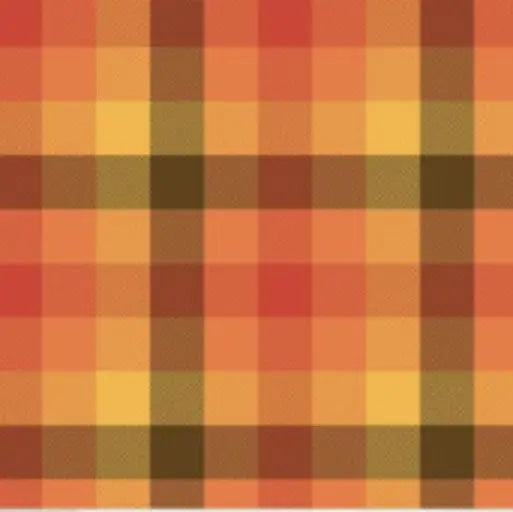
How to Back a Fall Quilt Seam-Free: Orange Gingham Wideback from Fall's in Town
A quilt back should support the top, not compete with the work of piecing it. The Orange Wideback Fall's in Town Checked Multi Fabric from Riley Blake Designs gives you a warm, seasonal finish in a single wide piece. Designed by Sandy Gervais as part of the Fall's in Town collection, this cotton print features a 5/8-inch gingham checked plaid with tiny diagonal lines. At 107/108 inches wide, it is made to accommodate most quilt backs without piecing standard-width fabric together.
What This Wideback Fabric Is
This is a 100 percent cotton wideback fabric, sold per yard, made by Riley Blake Designs. The product description says Fall's in Town is great for quilting, apparel and home decor, and this checked print shows why. Gingham is a familiar, orderly pattern: the even checks give a quilt a clean, finished reverse side, while the tiny diagonal detail inside the plaid keeps it from feeling flat. In orange and multi fall tones, it echoes pumpkins, turning leaves, and harvest stitching without needing a large-scale novelty print.
Because the checks are 5/8 inch, they are large enough to see clearly on a finished back, but small enough to work behind busy fall tops made from smaller prints, strips, or patchwork blocks. The pattern is also forgiving. A regular grid helps you spot whether your backing is straight when you baste or load it, and it hides everyday use better than a solid light fabric would.
Why Choose a Wideback for a Quilt Back?
Standard quilting cotton is usually about 44/45 inches wide, so backing a throw, twin, or queen quilt normally means seaming two or three lengths together. That center seam takes time, adds bulk, and can shift under quilting. A 107/108-inch wideback changes the math. For most quilts, one width covers the top plus the extra allowance your quilting method requires, so you can cut one panel to length, square it, and move straight to layering.
Measure your finished top first, then add the overhang recommended for your method — hand or machine quilting at home usually needs a few extra inches on each side, and longarm quilting often needs more. Buy that length by the yard, press the wideback well, and check that the gingham rows run straight before you cut. If the checks look slightly off-grain, straighten one edge, align a check line with your ruler, and trim carefully rather than forcing the fabric.
Pairing It With Fall Quilt Tops
This orange check pairs naturally with cream, warm brown, deep green, mustard, and other autumn solids and small prints from a fall collection. Use it behind pumpkin, leaf, acorn, or harvest-themed tops when you want the back to feel seasonal even when the quilt is folded. It also works in reverse thinking: choose it first as a cheerful backing, then pull binding colors from the check — a solid brown or deep orange binding frames the gingham neatly without another pattern competing at the edge.
Beyond quilt backs, the same wide cotton can serve home decor projects where extra width helps, such as tablecloths, duvet covers, or large cushion backs, and apparel projects that suit quilting cotton. Cut pattern pieces with the check direction in mind so the grid sits straight across the finished item.
Care and Finishing
The washing instructions for this fabric are simple: machine wash cold and tumble dry low. Wash it the same way you plan to wash the finished quilt, and press after drying so the backing lies flat for layering. Once quilted and bound, that gingham back will be the side that gets seen every time the quilt is draped over a chair — a small, warm reminder that the back deserved a plan, too.
Shop the Orange Wideback Fall's in Town Checked Multi Fabric Per Yard at Linda's Electric Quilters.


