
How to Use a Tone-on-Tone Damask with Let's Wander First Catch in Sage
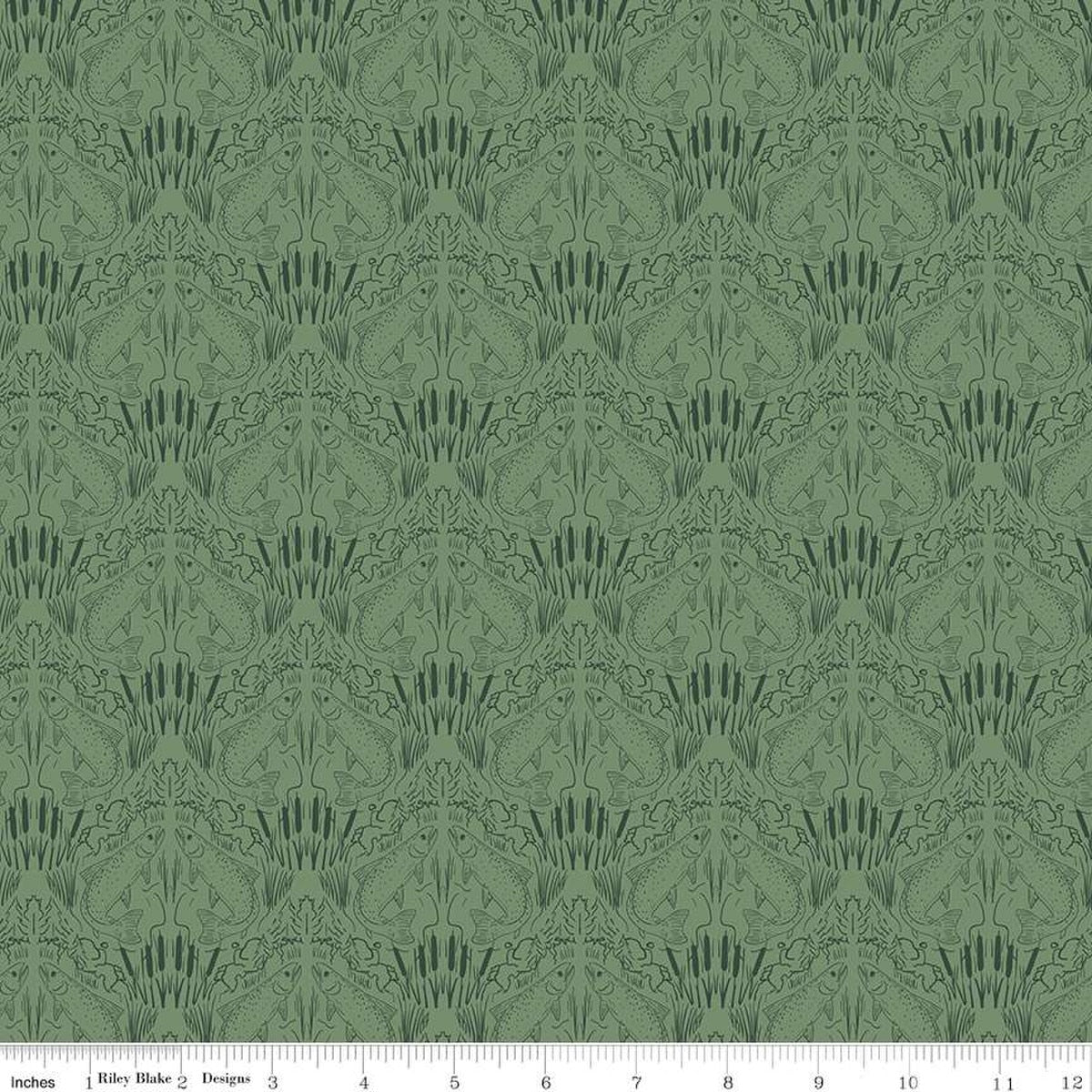
Some prints shout. Others reward a second look. Let's Wander First Catch in Sage, designed by Casey Cometti for Riley Blake Designs, is firmly in the second group: a tone-on-tone damask pattern with fish and foliage worked into the design. From a distance it reads as a soft, textured sage green. Up close, the fish and foliage appear. Here is what this fabric is, what it does best, and how to use that quiet detail to your advantage.
What This Fabric Is
First Catch Sage is a 100 percent cotton fabric, 43/44 inches wide, sold by the yard. It belongs to the Let's Wander collection by Casey Cometti for Riley Blake Designs, a collection the product description recommends for quilting, apparel, and home decor. The print itself is a damask — an ornamental, repeating pattern — rendered tone-on-tone in sage, with fish and foliage motifs woven through it.
That combination matters. Damask patterns traditionally bring a formal, textured feel, while fish and foliage ground this one in the outdoors. The result is a fabric that works as both a themed print and a near-solid blender, depending on how close your viewer stands. Care follows the listing: machine wash cold and tumble dry low.
Why Tone-on-Tone Prints Are So Useful
A tone-on-tone print does the job of a solid while adding depth a flat solid cannot. In a quilt top, large areas of plain color can look flat next to busier prints. Sage First Catch fills those same areas with subtle movement: the damask repeat catches the light differently across the surface, and the fish and foliage give the eye something to discover.
Use it anywhere you would normally reach for a solid sage — backgrounds, sashing, borders, and setting triangles — when you want the calm of a solid with a little more life. In a Let's Wander quilt, it is an ideal supporting print: it echoes the collection's outdoor theme without competing with a main print's larger wildlife and foliage scenes.
Cutting and Piecing Tips
Because the design is tone-on-tone and repeating, you do not need to fussy cut it — the motifs are meant to flow across seams rather than sit centered in a single block. Cut it as you would a blender, and let pieces join without worrying about matching the damask at every seam.
Do pay attention to direction if it matters to your layout. Damask and foliage designs often have an up and a down, so check the fabric before cutting long borders or backing pieces and keep your cuts oriented the same way. For piecing, this fabric pairs beautifully with small, simple patchwork: it gives busy blocks a quiet place to rest, and a whole background of First Catch makes brighter feature prints look richer by contrast.
Color Pairing and Project Ideas
Sage is a gentle, nature-leaning green, so pair it the way the outdoors does. It sits comfortably beside creams, soft browns, and other muted greens from a woodland palette, and it can cool down warmer prints when a quilt needs balance. Pull your companion colors from the fabrics already in your project first, and add First Catch where a restful green is missing.
Beyond quilt tops, the collection's intended uses point the way: in apparel, quilting cotton in a subtle print suits casual structured pieces and linings; in home decor, try cushion covers, table runners, or curtains where a pattern that reveals itself up close is a pleasure rather than a distraction. As a quilt backing, its all-over repeat hides seams well if you need to piece widths together.
Care and Keeping
Follow the listing's guidance: machine wash cold and tumble dry low. If you prewash, treat coordinating fabrics the same way so the finished project shrinks evenly. Press with a warm iron as you piece, and the crisp damask detail will stay clear in the finished work.
Shop the Let's Wander First Catch Sage Cotton 43"/44" Fabric Per Yard at Linda's Electric Quilters.


