
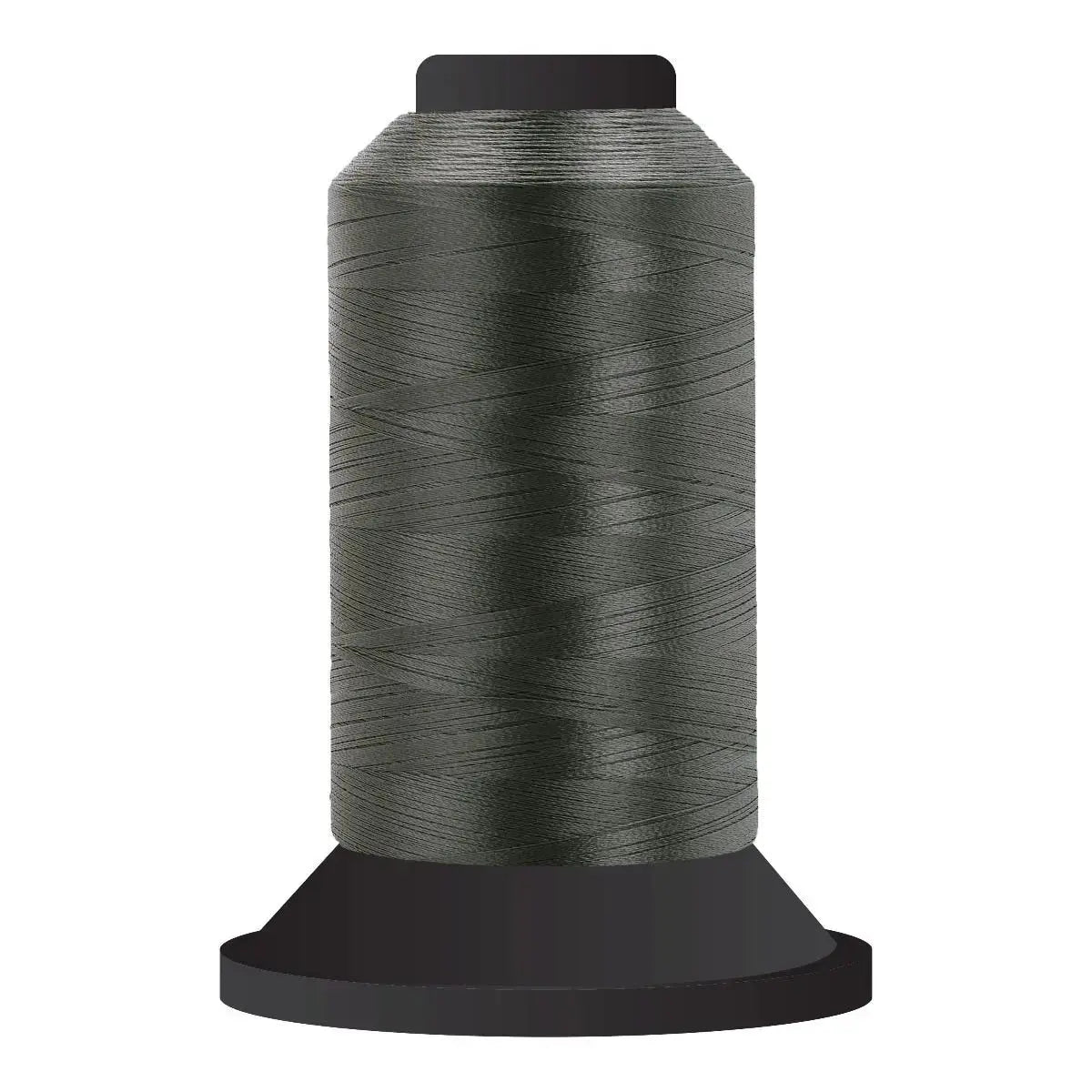
Fine thread does fine work — and that is exactly where a 60-weight earns its place. Sterling, colour 10877 in the Glide 60 line, is a medium grey in a very fine polyester thread, on a generous 5,500-yard cone. When your stitching needs to stay crisp at a small scale — tiny letters, dense micro-stippling, intricate detail — this is the weight class built for the job.
What Sterling Glide 60 Is
Glide 60 is a high tenacity filament polyester thread, 2-ply and 60 weight, so it is notably finer in diameter than a standard 40-weight thread. The product description highlights its tremendous bend-ability: a fine thread that can turn tight corners and follow small, detailed paths without fighting you. It also runs lint-free through your machine needle and tensioners, keeping the stitch path clean during long, dense runs.
Sterling itself is a useful middle grey — dark enough to define a line on light and medium fabrics, yet soft enough not to shout the way black can. On grey, blue, and cool-toned work it reads as shadow and detail rather than decoration.
What It Is Best For
Small letter embroidery: This is the headline use named for Glide 60. Fine thread keeps small lettering legible — counters in letters like e, a, and s stay open instead of filling in, and satin columns stay neat at small sizes where a heavier thread would crowd the design.
Micro-stippling and fine-detail quilting: A very fine diameter lets you quilt densely without building up thread bulk, so the texture comes from the pattern itself. Sterling is a natural choice for background fills and detail work on cool-toned tops, where the grey settles into the design.
Bobbin thread as well as top thread: The description specifically calls Glide 60 a great top thread as well as a bobbin thread. Running the same fine thread underneath supports dense embroidery and detailed quilting without adding thickness beneath the work.
Piecing: A fine 60-weight can produce flat seams, but Glide 60 is really a detail thread — save it for where precision and small scale matter.
How It Compares to Alternatives
Versus 40-weight Glide: The 40-weight is the bolder, more visible choice, with fuller coverage for quilting and embroidery that should stand out. Glide 60 trades that presence for fineness: smaller lettering, denser stippling, and less bulk. Choose by scale — if the detail is small, go finer.
Versus a dedicated bobbin-only thread: Because Glide 60 works on top and in the bobbin, you can colour-coordinate top and bottom in Sterling instead of defaulting to a generic bobbin fill — useful when the back of the work will be seen.
Versus black or white for detail work: Black can look harsh and white can glare on mid-tone fabrics. A medium grey like Sterling often blends across a wider range of values, defining detail without a hard contrast line.
Tension and Needle Tips
Test on a sample of your actual fabric and batting first, at the actual scale of your design — tension that looks fine on a large motif can crowd or loop on tiny lettering. Use a fresh needle with an eye sized for fine thread, re-thread with the presser foot up, and adjust tension in small steps, changing one thing at a time. For small lettering, slow down: fine thread rewards a steady pace with cleaner corners and fewer breaks. If you see skipped stitches on dense fills, check the needle first, then the thread path for snags.
Care and Storage
Store the cone upright in a cool, dry place out of direct sunlight, covered or in a closed cabinet so dust stays off the wraps. Note the colour name and number, Sterling 10877, for easy reordering. Wash finished pieces gently, following the care instructions for their fabrics and batting.
Choose Sterling Glide 60 when the work gets small: lettering that must stay readable, stippling that must stay fine, and detail that deserves a thread made for it.
Shop the 10877 Sterling Glide 60 Polyester Thread at Linda's Electric Quilters.


