
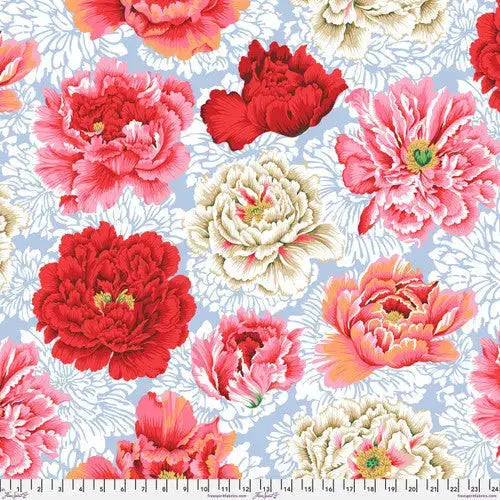
Most quilt backs are chosen to be quiet. This one is not — and that is exactly its charm. The Multi Natural Brocade Peony wideback from Free Spirit Fabrics puts a peony print across a full 108 inches of cotton, so the back of your quilt becomes a garden in its own right. Here is how to use a statement backing like this well, from measuring to washing.
What This Fabric Is
According to its product listing, this fabric is 108 inches wide, made of cotton, and made by Free Spirit Fabrics. It is sold by the yard as a wideback, under the name Multi Natural Brocade Peony. Its colour tags tell the palette story: baby pink and dark pink alongside blue, bright blue, and blue-green — a multi-colour floral on a natural ground, in the brocade-peony style its name describes.
That combination is more versatile than it first sounds. A natural background keeps the print grounded, while the pink-and-blue peonies give you several colours to echo from a quilt top. It suits floral, traditional, and cottage-style tops beautifully. Hold it against your finished top before ordering: the goal is a back that feels like the same quilt's other side, not a second quilt competing with the first.
How Much Backing Do You Really Need?
Start with the standard rule: backing size equals quilt top size plus 8 inches in both directions — 4 extra inches on every side. That overhang is not waste. A longarm quilter needs it to load the backing, attach the clamps, and advance the quilt without running short, and domestic-machine quilters need working margin for basting and handling, too.
Now measure against the 108-inch width. A throw top measuring 60 by 72 inches needs a 68-by-80-inch backing: the 108-inch width covers the 68-inch side easily, so order 80 inches of length, about 2.25 yards. A queen top at 84 by 92 inches needs 92 by 100 inches: the 108-inch width covers either side, so order 100 inches, about 2.75 yards. If either dimension of your required backing exceeds 108 inches, even a wideback will need an added strip — measure your actual finished top, not the pattern size, before you order.
Cotton, Minky, or Flannel?
Cotton wideback like this one is the stable, predictable, all-purpose choice: it presses crisply, feeds evenly, and behaves like the cotton in most quilt tops, so quilting and washing stay straightforward. Minky is a plush polyester — softer and warmer to the touch, but stretchier and bulkier, with more tendency to shift on the frame. Flannel is cozy and brushed, but it can shrink more than quilting cotton and adds weight of its own. If you want a printed back that handles predictably and shows off a floral design without added bulk, cotton is the natural pick here.
Working Tips
Press the fold out first. Widebacks arrive folded, and a centre crease can shadow through quilting. Press the whole piece before loading or basting, working the fold line patiently.
Consider prewashing. Cotton backing and a cotton top shrink at similar rates, so many quilters skip it — but prewashing a strongly coloured print like this one is cheap insurance against later colour movement. Test a small cut for colourfastness if you are unsure.
Mind the print direction. Peonies have a natural up and down. Decide which way the flowers should grow on the finished quilt before the backing goes on a longarm frame or under your basting pins — a directional print loaded sideways is a classic, avoidable regret. Load it straight and square so the print stays true across the quilt.
Care
Once quilted, care for the finished quilt as you would any cotton quilt: wash gently in cool water, and dry on low or line-dry to protect both the colours of the print and the quilting stitches. The reward for choosing well is a quilt that delights twice — once from the front, and again every time it is turned over.
Shop the Multi Natural Brocade Peony Cotton Wideback Fabric Per Yard at Linda's Electric Quilters.


