
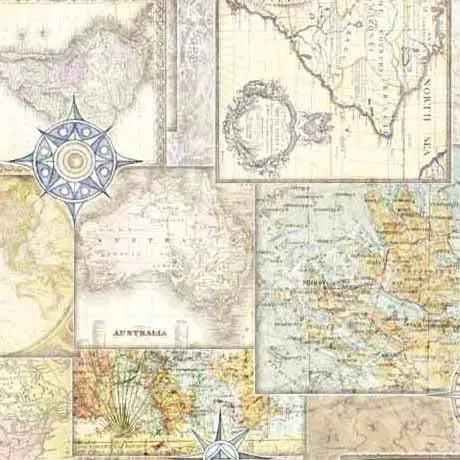
Most quilt backs are chosen to match the front. This one is chosen to continue it. The Multi Color Travel Maps Cotton Wideback, from the Globetrotter collection by Morris Creative Group for QT Fabrics, covers the back in a cream, multi-coloured travel map print — the kind of design that invites a second look when the quilt is turned over, folded back, or draped over a sofa.
What This Fabric Is
This is a 108-inch cotton wideback quilting fabric, sold by the yard. The colourway is listed as Cream (multi coloured): a warm cream ground carrying the colours of vintage travel artwork. The wider Globetrotter collection, as the maker describes it, is built around getting away — vintage posters, spinning the globe, hailing a taxi and taking lots of pictures — and it even includes a large 36-inch world map panel. This Travel Maps print belongs to that same assortment, so it pairs naturally with travel-themed tops, memory quilts made from trip fabrics, and quilts for anyone who collects places the way other people collect blocks.
Because it is a full 108 inches wide, most quilt tops can be backed in a single seamless piece — no centre seam to keep straight, and the map imagery runs uninterrupted across the whole back.
How Much Backing Do You Really Need?
Use the standard rule: your backing should measure your quilt top plus 8 inches in both dimensions — 4 inches extra on every side. That overhang gives a longarm quilter room to load and clamp the backing, and you working room on a domestic machine too.
Work the width first. With 108 inches of width, a quilt top up to about 100 inches wide can be backed with one width of this fabric. For length, divide your required backing length by 36 to get yardage. A 60 x 72 inch throw needs a backing about 68 x 80 inches, so 2.25 yards covers it. A 80 x 90 inch top needs about 88 x 98 inches, so order 2.75 yards. When a print has a sense of place like this one, also decide which way is up before you order: maps read best running the same direction as the quilt top, and planning that now avoids a sideways world later.
Cotton, Minky, or Flannel?
Cotton widebacks like this one are the workhorse choice: stable, easy to press and load, and they show quilting stitches crisply against the map. Flannel adds warmth, but can shrink more and grabs batting. Minky is softest against skin, but it is polyester with stretch and a nap, and it would hide the printed detail that is the whole point here. If the design matters, cotton is the right call.
Working Tips
Pressing the fold: Widebacks arrive folded, and that centre crease can be stubborn. Press from the wrong side with steam, working along the fold rather than across the whole width at once, and let the fabric cool flat before you move it.
Prewashing: Cotton can shrink slightly, so many quilters prewash a backing — especially a cream ground — before it meets a finished top. Wash it as you plan to wash the finished quilt, dry it, and give it a full press before measuring and cutting.
Longarm loading: Load the backing with the print running in the direction you planned, keep the cream ground smoothed and evenly tensioned, and check the top edge is straight before pinning. A light ground shows shadowing from dark batting, so a white or natural batting keeps the cream looking clean from the front of the back.
Care
Treat the finished quilt as you would any cotton quilt: wash gently in cool water, and dry on a low setting or line dry if you want to be kindest to the colours. The cream ground and multi-coloured print will hold up best when the quilt is washed as a whole, rather than spot-cleaned, and stored folded loosely out of direct sunlight.
Shop the Multi Color Travel Maps Cotton Wideback Fabric per yard at Linda's Electric Quilters.


