
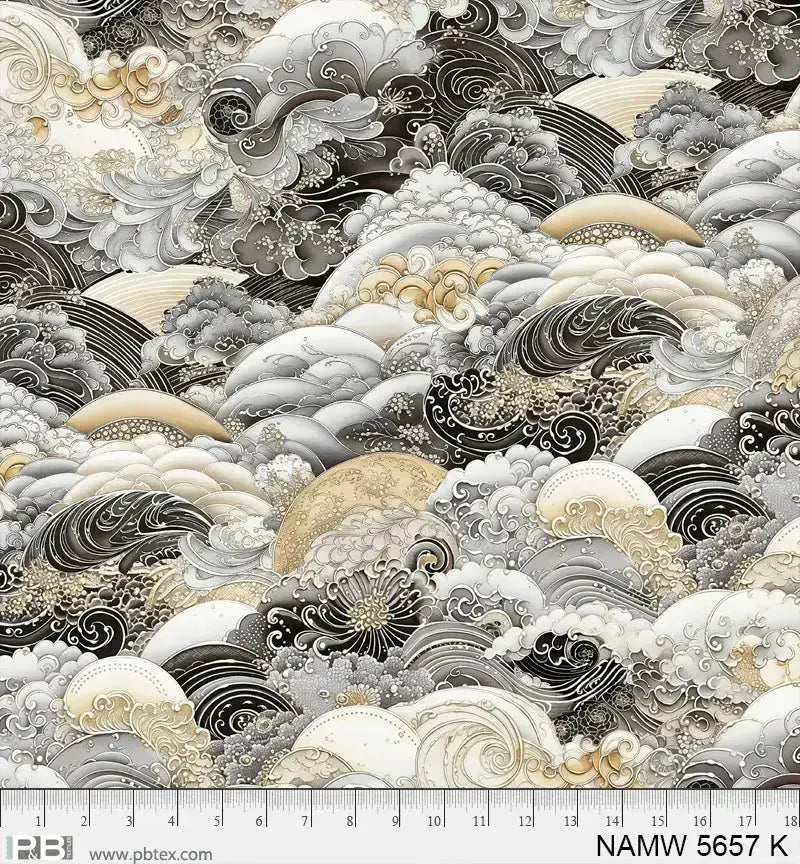
Some quilt backs quietly support the top. Others deserve a second look of their own. A grey, wave-filled backing does both: it finishes the quilt in one wide piece, and when the quilt is folded back, the movement in the print becomes part of the story.
What This Fabric Is
The Grey Multi Waves in Motion Nami Wideback Fabric, by P&B Textiles, is a 108-inch cotton wideback sold per yard. The description credits the design to Clint Eagar and describes pounding waves and sea froth, with details that let you nearly feel the power of the ocean. This colourway is Grey Multi, so the waves read in layered grey tones rather than a single flat colour.
It is one of six colourways in the design. The product description also notes that these prints can stand alone — suggested as a duvet cover, a shower curtain, or even framed as artwork. On a quilt back it will show as broad, flowing movement, suiting modern and ocean-themed tops.
Because it is cotton at 108 inches wide, one length will cover most quilt tops without a seam down the back.
How Much Backing Do You Really Need?
Use the standard rule first: your backing should measure your quilt top plus 8 inches in both dimensions — about 4 inches of overhang on every side. That extra fabric gives room to load, clamp, and baste.
Work an example. A 70 by 80 inch quilt top needs a backing of about 78 by 88 inches. The 108-inch width easily covers the 78-inch side, so you only need length. Divide 88 by 36 and you get just under 2.5 yards — order 2.5 yards, or a little more for squaring up. For a 90 by 90 inch top, you need about 98 by 98 inches — the width still fits, so order 3 yards.
If your top is wider than about 100 inches once that allowance is added, even a 108-inch wideback will need a seam or a different plan, so measure before you order.
Cotton, Minky, or Flannel?
Cotton wideback, like this one, is the versatile default. It presses crisply, quilts cleanly on domestic and longarm machines, adds no extra bulk, and keeps the quilt breathable.
Minky, usually 90-inch extra-wide Cuddle, is plush polyester. Choose it when softness and warmth matter most, accepting that it has some stretch and sheds when cut. Flannel is cotton with a brushed surface: warmer than plain cotton, but it can shrink more and adds weight. For a dramatic printed back used year-round, smooth cotton is usually easiest to work with.
Working Tips: Pressing, Prewashing, and Loading
Wide fabric arrives folded, and that centre fold can be stubborn. Press the whole backing before basting or loading, working the fold line from both sides. Lay the fabric out fully rather than pressing in small folded sections, which can set new creases.
Prewashing is a personal choice with cotton. Washing first lets any shrinkage happen before quilting. If you do not prewash, expect a softer, crinkled texture after the first wash of the finished quilt.
For longarm loading, check that the directional waves run the way you intend. Decide whether they flow across the quilt or down its length before you pin it on. Square the leading edge and smooth from the centre outward.
Care
Wash a finished cotton-backed quilt gently in cool to warm water with mild detergent, and dry on low or line dry. Avoid harsh bleaching, which can fade grey tones. Store folded loosely or rolled, out of direct sunlight.
Chosen well, this backing is more than coverage. It is a wide, seamless piece of ocean movement that finishes the quilt and rewards anyone who turns it over.
Shop the Grey Multi Waves in Motion Nami Wideback Fabric Per Yard at Linda's Electric Quilters.


