
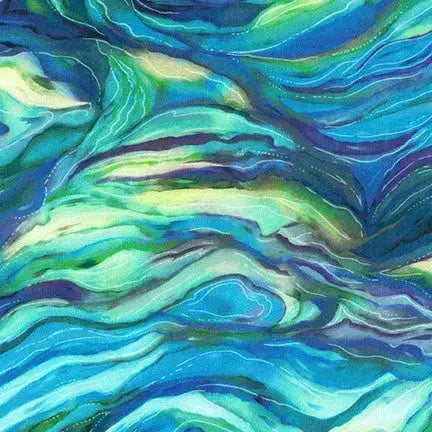
A quilt top inspired by the outdoors deserves a back that continues the story instead of interrupting it with a seam. A blue wildlife wideback does exactly that: it covers most quilts in one wide, unbroken piece, and when the quilt is turned over, the back feels like part of the design rather than an afterthought.
What This Fabric Is
The Blue North American Wildlife Cotton Wideback Fabric, made by Robert Kaufman Fabrics, is a 108-inch cotton wideback sold by the yard. As its name describes, it is a blue fabric with a North American wildlife theme, intended as a wide backing fabric. At 108 inches wide, it is far wider than standard quilting cotton, so a single cut can back most throw, twin, and many larger quilts without piecing panels together.
That seamless coverage is the main reason to choose a wideback. One wide piece lies flatter than pieced panels, loads more evenly, and lets the wildlife theme show across the back without a join cutting through it.
How Much Backing Do You Really Need?
Use the standard rule: your backing should measure your quilt top plus 8 inches in both dimensions, giving you about 4 inches of overhang on every side. That extra fabric lets a longarm quilter load and clamp the backing securely, and it gives you working room if you quilt on a domestic machine.
Work the width first. With 108 inches of usable width, a quilt top up to about 100 inches wide can usually be backed with a single width once the extra 8 inches are added. For length, divide the required backing length by 36 to find the yardage. A 50 by 60 inch throw needs a backing about 58 by 68 inches, so 2 yards is comfortable. A 70 by 90 inch twin needs about 78 by 98 inches, so order 3 yards. If your top is wider than about 100 inches, plan to piece the backing or rotate it if the length allows.
Cotton, Minky, or Flannel?
Cotton widebacks like this one are stable, breathable, and the easiest of the three to load and quilt. They are a good match for quilts that will be used and washed regularly, and they hold quilting stitches cleanly. Flannel adds softness and a little extra warmth with its brushed surface, but it can shrink noticeably, so prewashing matters. Minky is the softest and warmest option, with a plush pile, but it is stretchier and more slippery and asks for more careful handling. If you want the print to stay visible and the backing to behave predictably under the needle, cotton is usually the calmest choice.
Working Tips: Pressing, Prewashing, and Loading
Pressing the fold: wide cotton arrives folded from the bolt, and that centre crease can be stubborn. Press it out on a cotton setting, working from the centre toward the edges, and use steam if the crease resists. A flat backing loads straighter and quilts with fewer tucks.
Prewashing: cotton can shrink a little in its first wash. If your quilt top uses unwashed cotton, consider prewashing the backing so both layers behave similarly later, then press it well after drying. If you prefer not to prewash, expect the finished quilt to crinkle slightly after its first wash, an effect many quilters enjoy.
Longarm loading: check that the backing is square before loading, keep the wildlife design running in the direction you intend, and confirm you have that 4-inch overhang on all sides. Smooth, even tension matters more than tight tension, which can distort the fabric.
Care
Care for a finished cotton-backed quilt the way you would care for the quilt top: wash gently in cool water, and dry on a low setting or line dry. That routine helps protect both the cotton fibres and the quilting stitches over time.
Shop the Blue North American Wildlife Cotton Wideback Fabric Per Yard at Linda's Electric Quilters.


