
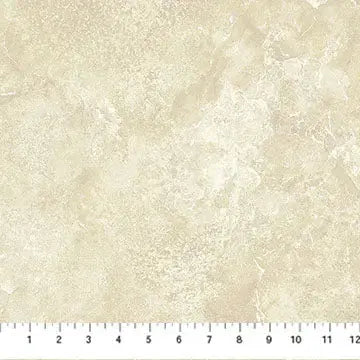
Flannel wideback backing for a 60 by 72 inch throw
For a 60-by-72-inch quilt top, 2 and a half yards of this 108-inch flannel wideback provides 90 inches of purchased length. If your quilter confirms a 4-inch backing allowance on every side, your target backing size is 68 by 80 inches. The 68-inch dimension fits within the fabric's listed 108-inch width, subject to usable width and squaring. Confirm your quilter's requirements before ordering.
The Beige Stonehenge Basics Flannel Wideback Fabric per yard is listed at 108 inches wide, with cotton flannel fiber content, made by Northcott, and sold by the yard. The beige coloring, also tagged as cream and ivory in the listing, is a neutral option that pairs with many quilt tops without competing with the front.
How much flannel wideback do you need?
A common longarm guideline is to measure your finished quilt top, then add 8 inches to each overall dimension for 4 inches per side. That overhang gives a longarm quilter room to load, clamp, and quilt to the edges. Confirm your own quilter's allowance before ordering, because home quilters may need a different amount. Use nominal, before-washing measurements, and allow for usable width, squaring, and any shrinkage if you prewash.
With a quilter-confirmed 4-inch allowance on every side, a 60 by 72 inch throw requires a 68 by 80 inch backing, 68 inches across the fabric width and 80 inches along the purchased length. Two and a quarter yards gives about 81 inches of length, which leaves only 1 inch beyond the 80-inch requirement, before any cutting, squaring, or shrinkage allowance. Two and a half yards, at 90 inches of length, is therefore the safer purchase amount. Using that same confirmed allowance, a 68 by 88 inch twin requires a 76 by 96 inch backing, so 3 yards, at 108 inches of length, works as a purchase amount with extra length, not as the exact mathematical minimum. If the dimension you plan to place across the fabric exceeds its usable width, that layout will not work as a single piece.
Why flannel, and when to choose something else
The comparisons in this section are general selection guidance, not guarantees for this fabric. Flannel is chosen in general when a brushed, cozy feel and extra warmth are the priority for the back of the quilt. As a cotton flannel, it offers a softer, warmer hand than smooth quilting cotton in general.
Choose smooth cotton wideback instead if you want a back that in general presses crisply, feels cooler, and holds a sharp printed pattern. Choose minky instead if you want a plush, high-softness back, accepting pile and stretch that need more support during layering and quilting in general. Flannel sits between those options, warm and soft without pile.
Working tips for flannel wideback
The following tips are general quilting guidance for working with flannel, not product-specific instructions. Consider prewashing flannel before cutting, because flannel in general can shrink and release lint on a first wash. If you prewash, measure again after washing and pressing before you confirm your backing still meets the target size.
Press out the fold and any creases before layering, working in sections so the full 108-inch width stays supported and does not drag. For longarm loading, keep the backing evenly tensioned without stretching it, and check that the fold line is fully pressed out before quilting begins, so it does not become a crease in the finished quilt.
Care
The product listing for this fabric does not state separate care instructions, so check the listing and any information that arrives with your fabric before washing. In general, cotton flannel is washed in cool water, dried on a low setting, and cleaned of lint before and after the first wash, but follow the specific guidance for your fabric when it is provided.
Start with the measurement, confirm the allowance with your quilter, then choose yardage with room to spare.
Shop the Beige Stonehenge Basics Flannel Wideback Fabric per yard at Linda's Electric Quilters.


