
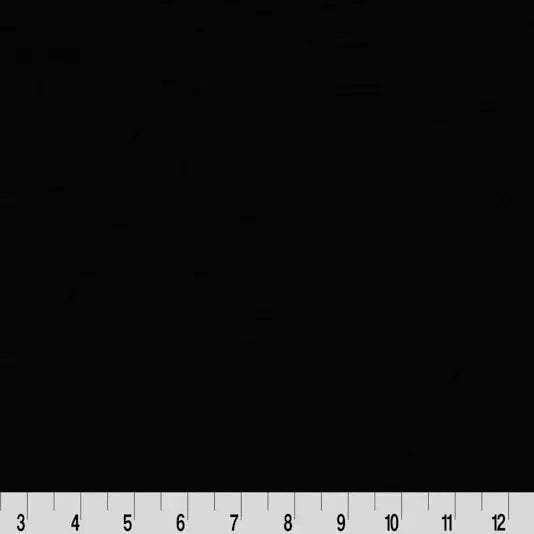
A Black Minky Backing With a Tropical Twist: How to Use Burnout Cuddle Wideback
A plain black backing is practical, but it does not have to be plain. Black Cuddle 3 Extra Wide Tropic Burnout, from Shannon Fabrics, starts with the smooth Cuddle 3 minky quilters already know, then adds a burnout tropical leaf pattern. The result is texture and subtle pattern in deep black — interesting up close, versatile from a distance, and soft everywhere it touches skin.
What This Fabric Actually Is
This is a 100% polyester Cuddle 3 minky plush, made extra wide at 88 to 90 inches. That width is the whole point: most quilt tops can be backed in one seamless piece, with no centre seam to align, press, or feel through the finished quilt. The burnout process creates the tropical leaf design in the surface, so the pattern comes from a change in texture rather than just printed colour. Sold by the yard, it also works for larger-than-life throw blankets, as well as tablecloths or curtains where a plush hand is welcome.
How to Choose a Backing: Size Math First
Start with your finished quilt top and add 8 inches to both the width and the length. That gives you 4 inches of overhang on every side — room a longarm quilter needs for loading and clamping, and useful insurance for home quilting if the layers shift slightly. For example, a 60 by 72 inch throw needs a backing at least 68 by 80 inches. Against an 88 to 90 inch width, that fits in a single piece, and you would order the length: 80 inches is about 2.25 yards, so round up to 2.5 yards for trimming room. Always check the wide direction too — if your top plus 8 inches is wider than the fabric, you will need a second length and a seam.
Cotton, Minky, or Flannel?
A 108 inch cotton wideback is the crisp, familiar choice: it presses flat, quilts smoothly, and matches a cotton top in weight and care. Flannel sits in the middle — warmer and softer than quilting cotton, with a brushed surface that helps layers grip. Minky, like this Cuddle 3, is the cosiest option. The plush polyester adds warmth and a drape people reach for on sofa throws, bed quilts for cold sleepers, and quilts made to be hugged. Choose it when comfort is the priority and you accept a little more stretch and slip to manage during quilting.
Working Tips for Minky Wideback
Pressing the fold: minky does not love a hot iron. Smooth it flat by hand, let it relax open, and if you must press, use low heat from the wrong side with a press cloth — never park a hot iron on the plush face. Prewashing: many quilters skip prewashing minky, but if you wash the finished quilt often, a gentle cold wash first lets you check the fabric on its own. For longarm loading, pin the backing evenly, keep tension firm but not stretched, and remember that minky has some give — over-stretching it on the frame can leave the finished quilt rippled once it relaxes. A walking foot and a slightly longer stitch help on a domestic machine.
Care
Follow the maker's instructions for this fabric: machine wash cold with like colours, use no fabric softener, and tumble dry low with no dryer sheet. Softener and dryer sheets coat plush fibres and flatten the soft hand you bought the fabric for, so skipping them keeps the leaves — and the cuddle — looking and feeling their best for longer.
Shop the Black Cuddle 3 Extra Wide Tropic Burnout Fabric per yard at Linda's Electric Quilters.


