
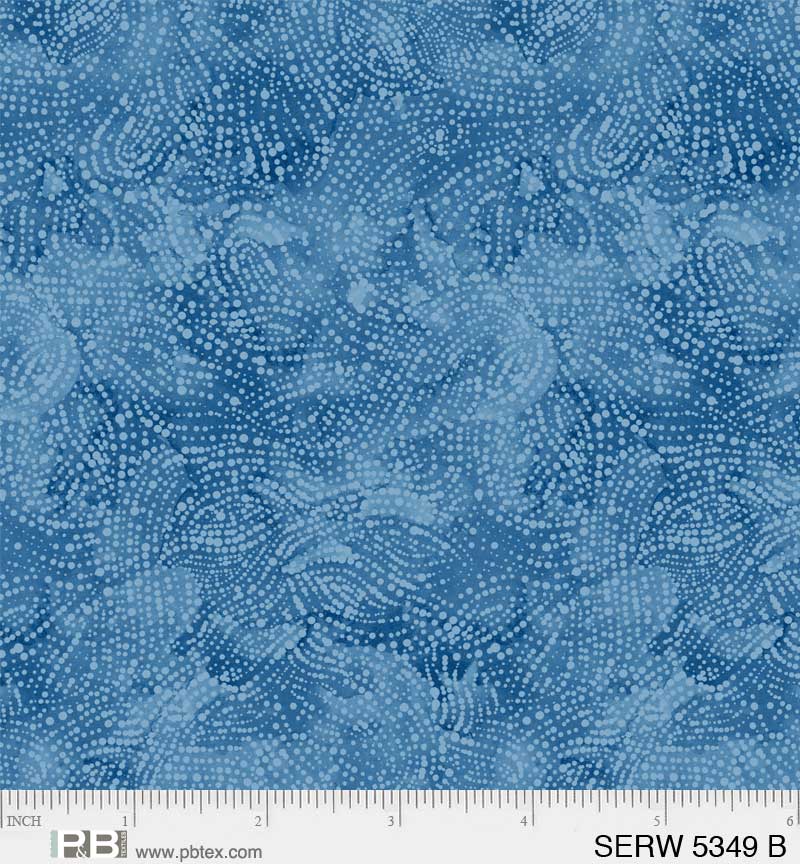
Some quilt tops ask for a backing that quiets the whole project down — no pieced seam down the middle, no busy print competing with the front, just a calm, continuous surface. This Blue Blizzard Serenity cotton wideback from P&B Textiles is built for that job: 108 inches wide, 100 percent cotton, and sold by the yard, in serene hues of blue the listing describes as soothing, durable, comfortable, and elegant.
What This Fabric Is
According to its product listing, this is a 108-inch cotton wideback made by P&B Textiles. The fabric is 100 percent cotton, which the listing credits with a soft touch, while the vibrant blue tones provide the visual appeal. It is presented as a versatile base for quilting and sewing projects — a smooth, wide canvas that brings both quality and convenience to the process. A tonal blue like this works especially well behind blue, white, grey, and winter-themed tops: it supports the palette instead of introducing a new one, and because it reads as a calm solid-like surface from a distance, quilting stitches show as texture rather than getting lost in a high-contrast print. Check the fabric in both natural and artificial light before you commit, since blues can shift noticeably between the two.
How Much Backing Do You Really Need?
Start with the standard rule: backing size equals quilt top size plus 8 inches in both directions — 4 extra inches on every side. That overhang is not waste. A longarm quilter needs it to load the backing, attach clamps, and advance the quilt without pulling the top to the edge, and home quilters need working margin too.
Now measure against the 108-inch width. A throw top measuring 60 by 72 inches needs a 68-by-80-inch backing: the 108-inch width covers the 68-inch side easily, so order 80 inches of length, about 2.25 yards. A queen top at 84 by 92 inches needs 92 by 100 inches: the 108-inch width covers either side, so order 100 inches, about 2.75 yards. A king top wider than 100 inches in both directions will not fit a single width even at 108 inches — measure your actual finished top, not the pattern size, and plan an added strip if either backing dimension exceeds 108 inches.
Cotton, Minky, or Flannel?
Cotton wideback like this one is the predictable, all-purpose choice: stable, easy to press, and well matched to a cotton top for quilting and washing, which is why it suits a serene, everyday quilt meant to be used and laundered regularly. Minky is a plush polyester — warmer and softer to the touch, but stretchier, bulkier, and more prone to shifting, so it needs more pinning and care on the frame. Flannel is cozy and soft, but it can shrink more than quilting cotton and adds loft of its own. If the goal is a calm finish, straightforward handling, and care that matches the top, cotton is the natural pick here.
Working Tips
Press the fold. Widebacks arrive folded, and the center crease can be stubborn. Open the fabric fully, press with steam from the wrong side, then let it cool flat before you measure or trim. Prewashing: if you prewashed your top fabrics, prewash the backing the same way so any shrinkage happens before quilting, not after; if you did not, many quilters load cotton backing unwashed — just be consistent, and note that deep blues are worth a separate first wash with like colors to check for excess dye. Longarm loading: keep the selvages even, load with the extra 4 inches distributed on all sides, and avoid stretching the backing drum-tight, which can pull the quilt out of square when it relaxes.
Care
Care for the finished quilt as you would other cotton quilts: wash gently in cool to lukewarm water, avoid harsh bleach, and tumble dry low or line dry. Press lightly if needed. Handled this way, the soft cotton and its serene blue tones should hold up through regular use, keeping the back as calm and finished as the front.
Shop the Blue Blizzard Serenity Cotton Wideback Fabric per yard at Linda's Electric Quilters.


