
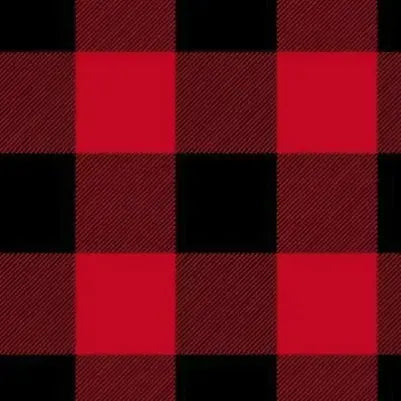
Buffalo Plaid on the Back: Sizing and Matching a Bold Check Wideback
A buffalo plaid backing does not whisper. The big red and black checks turn the back of a quilt into a second design — perfect for cabin, lodge, and holiday quilts, and for any top where a plain solid would feel like a missed opportunity. In a 108-inch cotton wideback, that bold pattern also arrives in one seamless panel, with no centre seam breaking up the checks.
What This Fabric Is
Red Buffalo Plaid Cotton Wideback Fabric is a 108-inch-wide, 100 percent cotton wideback made by Windham Fabrics, sold by the yard. The product description highlights the eye-catching red and black buffalo check, a comfortable feel, and durability, and notes that the wider width lets you create larger projects without seams. That large-scale check on a true quilt-backing width is why buffalo plaid works so well behind pieced tops in neutrals and woodland themes: the checks hold their own against a busy front instead of fighting it.
Beyond quilt backs, the description notes the fabric suits clothing and home decor — projects where a standard 44-inch width would force a visible seam right through the pattern.
How Much Backing Do You Really Need?
Start with your finished quilt top and add 8 inches to both dimensions — 4 inches of extra backing on every side. That overhang gives a longarm quilter room to load, clamp, and advance the quilt, and gives home quilters margin for the layers to shift slightly while basting and quilting.
For example, a 60 x 72-inch throw needs a backing at least 68 x 80 inches. At 108 inches wide, this fabric covers the 68-inch width in a single panel, and 80 inches of length is about 2.25 yards — order 2.5 yards to be safe. An 80 x 90-inch quilt needs 88 x 98 inches: the width still fits in one panel, at about 3 yards. If your top plus overhang is wider than about 100 inches, plan to turn the fabric or piece the backing before you order.
Cotton, Minky, or Flannel?
Choose a cotton wideback like this one when you want the widest seamless panel, a backing that presses crisply, quilts cleanly, and shows a printed pattern sharply — a plaid's straight lines and clean colour blocks depend on that crispness. Choose minky when the back should be the cosy side: plush and warm, but typically narrower, heavier, and a little stretchy to load. Choose flannel for cotton-based warmth with a brushed feel, knowing it can shrink more and its softer weave blurs a check's edges slightly. For a graphic plaid back, cotton is usually the sharpest choice.
Working Tips: Folds, Prewashing, and Loading
Pressing the fold: Wide cotton arrives folded, often with a crease down the centre. Press from the wrong side with a warm iron and steam, working in sections, and let each section cool flat. With a plaid, check that the checks still run straight — pressing at an angle can nudge a woven check off grain, and a skewed backing will fight you at loading.
Prewashing: Cotton can shrink, and a saturated red next to black deserves a decision before you cut. If you plan to wash the finished quilt, prewashing the backing keeps the layers behaving the same way and lets any excess dye leave before it meets a light-coloured quilt top. Wash in cool to warm water with mild detergent, dry on medium, and press well.
Longarm loading: Load the backing so the plaid runs square to the frame — a check makes any drift obvious, so sight along a horizontal check line as you clamp. Centre the top within the overhang, and check the checks stay parallel to the bars as you advance.
Care
For the finished quilt, wash in cool to warm water with mild detergent — especially for the first few washes alongside light-coloured tops — and tumble dry on medium or line dry. The cotton will soften with use while the checks keep their contrast, and storing the quilt folded loosely, out of direct sunlight, helps the red fade evenly.
Shop the Red Buffalo Plaid Cotton Wideback Fabric per yard at Linda's Electric Quilters.


