
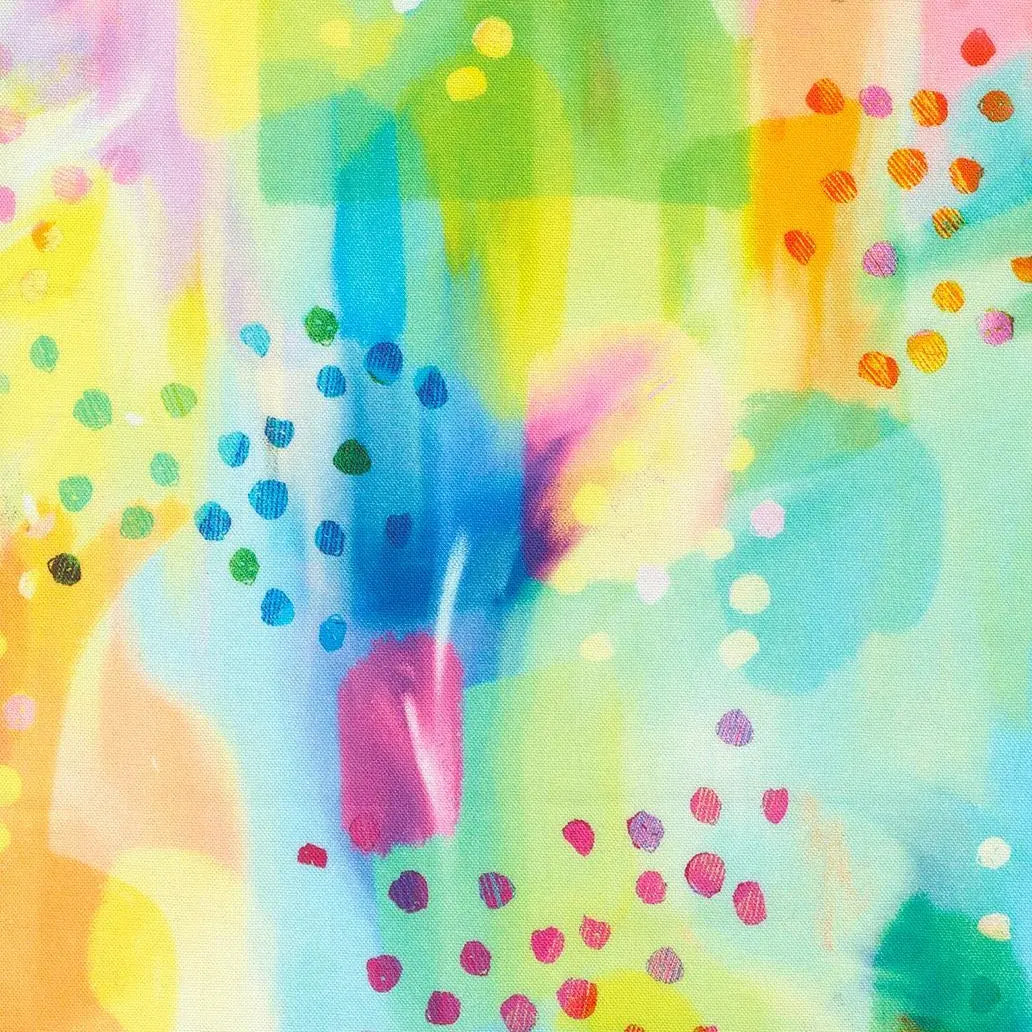
How a Gradient Prism Backing Adds Depth Without Piecing a Single Seam
A quilt back does not have to be plain to be practical. When a top is built from solids, modern blocks, or simple patchwork, a backing with flowing color can add depth — without piecing a back from smaller cuts. A gradient wideback does that in one seamless panel, letting color shift across the quilt.
What This Fabric Is
The Multi Gradients Auras Prism Moda Wideback Per Yard is a 108-inch cotton wideback from Moda Fabrics, part of the Gradients Auras collection. Per the product details, the material is 100% cotton and the fabric is sold by the yard. Its design uses multiple colors to create a gradient effect, with a prism look that the description notes gives it an elegant retro appeal.
That makes it different from both a flat solid and a small repeating print. From a distance, the back reads as blended color. Up close, the prism gradient gives quilting something interesting to travel across. The description also notes it suits quilting, home décor, and other sewing projects, and is crafted for durability and longevity.
How to Choose a Backing: Start With the Math
Size every backing the same way: measure your finished quilt top, then add 8 inches to both the width and the length — that is 4 inches of overhang on every side. That margin gives a longarm quilter room to load, clamp, and advance the quilt, and it gives home quilters a safety buffer as the layers shift slightly during quilting.
Now check that math against the 108-inch width. A throw top of 60 by 70 inches needs a backing 68 by 78 inches, so one cut of about 2-1/4 yards covers it in a single panel. A queen top of 90 by 96 inches needs 98 by 104 inches — still within the width, at about 3 yards. Only very wide king tops push past a 108-inch backing in one piece, which is exactly why a wideback saves piecing, pressing seams, and trying to keep a directional gradient aligned across a join.
Cotton, Minky, or Flannel?
Cotton wideback like this one is the stable, all-purpose default: it presses crisply, loads predictably, and drapes and breathes like the cotton most likely used in your top. Flannel is softer and warmer, but it shrinks more and should always be prewashed. Minky is plush and cozy, but its polyester pile has some stretch and needs a gentler hand when loading and quilting. Choose cotton when you want a flat, dependable back that shows quilting clearly and lets a color effect — like this prism gradient — stay smooth and uninterrupted.
Working Tips: Pressing the Fold, Prewashing, and Loading
Wide fabric arrives folded, and that center crease is the first job. Open the fabric fully, lay it flat, and press from the wrong side with steam, working the fold line patiently rather than parking a hot iron on it. With a gradient, take a moment before pressing to note which way the color flows, so you load it running the direction you intended.
Prewashing is a personal call with cotton backing. Many quilters prewash a wideback to remove sizing and allow for shrinkage before quilting, especially if the quilt top itself was prewashed. Whatever you choose, keep top and back consistent, and press the backing well after washing so it loads without ripples.
On a longarm, confirm your 4 inches of overhang on all sides, check the gradient direction, and load with even tension so the back stays square. On a domestic machine, pin or spray-baste thoroughly and use a walking foot for an even feed.
Care
Finished cotton quilts are made to be used. Wash gently in cool water, dry on low or line dry, and expect the cotton to soften with use while the gradient color continues to give the back a finished, intentional look — not an afterthought.
Shop the Multi Gradients Auras Prism Moda Wideback Per Yard at Linda's Electric Quilters.


