
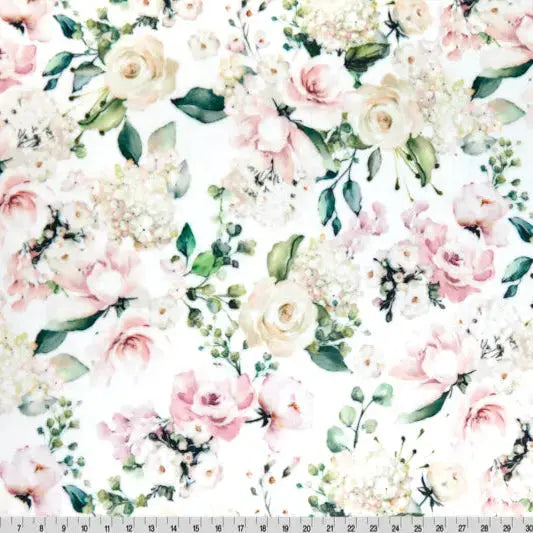
A Floral Print with a Plush Finish
Some quilt backs are plain on purpose. This one is not. The Multi Something Pink Digital Cuddle Fabric per yard, from Shannon Fabrics, is a Digital Cuddle minky plush — 100% polyester, sold by the yard — bursting with bouquets of elegant cabbage roses, beautiful wild roses, and delicate hydrangea. Its palette of Pretty Pinks, Baby Blues, Tender Teals, and Calm Creams gives it a vintage, shabby chic, fairy-tale feeling.
Digital Cuddle is Shannon's printed minky line, so you get two things at once: a detailed floral print and the short, velvety plush surface minky is known for. The description suggests it for cottage decor, spa and lounge wear, and bridal or baby shower gifts — as a backing, that same softness makes the reverse side feel like part of the gift.
How Much Backing Fabric Do You Really Need?
Start with the standard size math: your backing should measure your quilt top plus 8 inches in both width and length — 4 extra inches on each side for longarm loading, clamping, and the small amount of take-up that happens during quilting.
For example, a 50 x 60 inch throw needs a backing at least 58 x 68 inches. A 60 x 72 inch quilt needs a backing of at least 68 x 80 inches. Lay that required size against the width listed on the product page before you order. If one width covers the shorter side, you only need yardage for the longer side: divide that length in inches by 36 and round up — 68 inches is just under 2 yards, and 80 inches is about 2 1/4 yards. If your top plus 8 inches is wider than a single width, plan to piece the backing. Measure first, and confirm your longarmer's requirements.
Cotton vs. Minky vs. Flannel: Choosing Your Backing
A 108-inch cotton wideback is crisp, stable, and breathable. It presses flat, feeds smoothly, and covers most tops in one seamless panel. Minky like this Digital Cuddle is the comfort choice: plush, warm, and soft against the skin, but with stretch and slip that cotton does not have, so it asks for slower handling and moderate tension. Flannel sits in between — warmer than cotton, but more prone to shrinkage, which makes prewashing important there.
Choose minky when comfort and print both matter: a baby shower gift or a cottage-style throw seen from both sides. The roses and hydrangea read as soft pattern from a distance and reward a closer look.
Working Tips: Pressing the Fold, Prewashing, and Longarm Loading
Backings arrive with a fold line from the bolt. With minky, do not attack that fold the way you would with cotton — high heat and direct pressure can crush the plush pile. Let the fabric relax flat first; if a crease remains, use low heat on the wrong side with a press cloth.
Prewashing is usually a skip for minky, which is polyester and shrinks very little compared with cotton. If you normally prewash your cotton top, do so before pairing it with a minky back, so the two layers behave more alike in the finished quilt's first wash. When you cut, lay minky flat, smooth it gently without stretching, and use a fresh rotary blade — minky shifts as you handle it.
For longarm loading, load minky with its stretch running across the frame and keep tension moderate. Over-tensioning can leave puckers once the quilt comes off the frame and relaxes. Moderate, even quilting — an allover meander or larger-scale motif — shows off printed minky best; very dense quilting flattens the pile.
Care
Care for a minky-backed quilt gently: wash cold on a gentle cycle and tumble dry low, and check the product page for any care guidance specific to this fabric. Skip fabric softener and dryer sheets, which coat plush fibers and dull their softness over time, and never iron the plush side. Treated that way, the plush hand and soft florals should stay inviting wash after wash.
Shop the Multi Something Pink Digital Cuddle Fabric per yard at Linda's Electric Quilters.


