
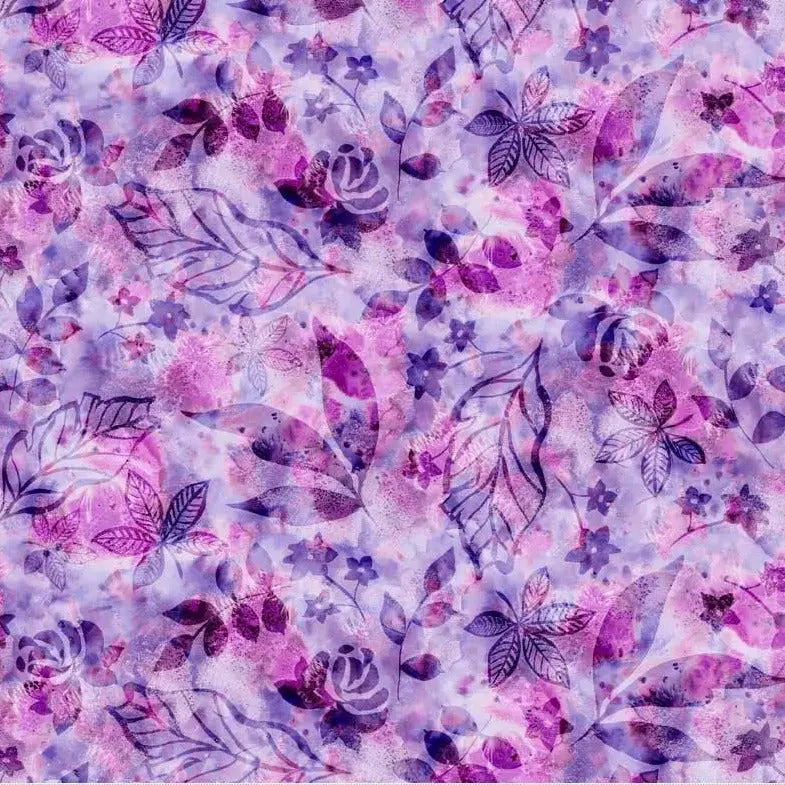
A Garden That Works as Hard as It Looks Good
Some quilt backs are chosen simply to cover the batting. Others earn their place. Purple Botanics Cotton Wideback Fabric, made by P&B Textiles, is in the second group: a botanical design in shades of purple on a full 108-inch cotton wideback, sold by the yard. Flip the quilt over and the back is a finished garden scene of its own, practical enough to back most quilts in a single seamless piece.
What This Fabric Is
This is a 108-inch wide, 100% cotton wideback. The description calls it premium-quality cotton with a luxurious feel and exceptional durability for everyday use, easy to work with for professionals and novices alike. The botanical print gives the back real appeal without piecing or pattern matching across a seam.
Because it is 108 inches wide, one width will back most throw, twin, and many queen quilts without a join. That wideback feature ensures ease in handling large projects and eliminates seams — no centre seam to align, no extra bulk in the middle.
How to Choose a Backing — and Size It
Start with the standard rule: your backing should measure your quilt top plus 8 inches in both dimensions — 4 inches extra on every side. Quilting takes up fabric and layers shift, so a 60 × 72 inch throw needs backing at least 68 × 80 inches, and an 80 × 90 inch queen needs at least 88 × 98 inches.
Check that against the 108-inch width. One dimension must fit across the width; the other is simply the yardage you order. For the queen example, the 98-inch side fits across with room to spare, so you would order enough yardage to cover the 88-inch dimension — about 2 1/2 yards, plus a little trimming allowance. If both dimensions run over about 100 inches, even a wideback will need piecing, so measure before you order.
Cotton, Minky, or Flannel?
Cotton, like this wideback, is the versatile default: stable, breathable, easy to press, and friendly to both domestic-machine and longarm quilting. Minky — a plush polyester — adds warmth and softness, but it has stretch and pile, so it needs more pinning and care on the frame. Flannel sits in between: cotton-based and warm with a brushed surface, but it can shrink more and adds extra weight. Choose cotton for a clean finish and reliable handling, minky for maximum cosiness, and flannel for a warm, casual quilt.
Colour matters too. A purple botanical back suits tops in purples, greens, or soft neutrals, and a print is forgiving: stitches blend into the design and marks show less than on a plain pale solid.
Working Tips: Pressing, Prewashing, and Loading
Widebacks arrive folded, and that centre fold can be stubborn. Press the whole piece before you load it, working the fold line from both sides with steam. If a crease resists, press it early and let the fabric rest flat rather than fighting it on the frame, where a crease can quilt in permanently.
Prewashing is a personal choice. Washing first removes sizing and lets shrinkage happen before quilting, giving a flatter result; skipping it gives a crisper fabric that is easier to load and softens after the quilt is first washed. With a rich colour like purple, wash first on its own or with like colours.
For longarm loading, pin the backing square, check that the botanical design runs the direction you intended, and smooth from the centre outward. Keep tension even rather than tight — cotton has very little give, so over-tightening can distort the top once the quilt comes off the frame.
Care
Care for it like most cotton quilts: wash gently in cool to warm water, dry on low or line dry. This durable cotton is made for everyday use — used, washed, and used again, with that purple garden still showing on the reverse.
Shop the Purple Botanics Cotton Wideback Fabric Per Yard at Linda's Electric Quilters.


