
Seamless and Sea-Blue: How to Size and Use a 108-Inch Cotton Wideback
A good backing should finish a quilt, not fight it. When the top is pieced in blues and sea-inspired colours, a wide cotton back in the same family lets the whole quilt feel considered from both sides — and at 108 inches wide, it can do that without a single pieced seam.
What This Fabric Is
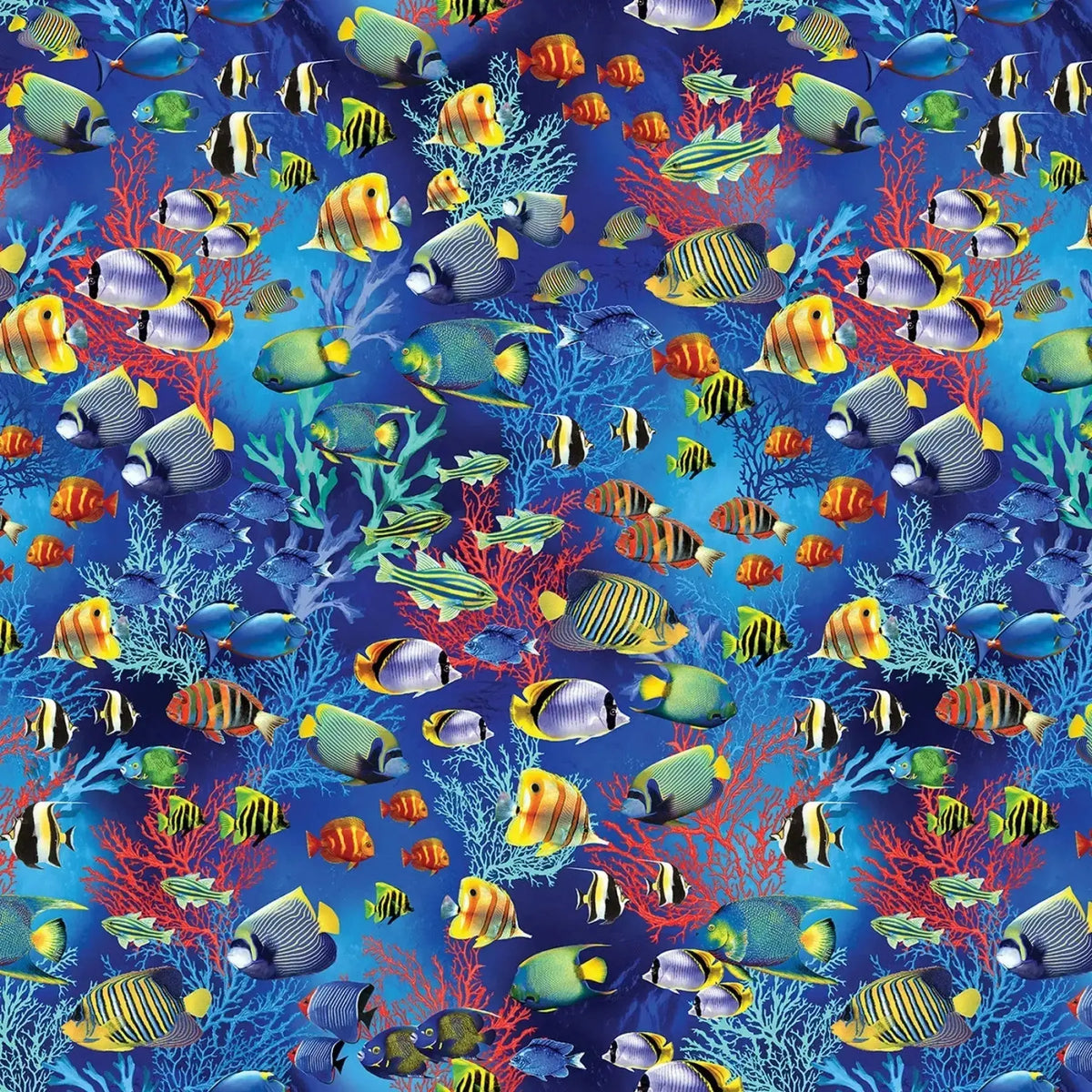
This is the Blue Jewel of the Sea Cotton Wideback Fabric, sold by the yard at Linda's. It is a 108-inch-wide cotton fabric made by Kanvas, from Benartex Inc. The listing tags it with blue, coral, and coral reef — a clue to its sea-themed palette and why it pairs naturally with ocean-inspired, coastal, and blue-heavy quilt tops.
The headline fact is the width. Standard quilting cotton is roughly 44 inches wide, so backing even a modest throw usually means seaming two or three lengths together. A 108-inch wideback changes that math completely: one continuous width covers most lap, throw, twin, and even many queen tops in a single piece, with no centre seam to align, press, or worry about shifting on the frame.
How to Choose a Backing: Size Math First
Start with the standard rule: your backing should be your quilt top plus 8 inches in both directions — 4 extra inches on every side. That overhang gives a longarm quilter room to load, clamp, and advance the quilt, and gives a home quilter room to baste and square up cleanly at the end.
Put it into practice. A 60-by-72-inch throw needs a backing about 68 by 80 inches. Against a 108-inch width, the 68-inch side fits easily across, so you only need the 80-inch length — about 2¼ yards, since a yard is 36 inches and 80 divided by 36 is just over 2.2. A 70-by-90-inch twin needs about 78 by 98 inches of backing: the 78 fits across the 108-inch width, and 98 inches of length is about 2¾ yards. Always compare your top's wider dimension, plus 8, against the 108-inch width before ordering — if that number stays under 108, one seamless piece will do it.
Then weigh the fibre. Cotton like this is smooth, stable, and breathable — the easiest seamless default, and it behaves much like the cotton in most quilt tops when washed. Minky is the softness choice: plush and warm, but with a little give that asks for gentler handling. Flannel, a brushed cotton, sits in between — cozy and slightly grippy. Choose cotton when you want stability, a crisp finish, and a back that quilts and washes predictably alongside a cotton top.
Working Tips: Pressing, Prewashing, and Loading
Pressing the fold. Wide fabric comes folded, and that centre crease can be stubborn. Unfold it fully, let it relax, then press from the centre outward with steam, working in sections on your ironing board. Do not drag the iron sideways and stretch the edge — lift, set down, and move along so the grain stays true.
Prewashing. If you prewash your quilt tops, prewash the backing the same way so both layers shrink together at the first wash. If you prefer not to prewash, finish the quilt and wash the whole thing once, gently, before first use.
Longarm loading. Check that the backing is square before loading — measure both lengths and trim a skewed end straight. Load with the selvedges to the sides, keep tension even rather than tight, and confirm that 4 inches of overhang remain on every side before you start quilting.
Care
As a cotton fabric, this wideback is cared for like the rest of a cotton quilt: wash gently in cool to warm water and dry on a low to medium setting, removing it promptly to limit wrinkling. Press lightly if needed. Treated that way, a seamless cotton back keeps the focus where it belongs — on a quilt that is finished, flat, and ready to use.
Shop the Blue Jewel of the Sea Cotton Wideback Fabric per yard at Linda's Electric Quilters.


