
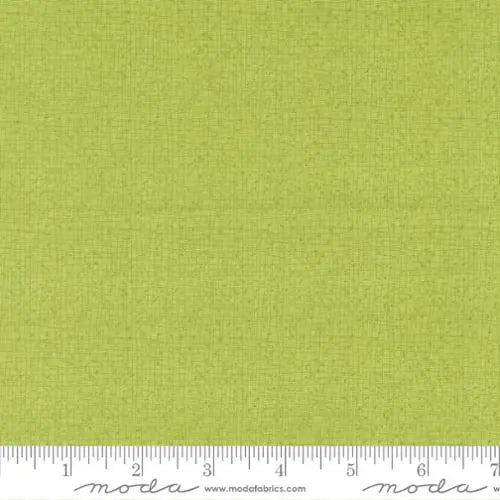
What This Fabric Is
Thatched Lime Cotton Wideback Fabric, from Moda Fabrics & Supplies, is a 108-inch cotton wideback sold by the yard. It comes from designer Robin Pickens' 108" Thatched group, and the color is a light green — the fresh, citrus-leaning lime tone that gives the fabric its name. The Thatched design is tonal rather than high-contrast: a subtle woven-look texture worked into the same green family, so the back of your quilt reads as a soft solid from a distance and reveals quiet detail up close.
That full 108-inch width is the whole point of a wideback. Instead of piecing together lengths of standard quilting cotton and pressing a seam that will always show through the quilting, you can back most quilts with one smooth, seamless panel. In light green, it suits spring and garden-themed tops, modern quilts built on white and low-volume prints, and any project where a dark back would feel too heavy.
How Much Backing Do You Really Need?
Start with the standard rule: your backing should measure your quilt top plus 8 inches in both directions — 4 inches of extra fabric on every side. That overhang gives a longarm quilter room to load, clamp, and advance the layers without running short, and it gives home quilters a safe margin for basting, shifting, and final trimming.
Then check that size against the 108-inch width. A 60 x 72-inch throw needs a backing of at least 68 x 80 inches. The 68-inch side fits easily across the width, so you need 80 inches of length — about 2.25 yards, so order 2.5 yards to allow for squaring up and any shrinkage if you prewash. An 80 x 90-inch quilt needs 88 x 98 inches: still within the width, at roughly 2.75 yards, so order 3 yards. Only when your top plus 8 inches exceeds 108 inches in both directions will you need to piece this backing at all.
Cotton, Minky, or Flannel?
A 108-inch cotton wideback like this one is the stable, predictable default. Cotton lies flat, presses crisply, feeds evenly, and shows detailed quilting beautifully, which is why longarm quilters generally prefer it — and a tonal texture like Thatched shows off stitch patterns especially well. Minky is plusher and warmer, but it has pile and a little give, needs more care on the frame, and is often narrower than 108 inches. Flannel sits in between: brushed and cosy, but it can shrink more and its nap grabs, so it takes more patience to load. If you want a back that behaves and quilts cleanly, cotton is the sensible choice.
Working Tips
Widebacks arrive with a hard fold down the middle from the bolt, and that crease is the first job. Press it out before you do anything else, working from the center outward; a crease left in place can get quilted in permanently. Check the cut ends for squareness too — wide fabric can drift off-grain, so trim the ends true before measuring your yardage against your top.
Should you prewash? Prewashing removes sizing and lets any shrinkage happen before assembly rather than after quilting. If you are sending the quilt to a longarm quilter, ask their preference first — many prefer unwashed backing for stability — but if you do prewash, press well afterward so the fabric loads flat.
On the frame, load the backing with the selvages along the rails so the 108-inch width becomes your working width, and keep tension even rather than tight. At home, that same overhang makes basting less stressful, because the layers can shift slightly without exposing a raw top edge.
Care
As a 100% cotton fabric, this wideback cares for the way most quilting cottons do: wash in cool to warm water on a gentle cycle with like colors, and tumble dry low or line dry. Gentle washing helps a light green stay bright rather than dingy over time. Press as needed, and your quilt will hold up to years of regular use.
Shop the Thatched Lime Cotton Wideback Fabric Per Yard at Linda's Electric Quilters.


