
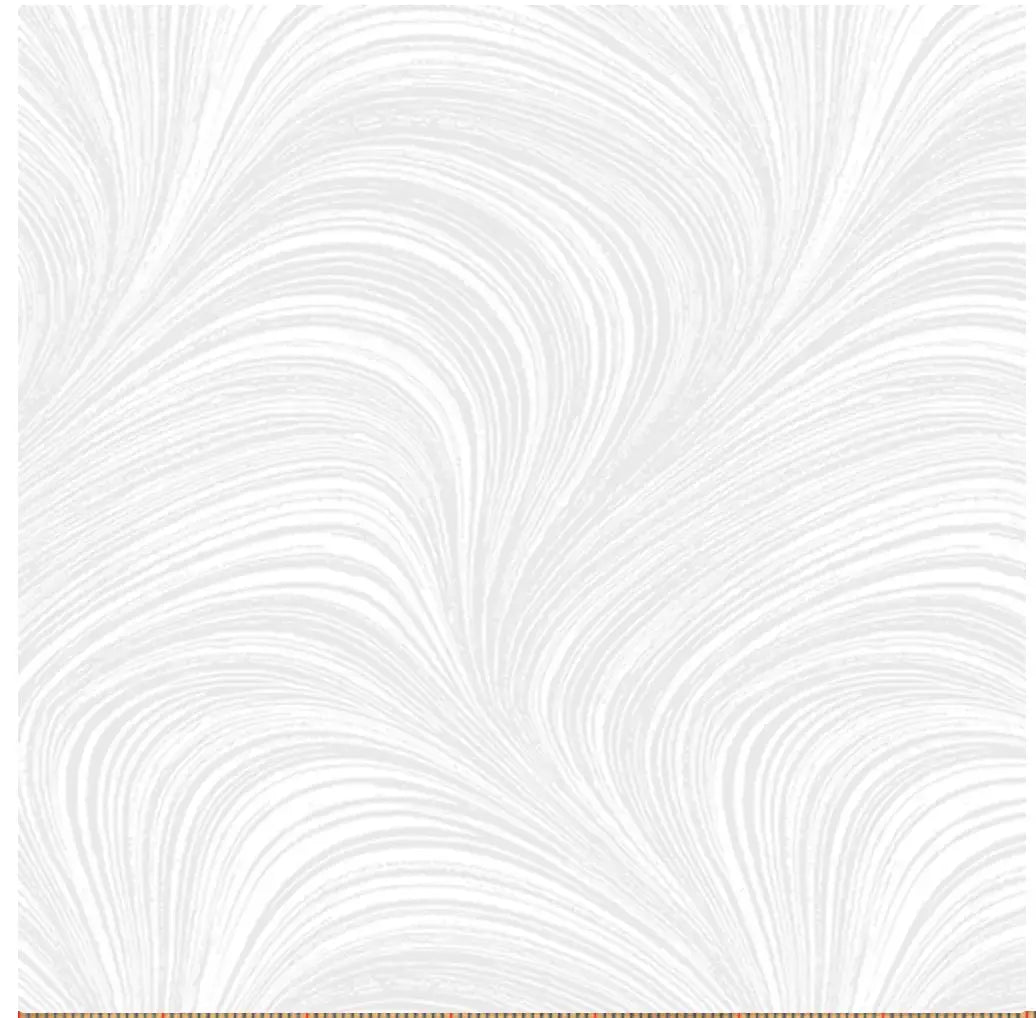
What This Fabric Is
White Wave Texture Flannel Wideback Fabric, made by Benartex, is a 108-inch cotton flannel sold by the yard. In clean white, with a subtle wave texture, it gives a quilt back a soft, finished look without a busy print competing with the top. Flannel is soft and warm while still feeling light and breathable — a combination that makes a finished quilt cosier to hold, without turning heavy.
Because it is a full 108 inches wide, most tops can be backed in one seamless panel, with no piecing seam down the middle. That matters even more with flannel, because a pieced seam adds bulk. One wide piece keeps the back smooth and comfortable.
How Much Backing Do You Really Need?
Use the standard rule: your backing should measure your quilt top plus 8 inches in both directions — 4 inches of extra fabric on every side. That overhang gives a longarm quilter room to load and clamp the layers, and gives home quilters a safe margin for basting and final trimming.
Then check that size against the 108-inch width. A 60 x 72-inch throw needs a backing of at least 68 x 80 inches. The 68-inch side fits easily across the 108-inch width, so you need 80 inches of length — about 2.25 yards, so order 2.5 yards to allow for squaring up and for any shrinkage if you prewash. An 80 x 90-inch quilt needs 88 x 98 inches: still within the width, at about 2.75 yards, so order 3 yards. Only when your top plus 8 inches exceeds 108 inches in both directions will you need to piece this backing.
Cotton, Minky, or Flannel?
A plain 108-inch cotton wideback is the stable default: flat, predictable, and the best surface for showing detailed quilting. Minky is plusher and warmer to the touch, but it has pile and a little stretch, so it needs more pinning and care on the frame, and many minky widths are narrower than 108 inches.
Flannel sits between the two. This cotton flannel has a brushed, cosy feel and gentle warmth, but no deep pile, so it loads and quilts more like cotton than minky does. It is a strong choice for winter quilts, quilts for children and older family members who feel the cold, and any project where the back will sit directly against the skin. The white colour and quiet wave texture also suit home furnishings and winter apparel beyond quilting, as the maker notes.
Working Tips
Prewashing. Prewash flannel before you measure and cut it. Cotton flannel can shrink more than quilting cotton, and it is far better for that shrinkage to happen before the backing is quilted to a top that may shrink differently. Wash it the way you plan to wash the finished quilt, dry it, then measure again before you work out your final yardage.
Pressing the fold. Widebacks arrive folded, and flannel can hold that centre crease. Unfold the fabric fully and press with a warm iron, working along the fold line in sections and letting each section cool flat. Take care not to stretch the fabric as you press — pull it straight, do not pull it wider.
Longarm loading. Load the backing with the full 4-inch overhang on each side, smooth it without over-tensioning it, and keep the selvedges even as you roll. Flannel has a little more grip than flat cotton, which can help the layers stay put, but that same grip means wrinkles are less likely to shake out — smooth the surface by hand before you start quilting.
Care
Wash the finished quilt in cold water on a gentle cycle with a mild detergent, and tumble dry low or line dry. Flannel softens with washing and use, which is part of its charm. As with any white fabric, wash it separately from strong colours, especially on the first wash.
If you want a back that adds warmth without weight, and a clean white finish that works with almost any top, a seamless flannel wideback is a practical, comforting choice.
Shop the White Wave Texture Flannel Wideback Fabric Per Yard at Linda's Electric Quilters.


