
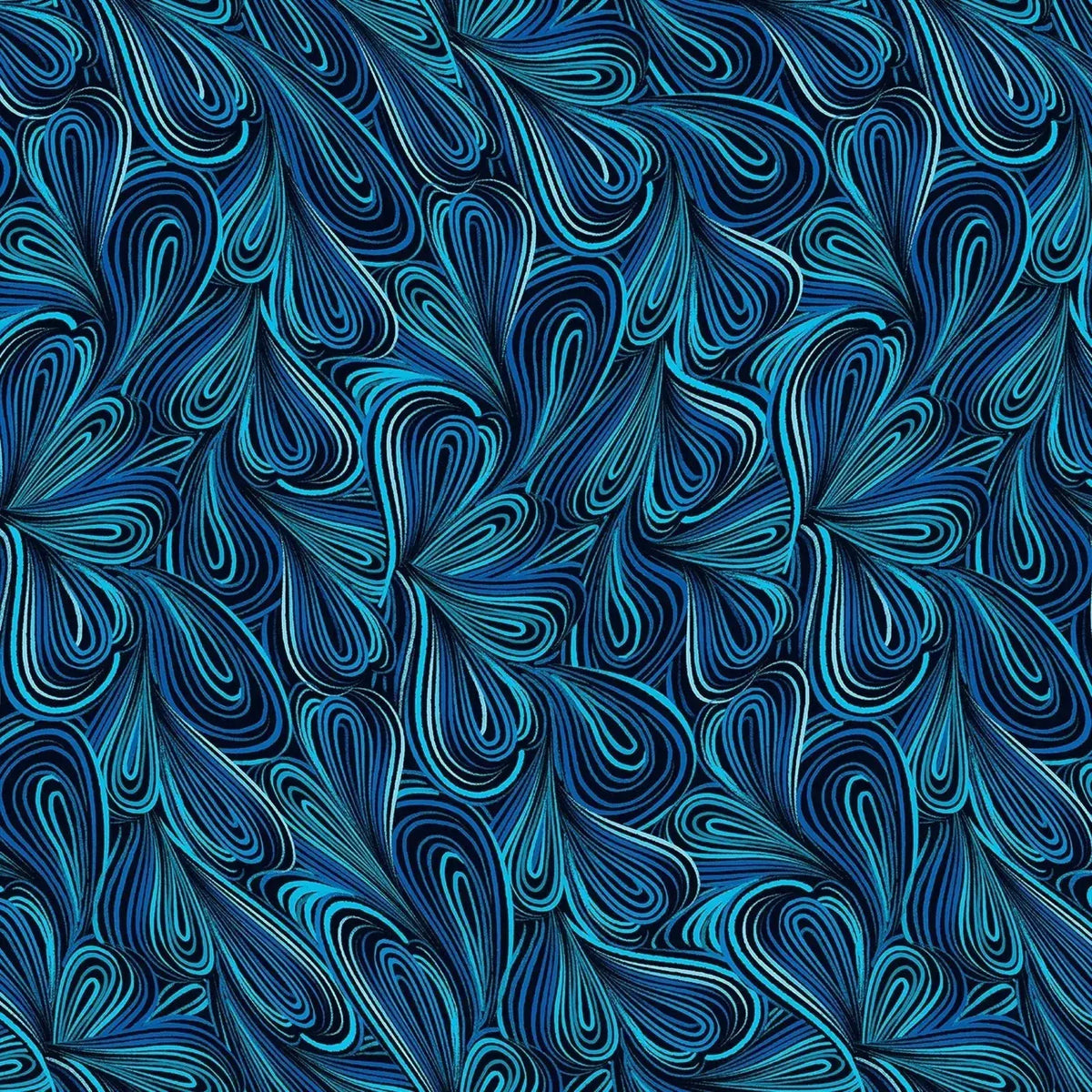
When the Back Deserves to Flow, Too
Most quilters choose a backing for practical reasons — width, price, and whether it will behave on the frame. But the back of a quilt shows every time it is folded back, draped over a sofa, or flipped over on a bed. The Blue Multi Color Flow Cotton Wideback Fabric per yard, made by Kanvas, is a 108-inch cotton wideback with a flowing, multi-color blue design that lets the back make its own statement.
At a full 108 inches wide, it can cover most quilt tops in a single panel — no piecing, no center seam to align, and an uninterrupted flow of color across the whole back.
How Much Backing Do You Really Need?
Start with the rule quilters and longarmers rely on: your backing should measure your quilt top plus 8 inches in both directions — 4 extra inches on each side for loading, clamping, and the small amount of take-up that happens during quilting.
For example, a 60 x 80 inch throw needs a backing at least 68 x 88 inches. The 108-inch width covers the 68 inches easily, so you only need enough length for the 88 inches — about 2 1/2 yards. A 90 x 95 inch queen top needs a 98 x 103 inch backing: the width handles one direction, and 3 yards gives you 108 inches of length for the other. Measure your finished top, add 8 inches to both measurements, divide the length you need by 36, and round up. This fabric is sold by the yard, so you can order what your math calls for.
Cotton vs. Minky vs. Flannel for a Backing
Cotton is the most versatile backing choice: it is stable, presses flat, feeds evenly, and shows quilting stitches cleanly. A printed cotton wideback like this one fits when the back will be seen often and you want color and movement without added weight.
Minky, typically around 90 inches wide in extra-wide styles, brings plush softness and warmth, but it has stretch, so it needs careful loading to keep it from growing while you quilt. Flannel sits in between — softer and warmer than quilting cotton, but more prone to shrinkage, which makes prewashing especially important. For a durable, easy-care back that behaves predictably from pressing to binding, cotton is the straightforward choice.
Working Tips: Pressing, Prewashing, and Loading
Widebacks arrive folded, and the center fold can be stubborn after shipping. Unfold your yardage as soon as it arrives, and press from the wrong side with steam, working the crease out gradually instead of pressing a new sharp line into the fabric. A light mist of water usually relaxes a fold that resists the iron.
Prewashing is optional for cotton widebacks, but with saturated blues it is worth considering. A gentle cold wash lets any shrinkage happen before quilting and removes excess surface dye, so the back and top age together. If you skip prewashing, test a small corner for colorfastness before committing the whole quilt.
For longarm loading, square the cut edges first so the panel loads evenly. Pin or clamp with the width spread smooth but not stretched, confirm your 4 inches of overhang on every side, and enjoy having no pieced seam to shadow through or shift under the needle. On a domestic machine, the single panel also means less bulk under the throat.
Care After Quilting
The product description points to this fabric's durability and easy-care nature, and once quilted, a cotton back asks for very little: wash cold on a gentle cycle, tumble dry low, and store away from strong direct light to help the blues stay rich.
If your quilt top leans on blues — or simply deserves a back with movement instead of a plain afterthought — a flowing multi-color wideback turns the reverse side into part of the design.
Shop the Blue Multi Color Flow Cotton Wideback Fabric per yard at Linda's Electric Quilters.


