
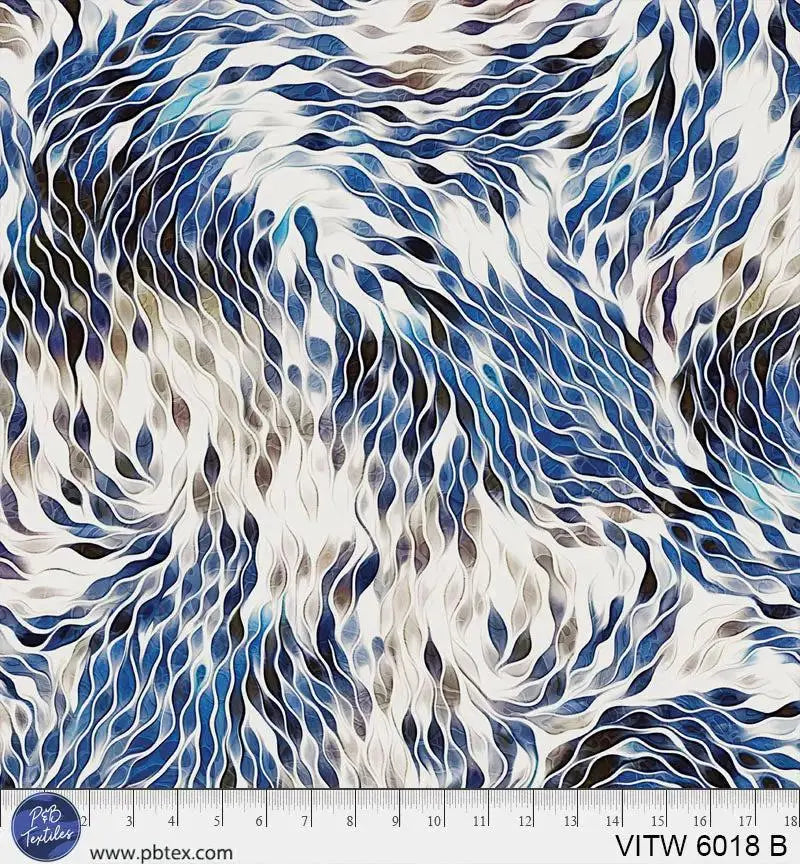
A Backing That Moves Without Shouting
Some quilt backs are meant to disappear. This one is meant to be noticed — quietly. The 108" Vitality Chic Blue Cotton Wideback Fabric per yard from P&B Textiles is a cotton wideback, 108 inches wide and sold by the yard. Its description says the design exudes visual movement, and calls it sophisticated and chic. A flowing print in blue gives the back energy and polish without a busy novelty pattern. The same design is offered in nine colors, so blue is one option in a wider family if you need a different mood for a different top.
Because it is a full 108-inch cotton, it can back most quilts in a single seamless piece. The description also notes it is stylish enough to hold its own beyond backing, as a duvet cover, pillows, or other home décor accents.
Doing the Size Math First
Start with your finished quilt top, then add 8 inches to both dimensions. That gives you 4 inches of overhang on every side — room your longarm quilter needs for loading and tension, and a buffer for small shifts during quilting. If you quilt on a domestic machine, that margin still helps you baste without fighting the edges.
Now compare that number with the 108-inch width. A lap top at 60 by 72 inches needs a backing of at least 68 by 80 inches, which fits across one width, so about 2.25 yards covers the length. A queen top at 90 by 90 inches needs 98 by 98 inches — still within the width, so roughly 2.75 to 3 yards covers it in one piece, with no center seam. Only very large king tops push past this width, and even then one seam in a movement print is easier to blend than in a flat solid.
Cotton, Minky, or Flannel?
Cotton wideback like this one is the stable, all-purpose choice: crisp hand, reliable feeding, and a smooth surface that shows quilting stitches clearly. Flannel, also cotton but brushed, feels warmer and grips the batting a little more, though it adds bulk. Minky is a polyester plush that drapes softer and feels warmer, in exchange for stretch and a slippery pile that rewards extra pinning. Choose cotton when you want structure and clean stitch definition, flannel for extra coziness, and minky when touch is the top priority.
Working Tips: Folds, Prewashing, and Loading
Wide cotton arrives with a hard fold from the bolt. Unfold it early, press with steam from the center outward, and if a line persists, a light mist of water and a second pass usually relaxes it. Pressing before you baste or load is far easier than smoothing it once layers are together.
Prewashing is a judgment call with cotton. Washing removes sizing and lets any shrinkage happen before quilting, which suits quilts washed often. If you skip it, expect a softer, slightly crinkled texture after the first wash — many quilters like that look. Keep your choice consistent with how the top fabrics were handled.
For longarm loading, center the backing, keep the print direction in mind as you roll it on, and avoid pulling it taut side to side — even tension, not tight tension, keeps a movement print from distorting. On a domestic machine, support the weight off the table edge and let the machine feed rather than pushing layers through.
Care and the Finished Quilt
For a cotton quilt back, gentle machine washing in cold water and tumble drying on low helps preserve the blue tone over many washes. Remove the quilt promptly and smooth it flat. Treated that way, a cotton backing softens gradually while keeping its structure.
If your quilt top is modern, graphic, or mostly solid, a back with genuine movement can make the whole quilt feel finished from both sides. This chic blue wideback does that job in one seamless piece for most sizes.
Shop the 108" Vitality Chic Blue Cotton Wideback Fabric per yard at Linda's Electric Quilters.


