
Why a 108″ Wideback Changes Your Quilt-Backing Math
If you have ever pieced a quilt back from three strips of standard 44″ quilting cotton, you already know the pain: extra yardage, an extra seam to press, and a center seam that has to be quilted over. A 108″ cotton wideback — like Moda's Grey Cordite Grunge — sidesteps all of that. Here is how to think about choosing, measuring, and working with it.
How Much Backing Fabric Do You Really Need?
The longarm quilter's rule of thumb is simple: quilt top plus 8 inches. You need roughly 4 extra inches on every side so the backing can be gripped in the frame and the quilting stitches run past the edge of the top. So a 60″ × 72″ throw needs backing at least 68″ × 80″. One yard of 108″-wide fabric gives you a single piece 108″ wide by 36″ long — no seams, no piecing, and plenty of coverage for twin-size quilts and smaller. For queen and king sizes, buy two to two-and-a-half yards and you still only sew one seam, compared with two or three seams on standard-width cotton.
Cotton vs. Minky vs. Flannel Backings
Cotton widebacks are the workhorse choice: they behave exactly like the cotton on your quilt top, so shrinkage, pressability, and thread compatibility all match. Minky widebacks add pillowy softness but stretch as they sew, demanding careful basting or pinning. Flannel adds cozy warmth but shrinks more and needs prewashing to avoid puckering. If your quilt top is cotton and you want a predictable, breathable finish, cotton is the straightforward answer.
What Makes a Grunge Wideback Useful
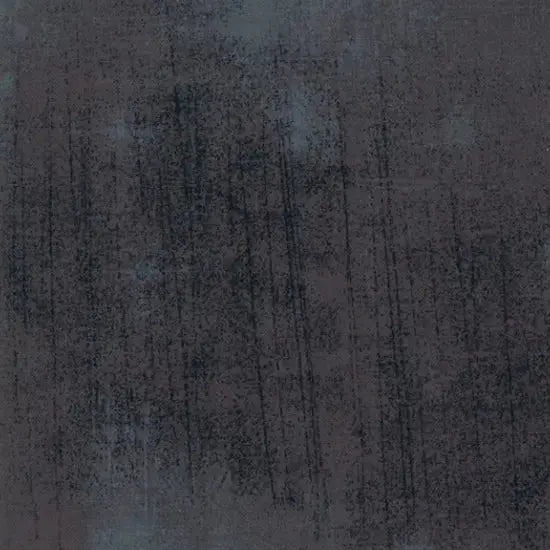
Moda's Grunge line — including the Grey Cordite colorway from Basic Grey — is a tone-on-tone basic: a subtle mottled texture over a solid ground. That matters for backing because a textured solid hides stitching, blends with binding tails, and complements both modern and traditional tops without competing with them. The Cordite colorway reads as a mid grey with faint blue and black undertones (the palette in its listing includes grey, black, blue, and dark tones), making it a flexible neutral that pairs with nearly any quilt front.
Working Tips: Pressing, Prewashing, Loading
Wideback fabric ships folded in quarters, and that center fold crease is the one thing every quilter should deal with before loading. Press it out with steam, or wash and dry the fabric first — which also handles prewashing. Prewash cotton widebacks if you plan to wash the finished quilt often, so the backing and top shrink together; skip it only if you want the crinkled antique look a first wash gives. When loading on a longarm, run the selvages parallel to the rails (the fabric is woven for this direction) and keep the length grain along the long axis of the frame to minimize stretch. The same 108″ width also works beautifully as a single-piece quilt top for whole-cloth or minimalist designs.
Care
Cotton widebacks care for just like any quilting cotton: machine wash cool to warm with like colors, tumble dry low, and press with steam while slightly damp for the crispest results. Grey and dark-tone widebacks benefit from a color-catcher sheet on the first wash, just as you would with any deeper dye.
Shop the Grey Cordite Grunge Cotton Wideback Fabric Per Yard at Linda's Electric Quilters.


