
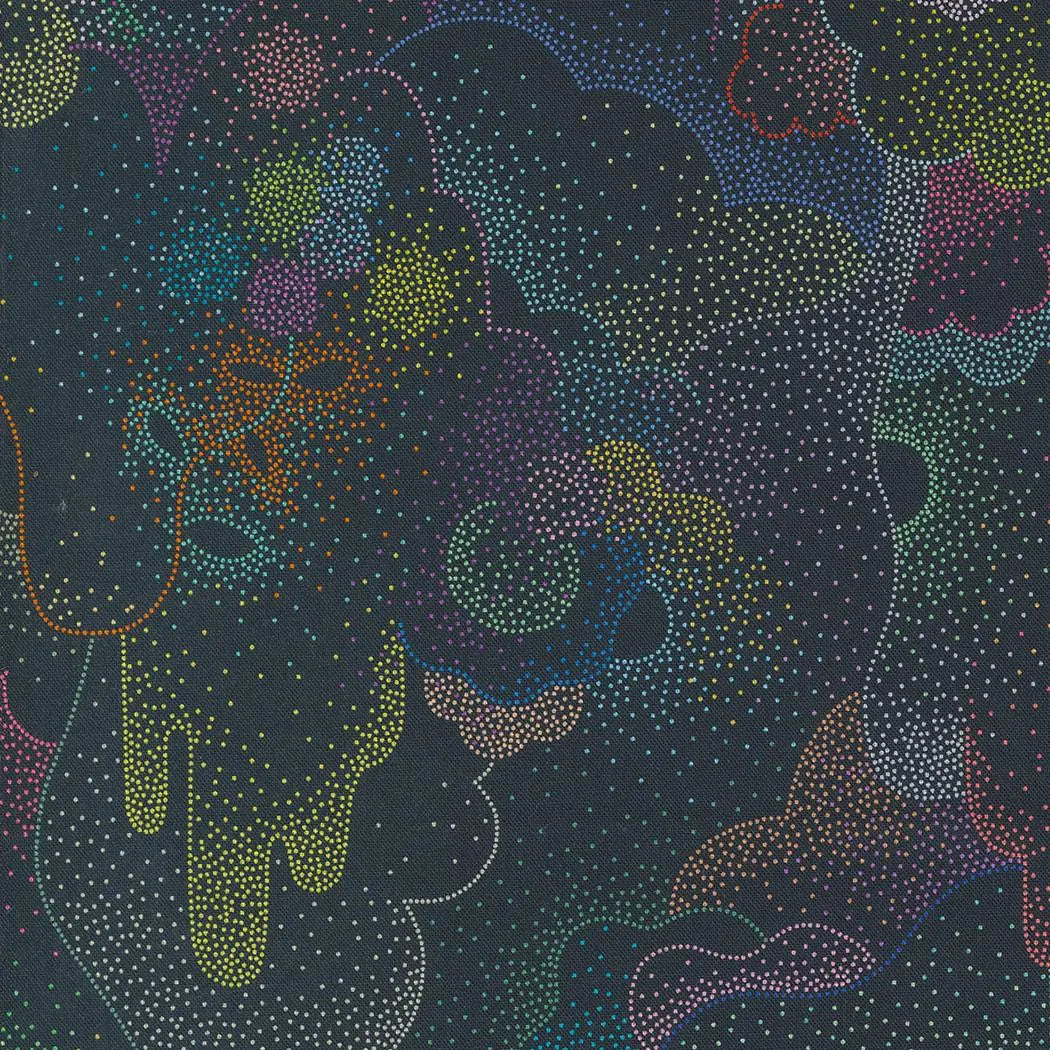
Why a Black Gradient Makes a Better Backing Than Plain Black
A solid black backing can look flat — and it shows every lint speck, stray thread, and quilting start and stop. A black gradient solves both problems. This wideback from Moda's Gradients Auras collection moves through an onyx-black gradient, so the back of your quilt has depth and movement instead of a single flat field, while still reading as a dramatic dark backing.
What This Fabric Is
Black Gradients Auras Onyx Moda Wideback is a 108-inch cotton wideback, sold by the yard. It is made by Moda Fabrics as part of the Gradients Auras collection. The product description highlights its rich, lavish texture, its durability for regular use, and that onyx-black gradient hue, described as adding sophistication to fabric projects. Because it is a true wideback, one width covers most quilt tops in a single seamless panel — no piecing a backing together from narrower cuts and no centre seam for quilting to cross.
Reach for it behind modern, monochrome, jewel-tone, or high-contrast tops where a white or pastel backing would fight the design. The gradient also forgives: quilting stitches blend into the tonal shifts, and the dark ground is far more forgiving of everyday lint than a flat black solid.
How Much Backing Do You Really Need?
Start with your finished quilt top and add 8 inches to both dimensions — 4 inches of extra backing on every side. That overhang gives a longarm quilter room to load, clamp, and advance the quilt, and it gives home quilters margin for the layers shifting while basting.
For example, a 60 x 72-inch throw needs a backing at least 68 x 80 inches. At 108 inches wide, this fabric covers the 68-inch width in one panel, and 80 inches of length is about 2.25 yards — order 2.5 yards to be safe. An 80 x 90-inch quilt needs 88 x 98 inches: the width still fits in a single panel, and you would order about 3 yards. A king top wider than about 100 inches once you add the overhang will need the backing turned or pieced, so do that math before you order.
Cotton, Minky, or Flannel?
Choose a cotton wideback like this one when you want the widest seamless panel, a smooth hand that presses crisply, and a printed gradient that stays clear and flat. Choose minky when the back should be the cosy side — it is plush, warm, and polyester, but typically narrower, heavier, and a little stretchy, and a tonal gradient will not read the same through pile. Choose flannel for cotton-based warmth with a brushed feel, knowing it can shrink more and will soften the look. For a dark, elegant finish that quilts cleanly, cotton is usually the right call.
Working Tips: Folds, Prewashing, and Loading
Pressing the fold: Wide cotton arrives folded, often with a crease down the centre. Press from the wrong side with a warm iron and steam, working in sections, and let each section cool flat before moving on. On a dark fabric, test your iron temperature first — too much heat on one spot can leave a shine.
Prewashing: If you plan to wash the finished quilt, consider prewashing dark cotton backing, especially when it will sit against light fabrics in the top. Wash it the way you will wash the quilt, dry it, and press before cutting. If your longarm quilter prefers unwashed backing, follow their guidance and wash the finished quilt gently the first time.
Longarm loading: Check that the gradient runs the direction you intend before loading. Load the backing with the gradient oriented consistently from top to bottom, keep tension even rather than tight, and confirm you have that 4 inches of overhang on every side before quilting begins.
Care
Care for the finished quilt as you would other cotton quilts: wash gently in cool water, and tumble dry low or line dry. Dark cottons soften with washing, and the gradient keeps its tonal depth while hiding small marks of everyday use better than a flat solid.
Shop the Black Gradients Auras Onyx Moda Wideback Per Yard at Linda's Electric Quilters.


