
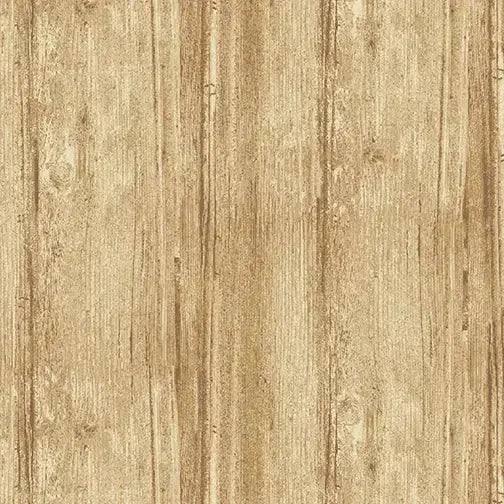
What This Fabric Is
The Natural Washed Wood Flannel Wideback Fabric, sold by the yard at Linda's, is a 108-inch flannel wideback made by Contempo Studio. Instead of the 44- to 45-inch width of standard quilting fabric, it gives you a full 108 inches across — enough, in most cases, to back a quilt in a single seamless piece, with no piecing and no center seam to line up or quilt over.
The look is what makes this one distinctive. A washed wood design in natural beige and light brown tones gives the back of a quilt a soft, weathered, cabin-friendly character without a busy print competing with the top. It suits rustic, farmhouse, nature-themed, and neutral quilts especially well, and the flannel surface adds a brushed softness you can feel the moment you unfold it.
How to Choose a Backing: Start With the Size Math
Use the standard rule before you order any backing: your backing should measure your quilt top plus 8 inches in both directions — 4 extra inches on every side. That overhang gives a longarm quilter room to load and advance the quilt, and gives a home quilter room to baste, quilt right to the edges, and square up cleanly afterward.
Now run the numbers against a 108-inch width. A throw top at 60 by 72 inches needs a backing of 68 by 80 inches. One width covers the 68-inch side easily, so you only buy for length: 80 inches is just over 2-1/4 yards. A queen top at 90 by 95 inches needs 98 by 103 inches — still inside one 108-inch width, so 3 yards covers it in one piece. Only when your top's shorter side plus 8 inches passes 108 inches do you need to think about piecing a backing at all.
Cotton vs. Minky vs. Flannel
Plain cotton wideback is the stable, breathable, all-purpose choice — it presses crisply and behaves like most quilt tops. Minky is the plush comfort choice, warm and cuddly, but with more stretch to manage under the needle. Flannel, like this washed wood backing, sits in between: brushed, cozy, and warmer than plain cotton, with a soft hand that makes a finished quilt feel inviting right away. Choose flannel when warmth and that soft, lived-in feel matter more than a crisp finish — for winter quilts, cabin quilts, and gifts meant to be curled up under.
Working Tips: Folds, Prewashing, and Loading
Pressing the fold: widebacks arrive folded, and fold lines can linger. Unfold the fabric and let it relax, then press gently, working from the center outward. Use a moderate setting suited to flannel and avoid dragging the iron, which can distort the brushed surface.
Prewashing: flannel is known for shrinking more than plain quilting cotton, so prewashing a flannel backing is strongly worth considering, especially if your quilt top was prewashed. Wash it the way you plan to wash the finished quilt, dry it, and press it before you measure and cut. Keeping the top and backing consistent helps the finished quilt wash evenly and stay square.
Longarm loading: a seamless wideback loads quickly because there is no piecing seam to center or avoid. Load it straight, check that the edges are even, and take a moment to confirm the washed wood direction runs the way you want it on the finished quilt before quilting begins.
Care
Finished quilts backed in flannel are made to be used, loved, and washed. Wash in cool to warm water on a gentle cycle with similar colors, and tumble dry on low. Expect flannel to soften further with washing. The natural, light tones are forgiving of everyday use, and storing the quilt out of harsh, prolonged sunlight will help all of its fabrics keep their color.
Shop the Natural Washed Wood Flannel Wideback Fabric Per Yard at Linda's Electric Quilters.


