
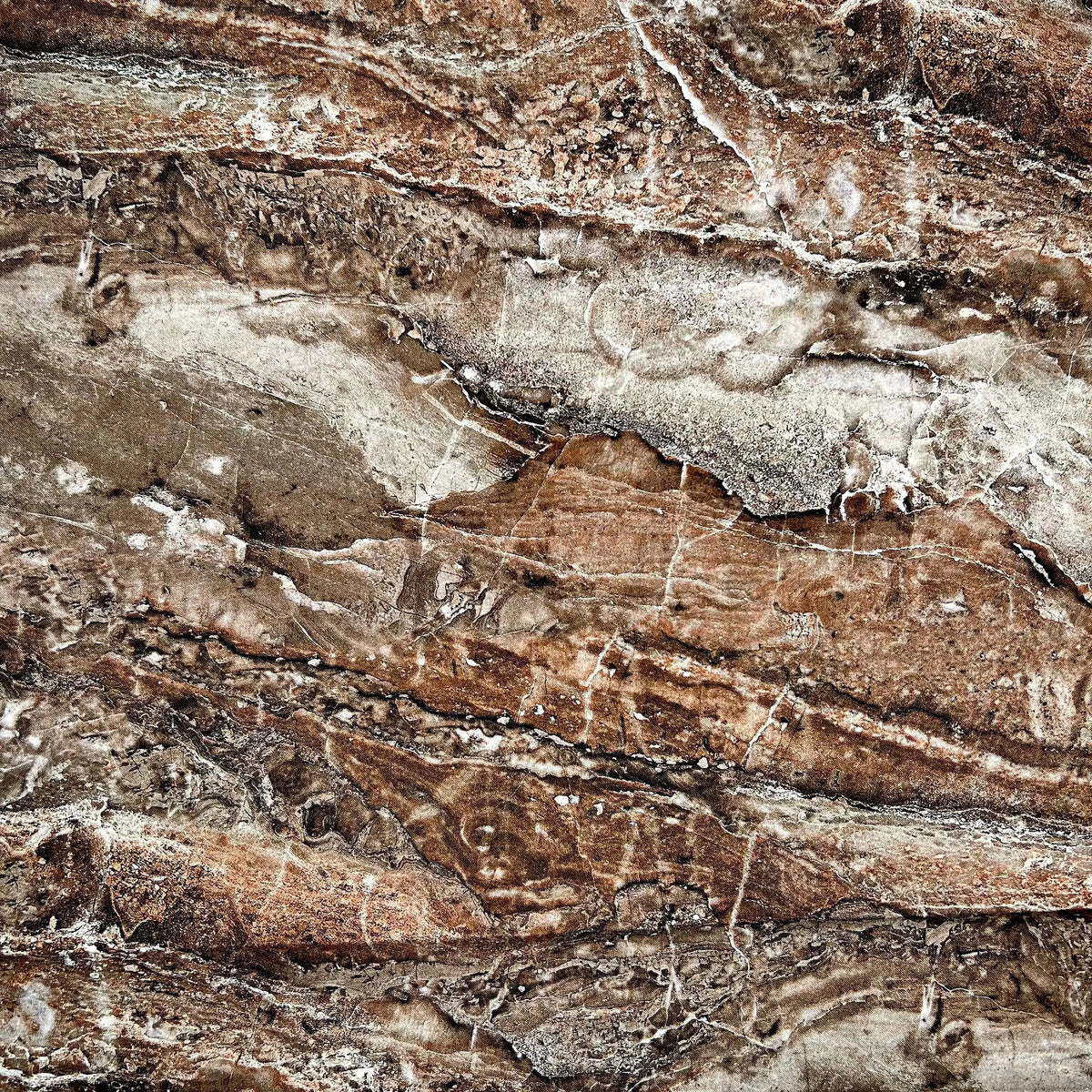
What This Fabric Is
The Brown Latte Surfaces Cotton Wideback Fabric, sold by the yard at Linda's, is a 108-inch-wide, 100% cotton backing made by Northcott. The colour is a warm brown latte tone, and the Surfaces name points to its textured, stone-like character — the queue tags also reference granite, mocha, and latte, which gives you a good sense of the family this print belongs to: warm, earthy, and mottled rather than flat and solid. Instead of a plain brown on the back of your quilt, you get a rich, warm surface with visual texture that hides quilting stitches gracefully and adds depth when the quilt is folded back.
The width is the practical headline. Standard quilting cotton is roughly 44 inches wide, so backing most quilts normally means seaming lengths together. At 108 inches, one continuous piece covers most lap, throw, twin, and many queen-size tops with no centre seam at all.
How to Choose a Backing: Size Math First
Use the standard rule before you order: your backing should measure your quilt top plus 8 inches in both directions — 4 extra inches on every side. That overhang gives a longarm quilter room to load and advance the quilt, and gives a home quilter room to baste and square up cleanly.
Worked examples make the yardage simple. A 60-by-72-inch throw needs a backing of about 68 by 80 inches. The 68-inch side fits easily across the 108-inch width, so you only need the 80-inch length — just over 2¼ yards, since 80 divided by 36 is about 2.2. A 70-by-90-inch twin needs about 78 by 98 inches: the 78-inch side fits across the width, and 98 inches of length is about 2¾ yards. Before ordering, always check your top's wider dimension, plus 8, against the 108-inch width. If it fits, one uncut width does the whole job.
A warm brown backing is a forgiving partner. It sits comfortably behind autumn palettes, earth tones, cream and tan neutrals, and scrappy quilts with warm colour in them. It is also practical for quilts that will be used hard — on a sofa or a bed made daily — because a mid-to-dark, textured ground shows everyday wear far less readily than a pale solid.
Cotton vs. Minky vs. Flannel
Cotton, like this wideback, is the all-purpose choice: breathable, stable, easy to press, and it quilts and washes predictably. Minky is a plush polyester knit — soft and warm, but stretchy and heavier. Flannel sits in between: cotton, but brushed for softness and warmth, with more tendency to shrink. If you want a classic, hard-wearing finish, a cotton wideback like this one is the right call.
Working Tips
Press the fold out before you do anything else. Widebacks arrive folded, and that centre crease can be stubborn. Press from the wrong side with steam, moving across the width in sections, and let the fabric cool flat before you roll or baste it. If you plan to prewash — a good idea when the top contains fabrics that may shrink differently, or simply to remove sizing — wash this cotton the way you will wash the finished quilt, then press again while it is just barely damp.
On a longarm, load the backing with the width running across the frame, keep tension even, and check that the piece is on straight as you advance. At home, the same generous width means a flatter, simpler sandwich to baste, with no pieced seam to keep centred.
Save your offcuts. A warm brown texture like this is useful for binding strips, borders, pillow backs, and tote bags.
Care
Treat the finished quilt as you would any cotton quilt: wash cool and gentle, and dry on low to medium or line dry. Cotton softens with washing while keeping its shape, and a warm, textured brown backing ages gracefully — small signs of use blend into the surface instead of standing out.
Shop the Brown Latte Surfaces Cotton Wideback Fabric per yard at Linda's Electric Quilters.


