
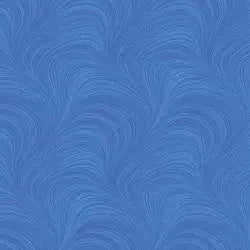
What This Fabric Is
The Blue Color Wave Texture Flannel Wideback Fabric, made by Benartex, is a 108-inch-wide cotton flannel backing fabric sold by the yard. Flannel is cotton with a brushed surface, so instead of the smooth, crisp hand of regular quilting cotton, it feels soft and slightly fuzzy — and that brushed finish is what makes a finished quilt feel warmer and cozier against the skin.
The design is a blue wave texture: a flowing, water-like pattern in blue tones rather than a flat solid. On the back of a quilt it adds movement and depth without competing with a busy top. The width is what makes it a wideback. Standard quilting cotton — and most flannel — is roughly 44 to 45 inches wide, so backing a bed quilt normally means piecing lengths together. At 108 inches wide, this flannel covers most tops in one piece, with no center seam interrupting the wave pattern.
How to Choose a Backing: Start With the Size Math
Use the standard rule first: your backing should measure your quilt top plus 8 inches in both directions — 4 extra inches on every side. That overhang gives a longarm quilter room to load and clamp, and a home quilter room to baste without running short.
Now run that number against this fabric's 108-inch width. A 60 by 72 inch throw needs a 68 by 80 inch backing, so one width is plenty and you need about 2 1/4 yards for the length. A 68 by 88 inch twin needs a 76 by 96 inch backing — still one width, at about 2 2/3 yards. A 90 by 95 inch queen needs a 98 by 103 inch backing: the 98-inch side fits across the 108-inch width, so order about 3 yards and trim the excess. Once a top plus 8 inches passes 108 inches in both directions, even a wideback needs a second cut.
Cotton vs. Minky vs. Flannel
Regular 108-inch cotton wideback is the stable, breathable default: no stretch and a crisp press. Minky is the comfort extreme: plush polyester, very warm and drapey, but with some give, a pile that needs careful pinning, and usually a narrower width. Flannel like this one sits in the middle. It is still cotton, so it handles and quilts much like quilting cotton, but the brushed surface adds warmth and a soft, lived-in feel — a good choice for quilts that will actually be slept under. Choose this flannel when you want cotton's stability with extra coziness.
Working Tips: Folds, Prewashing, and Longarm Loading
Pressing the fold: Widebacks arrive folded, and that center crease can be stubborn. Unfold the flannel early and press gently from the center outward. Use a medium setting and avoid crushing the brushed surface flat with heavy pressure — a light press and steam will relax the fold while keeping the soft nap.
Prewashing: Flannel is the backing most worth prewashing. Brushed cotton can shrink a bit more than quilting cotton on its first wash, and prewashing also removes loose surface lint. Wash, dry, and press it before measuring and cutting, so your size math uses the fabric as it will actually behave.
Longarm loading: Load with 4 inches of overhang on every side, and let your longarmer know the back is flannel. The brushed surface grips batting a little more than smooth cotton, which helps reduce shifting, but the fabric should still be loaded evenly and not stretched. At home, that grip also helps when you baste.
Care
Care for a flannel-backed quilt the way you would care for the quilt as a whole: gentle washing and moderate drying keep the brushed surface soft. Expect a little lint in the first wash or two — that is normal for flannel. With that simple routine, the back stays soft and the quilt stays the warm one everyone reaches for.
Shop the Blue Color Wave Texture Flannel Wideback Fabric Per Yard at Linda's Electric Quilters.


