Table of Contents
- Quick Comparison: Connecting Threads vs Marshall Dry Goods
- Pricing and Shipping Cost Structure
- Best Online Quilting Fabric Stores: Selection and Inventory
- How to Choose Fabric for Quilting Projects
- Precut Fabric Options and Specialty Collections
- Customer Service and Community Resources
- Yaya Han Fabric and Designer Collections
- Where Each Retailer Wins: Decision Framework
- Frequently Asked Questions
Last Updated: September 28, 2026
Quick Comparison: Connecting Threads vs Marshall Dry Goods
When you're sourcing quilting fabric online, the choice in Connecting Threads vs Marshall Dry Goods comes down to three things: what you're willing to spend, what you need to find, and how much hand-holding you want. Both retailers dominate the conversation in quilting communities, and for good reason. But they serve different quilters.
Connecting Threads excels at curated selection and educational resources. Marshall Dry Goods wins on aggressive pricing, especially for basics and precuts. The real question isn't which is objectively better, it's which matches your priorities.
| Aspect | Connecting Threads | Marshall Dry Goods | Winner |
|---|---|---|---|
| Starting Price | $2.99-$11.96/yard | $1.99-$2.99/yard | Marshall Dry Goods |
| Shipping Threshold | Varies | $80 free shipping | Marshall Dry Goods |
| Fabric Width | 42-44" standard | 42-44" standard | Tie |
| Precut Selection | Extensive (fat quarters, jelly rolls, charm packs) | Strong (bargain tables) | Connecting Threads |
| Educational Content | 700+ videos, tutorials | Limited | Connecting Threads |
| Best For | Curated fabrics, learning | Budget-conscious basics | Depends on priority |
Below, we'll walk through exactly where each retailer wins and where it falls short so you can make the right choice for your next project.
Pricing and Shipping Cost Structure
Pricing comparison requires understanding total cost of ownership across order sizes and shipping thresholds, not just headline per-yard cost.
Base Fabric Pricing Breakdown
Marshall Dry Goods' everyday pricing ranges from $1.99 to $2.99 per yard for standard quilting cotton, with bargain-table inventory priced at $1.00 to $1.99 per yard Marshall Dry Goods fabric inventory. Connecting Threads' standard pricing runs $2.99 to $11.96 per yard depending on fabric type and designer line, though promotional pricing can drop select items to $9.56 per yard Connecting Threads March 2026 Catalog.
Marshall's house-brand basics cost $1.99-$2.49/yard; Connecting Threads' proprietary collections run $5.99-$9.96/yard, with designer lines reaching $11.96.
True Cost-Per-Yard Across Order Sizes
Shipping structure dramatically changes the math. Marshall Dry Goods offers free shipping at $80 order value. Connecting Threads' shipping varies by order size and product type, typically ranging from $6.95 for orders under $35 to free shipping on orders over $150 Connecting Threads shipping policy.
Small order ($30-$50): Marshall wins decisively at $3.98-$7.47/yard with no shipping; Connecting Threads costs $9.94-$18.91/yard after $6.95 shipping.
Medium order ($80-$120): Marshall's free shipping threshold makes it $19.92-$24.90 total; Connecting Threads is $62.87-$76.85, but curation value narrows the gap.
Large order ($150+): Marshall costs $29.88 for 12 yards; Connecting Threads costs $95.88 with free shipping, justified by quality and curation.
Precut and Bundle Pricing
Connecting Threads' fat quarter bundles cost $24.99-$34.99 ($0.62-$0.87/piece) and are color-coordinated; Marshall's bargain bundles run $9.99-$19.99 ($0.25-$0.50/piece) but mix fabric weights and quality. True cost-per-usable-yard often favors Connecting Threads despite higher headline pricing.
Promotional Pricing and Loyalty Impact
Connecting Threads' seasonal sales (March, July, November) offer 25-40% off, dropping a $34.99 bundle to $24.49. Marshall uses everyday low pricing instead. Timing purchases at Connecting Threads can drop costs 20-30%; Marshall avoids guesswork.
Hidden Cost Factors
Connecting Threads offers prepaid return labels on orders over $50; Marshall requires customers to cover return shipping, saving Connecting Threads customers $5-$8 on large orders. Connecting Threads also bundles notions with fabric (e.g., "Complete Quilt Kit"), potentially lowering total project cost despite higher per-yard pricing.
Best Online Quilting Fabric Stores: Selection and Inventory
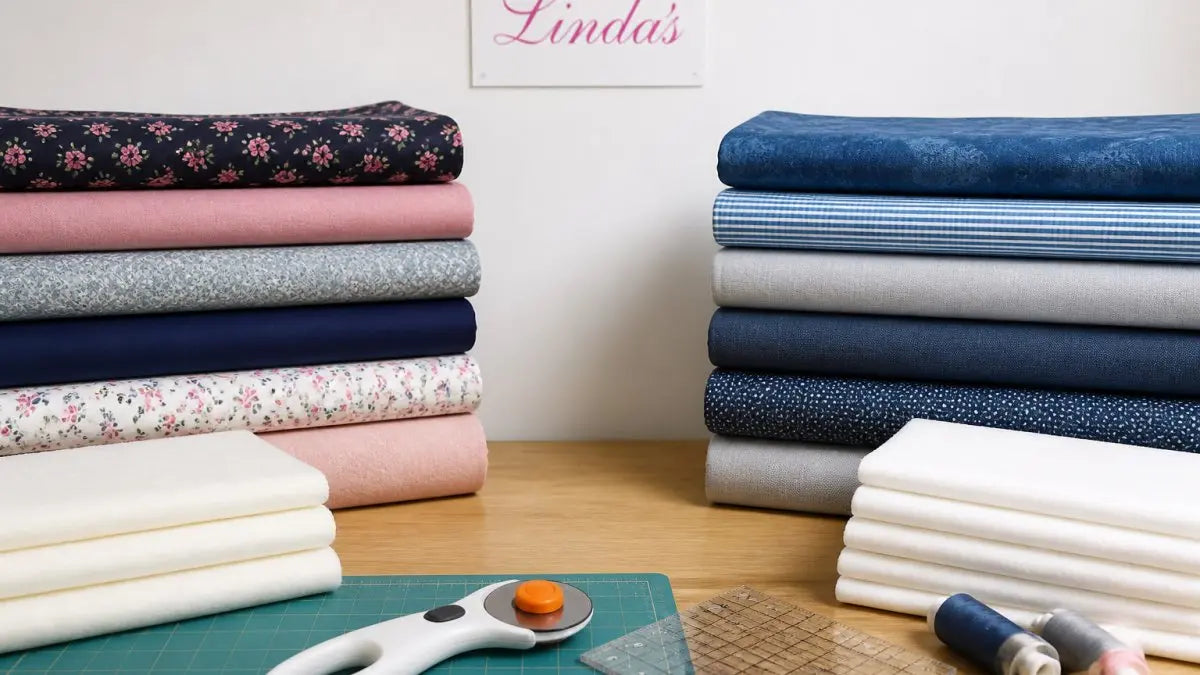
Both retailers maintain deep inventory, but their sourcing strategies diverge sharply. Connecting Threads differentiates itself by emphasizing proprietary fabric lines and expanding "wideback basics," which are a key differentiator when compared to other online quilting fabric retailers Linda's Electric Quilters wideback fabric selection. Marshall Dry Goods is noted for maintaining "bargain" tables priced at $1 and $1.99 that carry a variety of fabric lines, including some inventory from Connecting Threads.
Quilters frequently compare Connecting Threads, Hawthorne, Fat Quarter Shop, and Marshall Dry Goods to optimize pricing for basics and wide-backings. This tells you something important: neither retailer owns the entire market. Each fills a niche.
1154 Dusty Orange Aurifil Cotton 50wt →
The inventory depth difference matters most for specialty projects.
How to Choose Fabric for Quilting Projects
Standard quilting fabric runs 42-44 inches wide at both retailers. Connecting Threads stocks 100% cotton; Marshall carries a mix. Cotton is standard because it presses crisply, frays predictably, and holds color. Consider quilt purpose: baby quilts need soft, tightly-woven fabric; wall hangings tolerate looser weaves. Large quilts demand consistent quality across yardage, where Connecting Threads' tighter sourcing pays off.
Precut Fabric Options and Specialty Collections
Precuts (fat quarters, jelly rolls, charm packs) let you start projects without measuring. Connecting Threads carries the full range with coordinated collections; Marshall's bargain-table selection is less predictable.

Customer Service and Community Resources
Educational Content: Depth and Accessibility
Connecting Threads operates an extensive educational ecosystem. Linda's Electric Quilters hosts 700+ video tutorials covering everything from beginner piecing techniques to advanced appliqué and free-motion quilting Linda's Electric Quilters video library. These videos are accessible to all visitors; you do not need to make a purchase to watch them. The Crafters Roundtable podcast features quilters, sewists, and industry experts sharing real-world insights.
Platform and Accessibility Differences
Community Engagement and Peer Support
Customer Service Response and Issue Resolution
Measurable Outcomes: Skill Development and Retention
Decision Framework: When Each Service Model Works
Yaya Han Fabric and Designer Collections
Designer collaborations drive engagement in quilting. Yaya Han fabric collections, for example, represent a specific aesthetic: bold, contemporary, often inspired by pop culture and anime. These aren't basics. They're statement fabrics.
Where Each Retailer Wins: Decision Framework
Choose Connecting Threads if:
- You're new to quilting and want tutorials, community, and curated guidance
- You're hunting specific designer collections or reproduction fabrics
- You value consistent quality and coordinated color stories
- You prefer premium fabric from trusted manufacturers
- You're willing to pay more for curation and education
Choose Marshall Dry Goods if:
- You know exactly what you need and just want the lowest price
- You're buying basics, solids, and wide-back fabrics in bulk
- You enjoy hunting bargain tables for deals
- You're on a tight budget and willing to test quality on a small order
- You have quilting experience and don't need hand-holding
The real answer: many experienced quilters use both. They buy basics and precuts from Marshall Dry Goods to stretch their budget, then splurge on curated collections from Connecting Threads for special projects. Test with small orders from each, then decide which matches your workflow.
Frequently Asked Questions
Is Connecting Threads fabric high quality?
Connecting Threads offers solid quality quilting fabric at mid-range pricing. According to their March 2026 catalog, all quilting fabric is 100% cotton with standard widths of 42 to 44 inches. The brand is recognized for expanding wideback basics, which is valuable for large-scale projects. However, some quilters report that their house-brand fabric may have a coarser base compared to premium brands like Moda or Free Spirit. Quality varies by collection, so reviewing specific fabric lines before purchase is recommended.
What are the best online stores for quilting fabric?
Top online quilting fabric stores include Connecting Threads, Marshall Dry Goods, Fat Quarter Shop, and Hawthorne. Connecting Threads excels in wideback fabrics and proprietary collections. Marshall Dry Goods offers budget-friendly options with bargain tables starting at $1.99 per yard. Fat Quarter Shop is known for curated selections and specialty precuts. Your choice depends on priorities: Connecting Threads for variety and widebacks, Marshall Dry Goods for budget sourcing, or Fat Quarter Shop for premium curation. Compare shipping policies and minimum order thresholds to match your project needs.
Does Marshall Dry Goods sell wholesale quilting fabric?
Marshall Dry Goods primarily operates as a retail quilting fabric store rather than a wholesale supplier. They offer bulk inventory and bargain pricing on select items, with fabric available from $1.99 per yard on clearance tables. For true wholesale purchasing, professional quilters and embroidery artists may need to contact the retailer directly about bulk orders or business accounts. Most online quilting retailers, including Marshall Dry Goods, focus on individual hobbyist and small-business customers rather than large wholesale operations.
How do I choose the right fabric weight and type for my quilting project?
Standard quilting fabric is 100% cotton with a weight of approximately 44 inches wide (the industry standard). For piecing and patchwork, look for quilting-weight cotton, which is durable and easy to handle. For backing, consider wideback fabrics (60 to 108 inches wide) to reduce seaming for larger quilts. Tone-on-tone prints and solids are forgiving for beginners, while novelty prints work best with experienced piecing. Check fabric descriptions for thread count and finish to ensure consistency across your project. Connecting Threads and Marshall Dry Goods both stock these options with clear specifications.
What shipping costs and speeds should I expect?
Shipping varies by retailer. Marshall Dry Goods offers free shipping on orders of $80 or more. Connecting Threads provides promotional offers including reduced pricing on select items, though specific shipping thresholds vary seasonally. Standard ground shipping typically takes 5 to 10 business days for online quilting fabric orders. Batting rolls require careful handling to avoid creasing during transit. Compare total cost (fabric plus shipping) rather than fabric price alone, especially for smaller orders. Many retailers offer flat-rate shipping options that become economical for bulk purchases of precuts or yardage.
The choice between Connecting Threads and Marshall Dry Goods ultimately depends on whether you prioritize curation and learning or price and speed. Neither is objectively "better", they serve different quilters at different stages. Start with a small test order from each retailer, evaluate the quality and experience, then commit to the one that matches your needs. Your next quilt will thank you for getting this decision right.