
Our Grandmothers Got It Right – Morning with Corey

For many of our grandmothers, a quilt wasn't a weekend project.

It was an investment.

A quilt was expected to warm children, become a wedding gift, be folded across guest beds, and eventually be passed to the next generation.

That meant every decision mattered, from the fabric to the thread to the batting hidden inside.
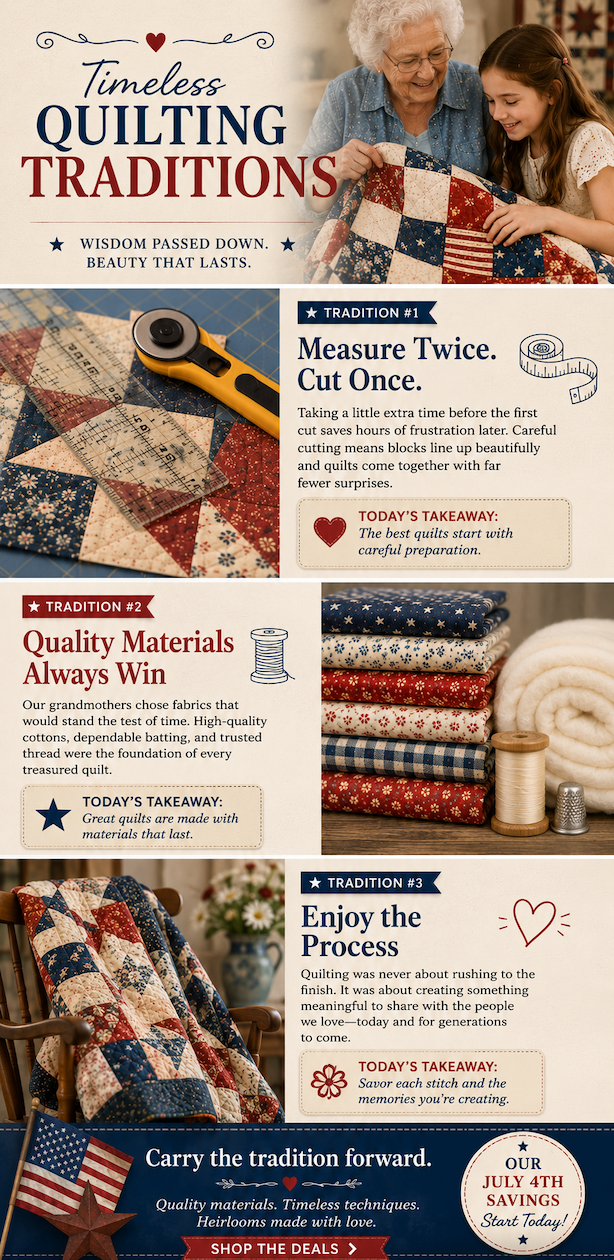
Grandmother's quilting habits

The tools may change. The fabrics may change.

But great quilting principles tend to stand the test of time.

Today, we're grateful to be part of a craft with such a rich American history, and even more grateful to share it with quilters like you.
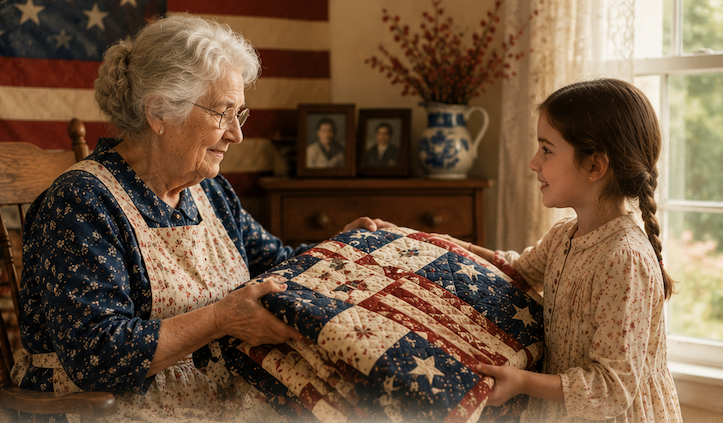
Timeless quilting wisdom

Remember

The best quilting techniques aren't always the newest ones.

Sometimes the traditions that have been passed down from our grandparents are still the most valuable lesson of all.

Here's to preserving the craft we all love.

Happy Quilting!

— Corey

Frequently Asked Questions

What quilting habits from past generations are worth keeping?

Measure twice and cut once, press every seam before moving on, check your work at each step, and finish what you start. Those habits produced quilts that survived a century of daily use.

Is hand quilting better than machine quilting?

Neither is better - they're different finishes. Hand quilting gives a soft, dimensional heirloom look; machine quilting is faster and often more durable for everyday quilts. Many quilters combine both.

Why were grandmothers' quilts so durable?

They used tight, consistent stitching, natural fibers, and quilting dense enough to anchor the batting. Durability came from construction discipline, not fancy tools.