
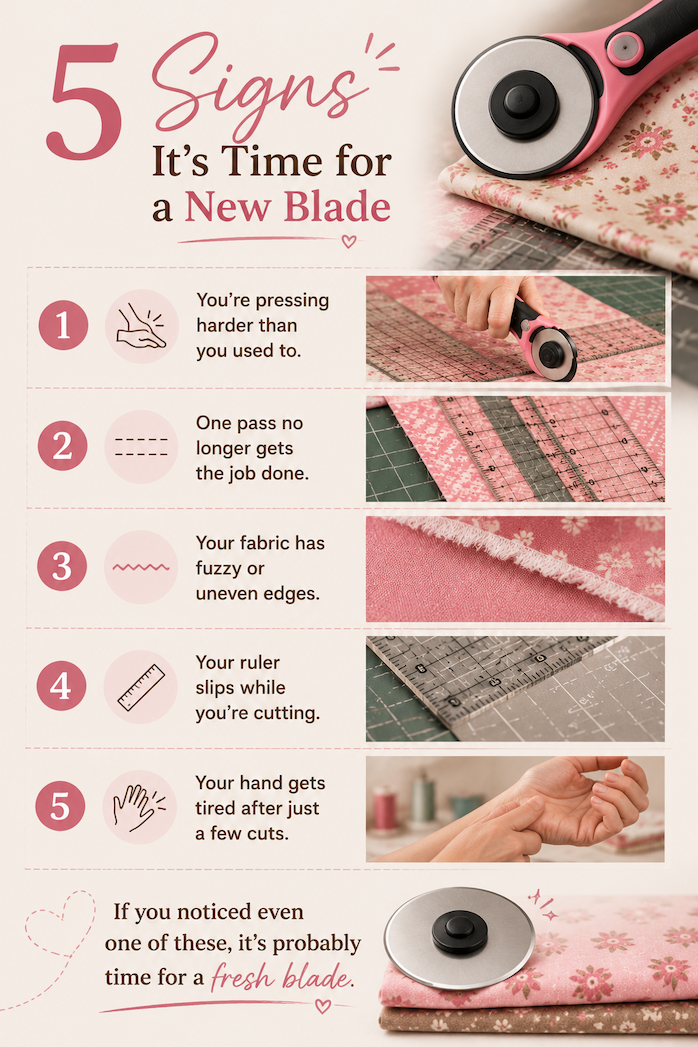
Does cutting fabric feel like more work than it used to?
Maybe you're pressing harder to get through each layer. Maybe you're making two, or even three, passes to finish a single cut. Or maybe your edges look frayed instead of crisp.
Here's the thing: it's probably not your technique.
Rotary blades become dull little by little, so the change is easy to miss. Before long, you're working harder, your cuts become less accurate, and quilting starts to feel frustrating instead of fun.
A fresh blade restores the smooth, effortless cutting you remember, and helps every project start with precision.
Upgrade Your Cut: Famoré Precision Cutting Tools
At Linda's, our cutting tools of choice come from Famoré — the precision tool maker behind our own flagship cutters. Famoré tools are built to surgical-grade standards, which is exactly what you want in the tool you use on every single project.
 ⭐ Linda's 45mm Ergonomic Rotary Cutter
Our flagship, made by Famoré. The ball-bearing trigger handle glides with a fraction of the hand pressure of a standard cutter — straighter cuts, far less hand fatigue.
 Linda's 60mm Ergonomic Rotary Cutter
The same ball-bearing design in a larger blade — for widebacks, batting, and multiple layers in one confident pass.
 45mm SKS-7 Replacement Blades
Japanese SKS-7 steel that stays sharp longer than bargain blades. Keep a pack in the drawer so a fresh blade is never more than a minute away.
 💎 400TC Tungsten Carbide Blade
For quilters who cut every day — tungsten carbide holds its edge many times longer than standard steel.
✂️ Also handy: the Famoré 28mm Rotary Cutter — the small blade that makes curves, templates, and tight corners easy.
Remember
Every beautiful quilt begins with a clean, accurate cut.
Don't fight your fabric.
Replace the blade — or upgrade to a cutter that works with your hand instead of against it — and get back to the part you love, quilting.
Happy Quilting!
— Corey