

Nothing interrupts a quilting session faster than thread breaking every few passes.
Your first instinct might be to adjust the tension, but in our experience, the culprit is often something much simpler: a worn or damaged needle.
Longarm needles work incredibly hard. Every stitch pushes through quilt tops, batting, backing, and thousands upon thousands of stitches. Even if a needle looks perfectly fine, the tip can become dull or develop a tiny burr that's impossible to see with the naked eye.
That tiny imperfection creates extra friction on the thread every time the machine stitches. Eventually... snap.
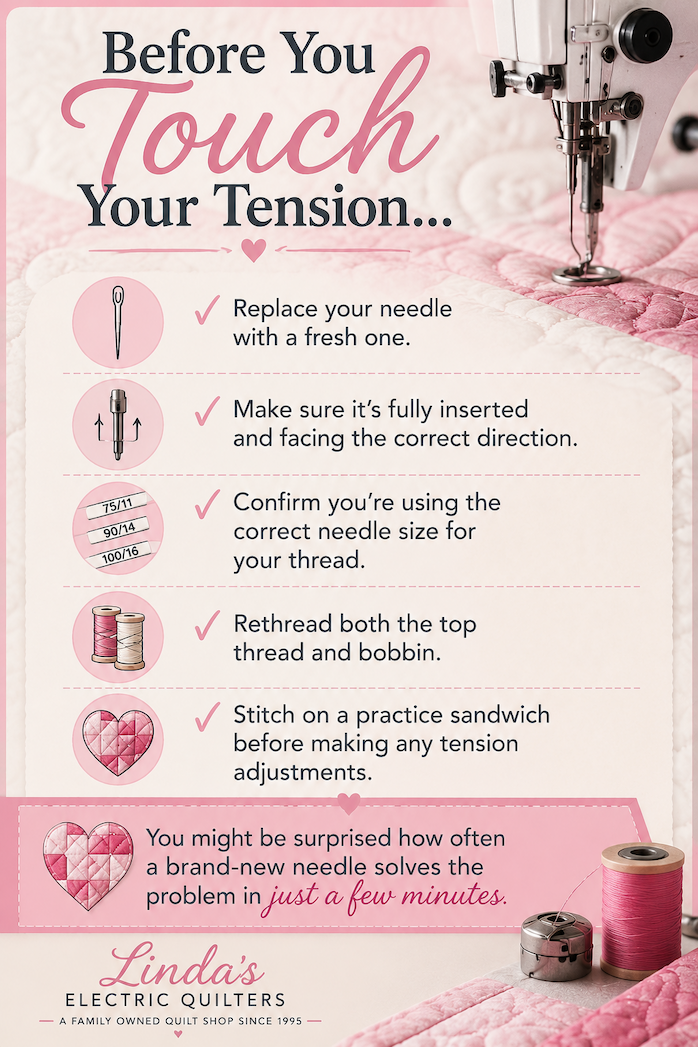
Before making tension adjustments, try this simple checklist:
Keep a Fresh Needle Close By
A fresh needle is one of the easiest, and least expensive, ways to improve stitch quality.
Whether you're quilting for customers or finishing a quilt for someone you love, replacing your needle regularly helps produce smoother stitches, fewer thread breaks, and less frustration.
Remember
Tension should be your last adjustment, not your first. Checking your needle first can save time, frustration, and keep you quilting with confidence.
Happy Quilting!
— Corey


