
Hi Bestie,
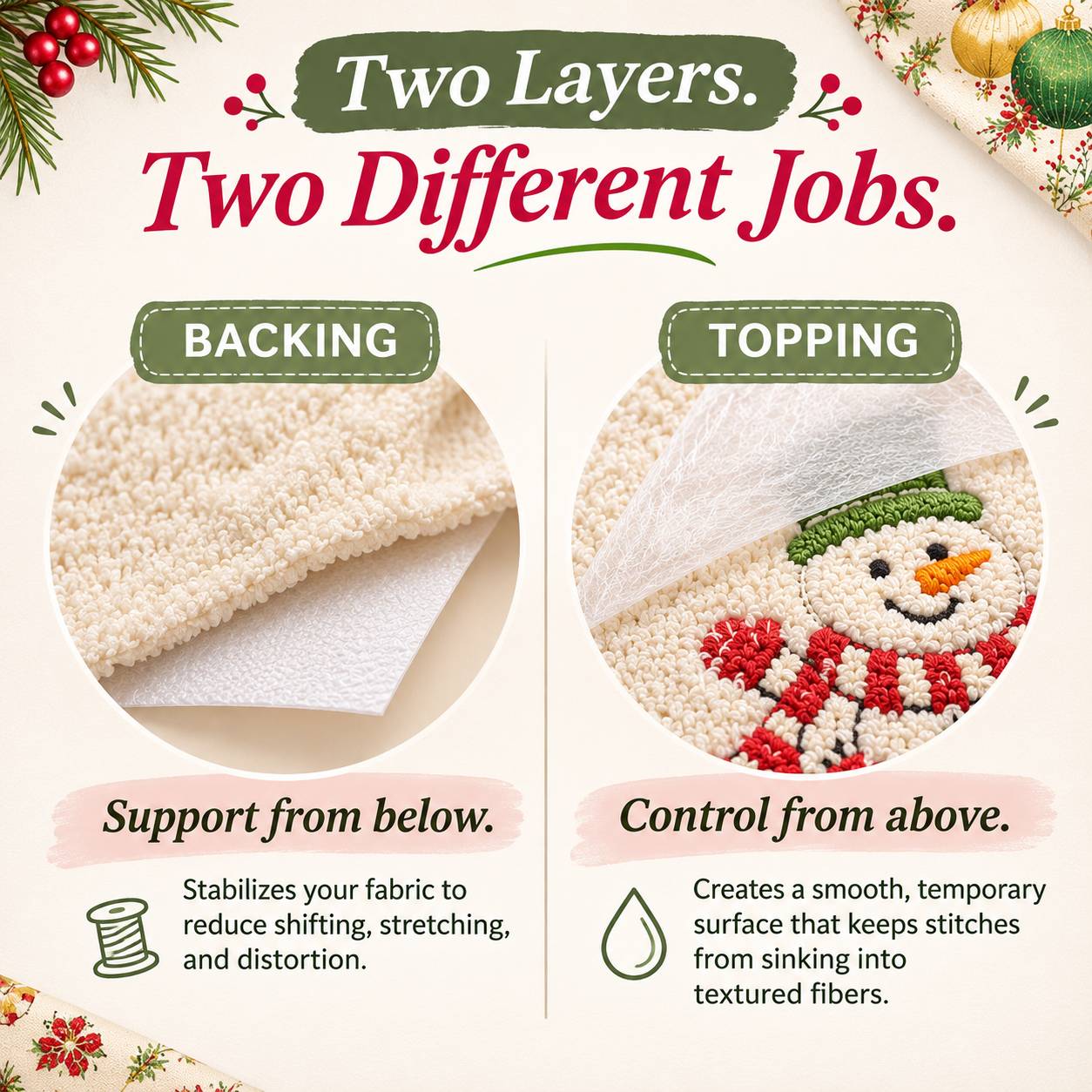
Backing and topping do two different jobs — and textured fabrics often need both. The backing keeps your fabric stable while you stitch, while the topping holds down fluffy loops so your design sits clearly on the surface.
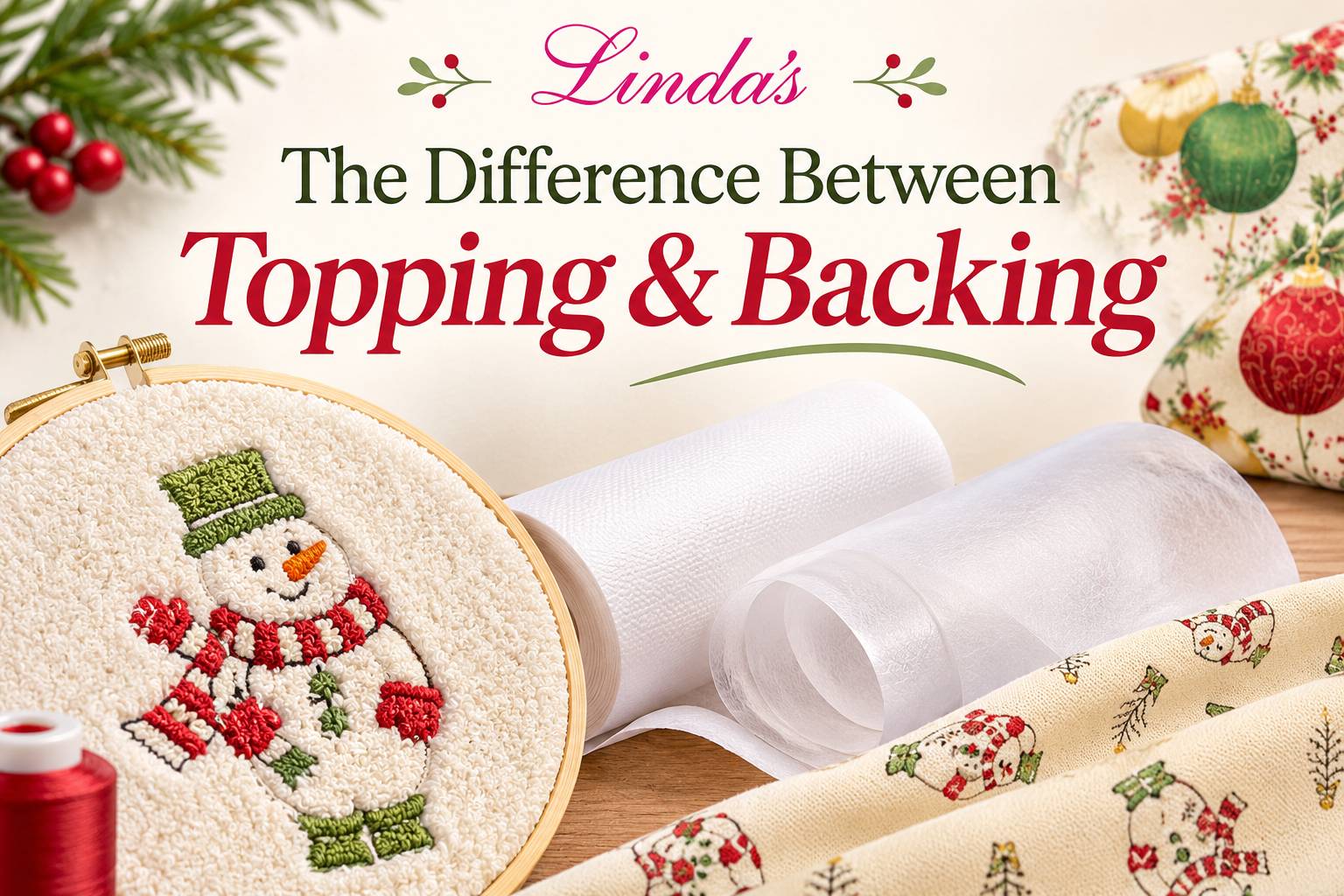
Ever embroidered a name onto a fluffy towel, only to find that some letters look crisp while others seem buried in the fabric?
Before you blame your thread tension or embroidery design, take a look at your stabilizer setup.
Backing and topping do two different jobs, and textured fabrics often need both.
Here's When Using Both Makes Sense
Say you're embroidering a monogram on a terry cloth towel.
The backing helps keep the towel stable while stitching. The topping holds down those fluffy loops so your letters sit clearly on the surface.
One supports the fabric. The other helps your design stand out.
And here's a useful tip: If you're working with small lettering on a high-pile fabric, don't skip the topping just because you've already used a sturdy backing. More backing won't solve stitches disappearing into the pile.
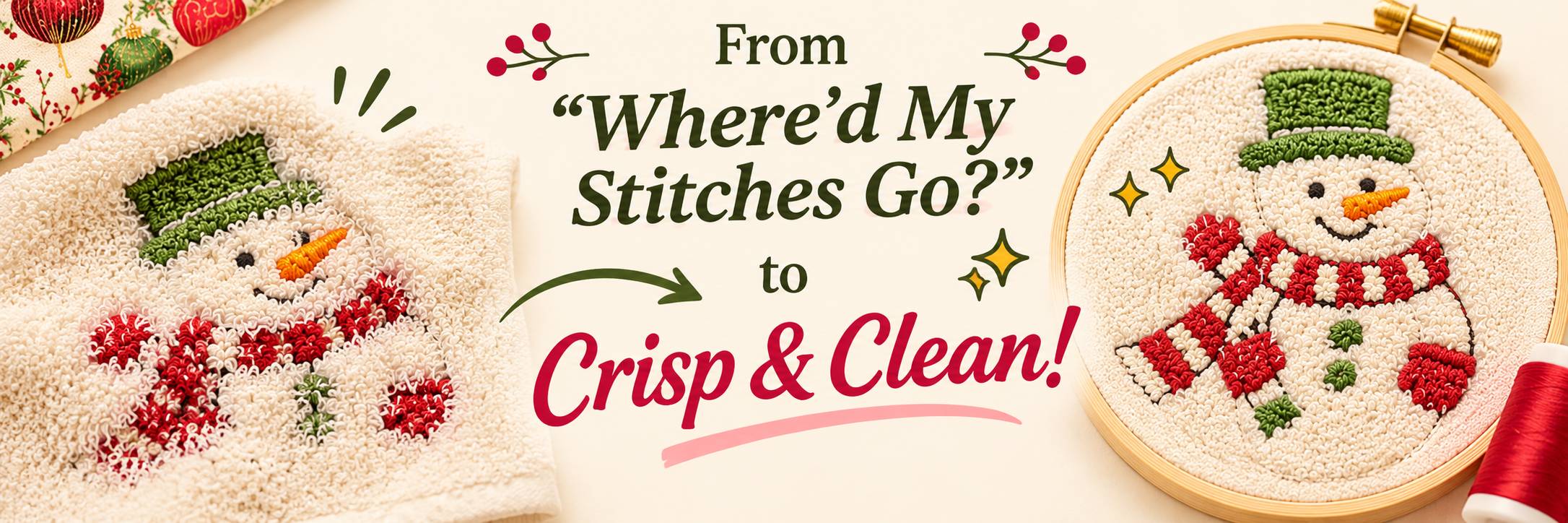
Remember,
Backing keeps your fabric steady, while topping helps your stitches stay on the surface instead of disappearing into the texture. When working with fluffy towels, fleece, or other textured fabrics, using both can make all the difference. A little extra preparation now means fewer stitching frustrations later!
Happy Quilting!
From Corey.
Frequently Asked Questions
What's the difference between backing and topping?
Backing and topping do two different jobs. The backing helps keep the fabric stable and steady while stitching — one supports the fabric. The topping holds down fluffy loops so your letters sit clearly on the surface and your stitches stay on the surface instead of disappearing into the texture — the other helps your design stand out.
When should I use both backing and topping?
Textured fabrics often need both backing and topping. Say you're embroidering a monogram on a terry cloth towel: the backing helps keep the towel stable while stitching, and the topping holds down those fluffy loops so your letters sit clearly on the surface. When working with fluffy towels, fleece, or other textured fabrics, using both can make all the difference.
Will more backing fix stitches disappearing into the pile?
No. If you're working with small lettering on a high-pile fabric, don't skip the topping just because you've already used a sturdy backing. More backing won't solve stitches disappearing into the pile.