
Good morning, quilters! Corey here.
You measured carefully. You stitched accurately. Every point matched beautifully.
So why does your finished quilt suddenly seem...off?
The culprit often isn't your piecing—it's how the quilt is handled throughout the process.
Many experienced quilters unknowingly stretch their quilt tops while pressing, trimming, or moving them between the sewing machine and ironing board. Even high-quality cotton has a bit of "give," especially when pieces are cut on the bias.
A few habits that keep quilts square
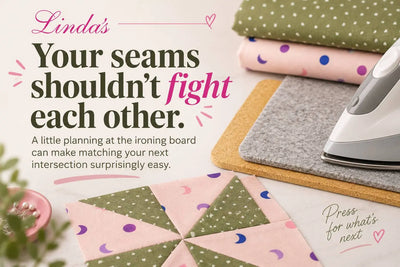
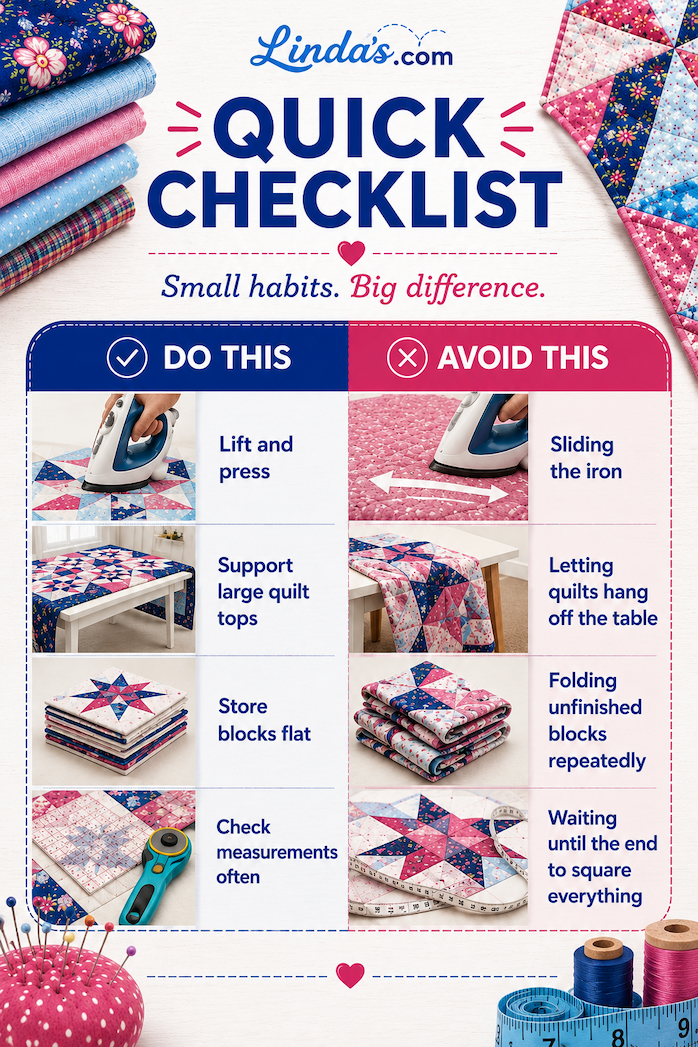
- ✓ Press, don't iron. Sliding the iron back and forth can stretch fabric. Instead, lift, press, and move to the next section. Let each area cool before you shift the fabric—warm fibers hold whatever shape they're left in.
- ✓ Support the weight of your quilt. As projects get larger, hanging fabric can pull on seams and gradually distort the quilt top. Keep the bulk on your table or in your lap rather than letting it drape off the edge while you sew.
- ✓ Handle bias edges gently. Triangles, setting pieces, and on-point quilts are especially vulnerable to stretching. A light touch of spray starch before cutting adds welcome stability.
- ✓ Square up as you go. Checking blocks before assembly prevents tiny inaccuracies from becoming major problems later. It's far easier to true up a 10" block than to fix a wavy border on a finished top.
The good news?
Once you recognize these small habits, they're easy to correct—and they can dramatically improve how your quilts look and feel.
A quilt that keeps its shape doesn't just photograph better.
It lays flatter.
It binds more easily.
And it's a joy to admire for generations.
Happy Quilting!
From Corey.