
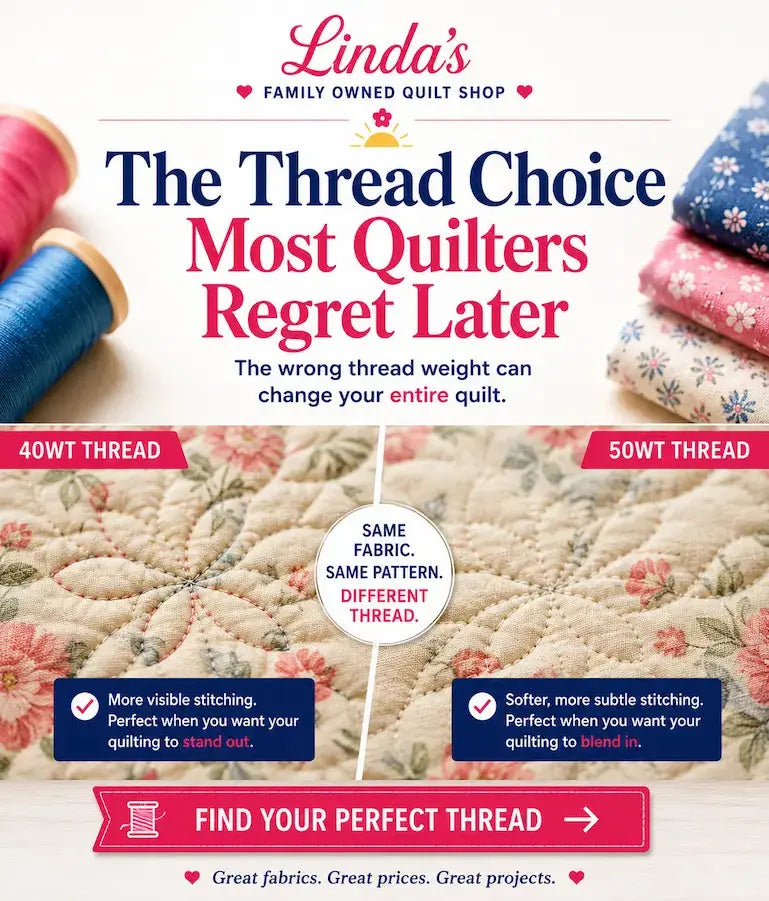
Have you ever finished a quilt and felt like something just wasn't quite right?
Maybe the quilting stood out more than you expected. Maybe the stitches seemed heavier than planned. Or maybe your piecing felt bulkier than it should have.
Many quilters assume it's the fabric, the machine, or the pattern.
Often, it's the thread.
The difference between 40wt and 50wt thread may seem small, but it can dramatically affect how your finished quilt looks and feels.
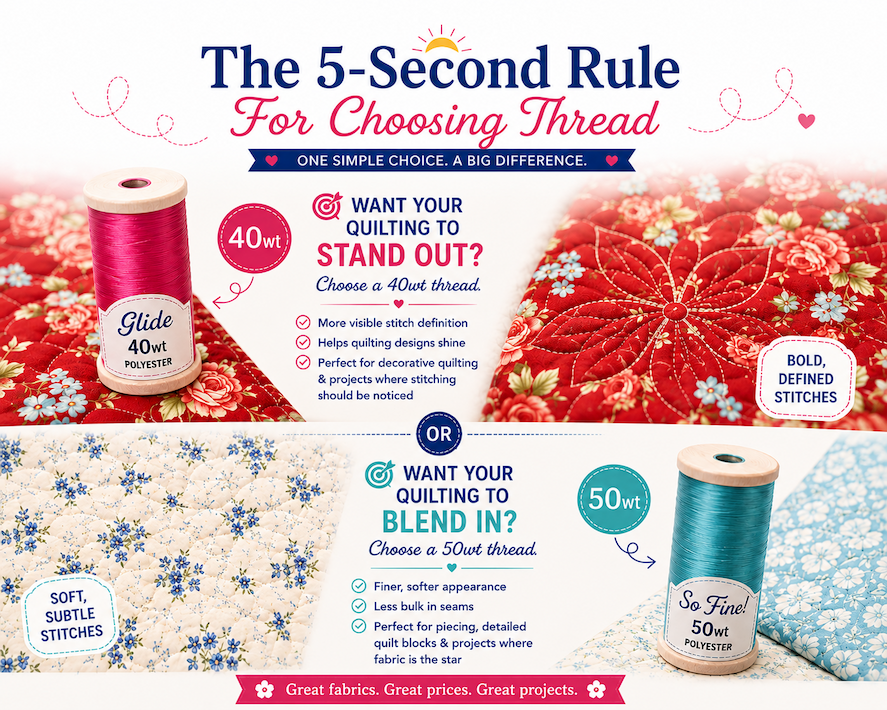
Find the Right Thread for the Job
🧵 Glide 40wt
For quilters who want smooth stitching and beautiful stitch definition that stands out.
Shop the Glide thread collection
🧵 OMNI 40wt
A reliable everyday quilting thread designed for consistent performance across a wide variety of projects.
Browse the Omni thread collection
🧵 So Fine 50wt
A finer thread that virtually disappears into your fabric, making it a favorite for piecing and subtle quilting.
Explore the So Fine thread collection
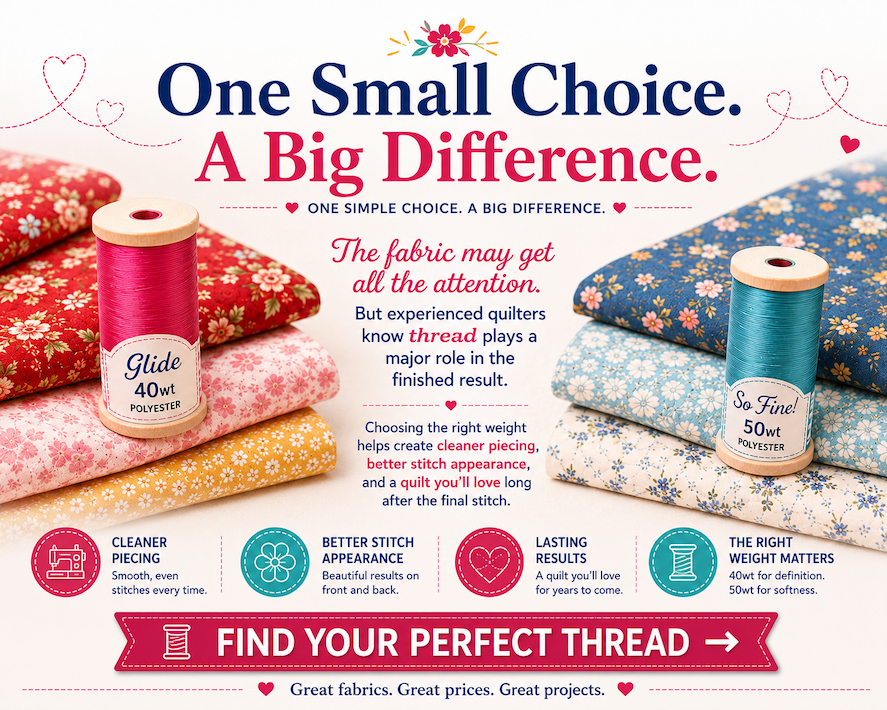
Remember
Choosing the right thread weight helps create cleaner piecing, better stitch appearance, and a quilt you'll love long after the final stitch.
Happy Quilting!
— Corey


