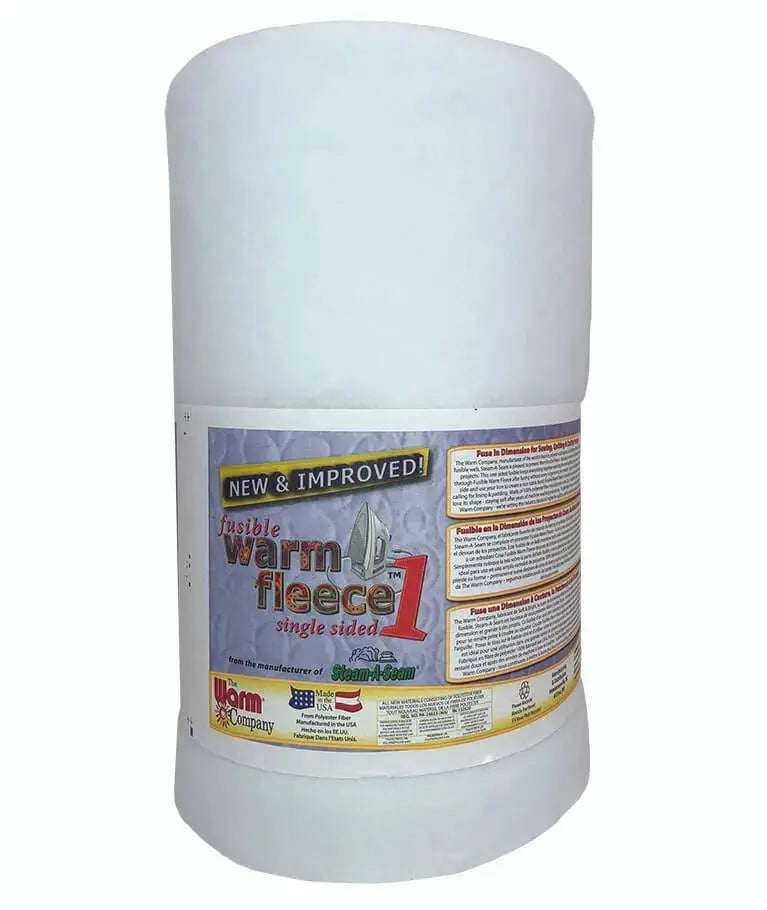
Warm Fleece (Sew-In) and Fusible Fleece (Iron-On)
The Warm Company offers two fleece batting formats for structured project work — the stability-and-body counterpart to their thermal battings like Insul-Bright. For full quilts rather than bags and accessories, the same maker's Soft & Bright polyester and Warm & Natural cotton battings are the workhorses.
- Warm Fleece Sew-In — a soft, stable sew-in fleece that adds body and structure to bags, totes, and quilted accessories without the bulk of traditional batting. Simply cut and sew in like any batting layer.
- Fusible Fleece — the same soft fleece with a heat-activated adhesive on one side. Iron it in place before sewing for no-shift, no-pin construction — ideal for appliqué backgrounds, bag panels, and any structured quilted project.
- Fusible Warm Fleece 2 — a heavier-weight version of Fusible Fleece for projects that need more body and structure.
All available in 45" x 20-yard rolls for production use.
Frequently Asked Questions
What is the difference between fusible fleece and fusible batting?
Fusible fleece is denser and thinner than quilt batting, engineered for body and structure rather than loft and warmth. It gives bag panels, placemats, and appliqué backgrounds a smooth, firm hand that holds its shape. Fusible quilt batting is loftier and softer, meant to be quilted through as the middle layer of a quilt. If the goal is a crisp, structured project, reach for fusible fleece.
How do I fuse Fusible Fleece without gumming up my iron?
Place the adhesive side (the slightly bumpy, shinier face) against the wrong side of your fabric, then press from the fabric side with a dry iron on a wool/cotton setting, holding 10–15 seconds per section without sliding. Pressing from the fabric side keeps the adhesive away from the soleplate. Let the piece cool flat before handling — the bond strengthens as it cools.
When should I use Fusible Warm Fleece 2 instead of regular Fusible Fleece?
Choose Fusible Warm Fleece 2 when a project needs to stand up on its own — structured tote bags, boxy pouches, fabric baskets, and bag bottoms. Its heavier weight delivers noticeably more body from a single layer, which often replaces the double layer of standard fusible fleece some patterns call for.