
⚡ Quick Answer — from Corey, Chief Quilter
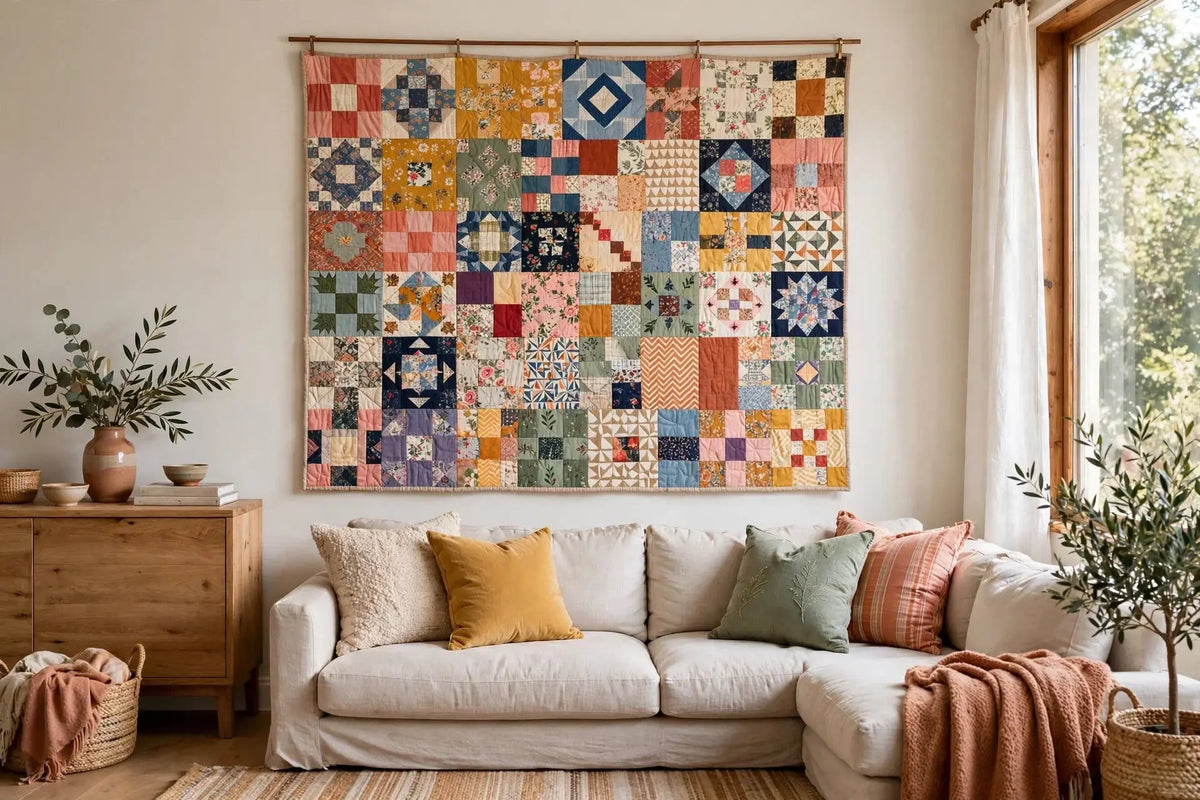
Hang a quilt by supporting its full top edge, never from its corners and never with pins or nails through the fabric. If your quilt has a hanging sleeve, slide it onto a decorative wire hanger or rod. If it has no sleeve, use an adjustable clamp-style hanger that grips the whole top edge — no sewing and no holes. Keep displayed quilts out of direct sunlight and rotate them a few times a year.
A finished quilt deserves better than a nail through the binding. Hanging concentrates all of a quilt's weight wherever it is held, so the method matters: spread that weight evenly and a quilt will display flat and safe for years; hang it from two corners and it will stretch, distort, and fade unevenly. Here are the methods I recommend, from our own display guide.
What are the main ways to hang a quilt?
There are two main families. Decorative wire hangers hold a quilt by a hanging sleeve sewn to its back, or with small clips, and the hanger's design shows above the quilt as part of the display. Split-bottom designs slide into the sleeve so the motif sits on top. Adjustable clamp systems telescope to fit the quilt's width and grip the top edge evenly across its full width, with no sleeve needed at all — they are the fastest way to rotate seasonal quilts on and off the wall. You can see both styles in our quilt hangers and display systems guide.
How do I hang a quilt with no hanging sleeve?
Use a clamp-style hanger. It grips the quilt directly along the top edge, so a quilt that was finished without a sleeve can go straight on the wall — no after-the-fact sewing, and no pins or clips piercing the fabric. This is also the kindest option for quilts you swap with the seasons, because mounting and removal take seconds and leave no marks on the quilt.
What size quilt hanger do I need?
Measure the finished width of your quilt's top edge, then match the hanger to it. For sleeve-style wire hangers, match the hanger width to your sleeve opening. For clamp systems, pick the range that brackets your quilt: the 21–35 inch size covers most minis and small wall hangings, while the 35–63 inch size handles lap-size quilts and larger panels. When a quilt falls between ranges, choose the range that supports the full width without the quilt bunching at the ends.
Will hanging damage my quilt over time?
Not if the weight is supported evenly across the top edge. Damage comes from the shortcuts: pins and nails leave holes, corner hanging stretches the fabric on the bias, and direct sunlight fades dyes unevenly. Hang with full-edge support, keep the quilt out of direct sun, rotate displayed quilts a few times a year to relax the fibers, and give large quilts a periodic rest folded or flat off the wall. More detail is in our wall hangings guide.
How do I keep a hanging quilt flat and straight?
Start with support across the entire top edge — that alone prevents the scalloped sag you get from two-point hanging. Level the hanger before you commit to its final position, and check that the quilt hangs a short distance off the wall so air can circulate behind it. If a quilt has been folded in storage, let it relax hanging for a day or two before judging the drape; most fold lines fall out on their own.
Frequently Asked Questions
How do you hang a quilt on the wall without damaging it?
Support the full top edge — with a hanging sleeve on a rod or wire hanger, or with an adjustable clamp hanger that grips the whole edge. Never hang from the corners and never put pins or nails through the quilt.
Do I need a hanging sleeve to use a quilt hanger?
Split-bottom and header-style wire hangers need a sleeve on the back of the quilt. Clip hangers and clamp-style systems do not — they grip the quilt directly, which makes them ideal for quilts finished without a sleeve.
What size clamp hanger should I buy?
Measure your quilt's top edge. Choose the 21–35 inch model for minis and small wall hangings, and the 35–63 inch model for anything up to lap size.
Can hanging a quilt stretch it?
Yes, if it hangs from its corners or from two points — the weight pulls the fabric out of shape. Even support across the full top edge prevents stretching, and rotating quilts a few times a year lets the fibers rest.
How do I protect a displayed quilt from fading?
Hang it out of direct sunlight, rotate it with other quilts a few times a year, and rest large quilts off the wall periodically.


